
Significant Potential! Analysis of the Operation of China's Urban Lighting Market
Urban lighting refers to urban functional lighting and nightscape / landscape lighting for urban roads, tunnels, squares, parks, public green spaces, historic sites, and other buildings within urban planning areas. In the current new development period, it also includes the smart pole industry.
Urban Functional Lighting
01 Positive Outlook
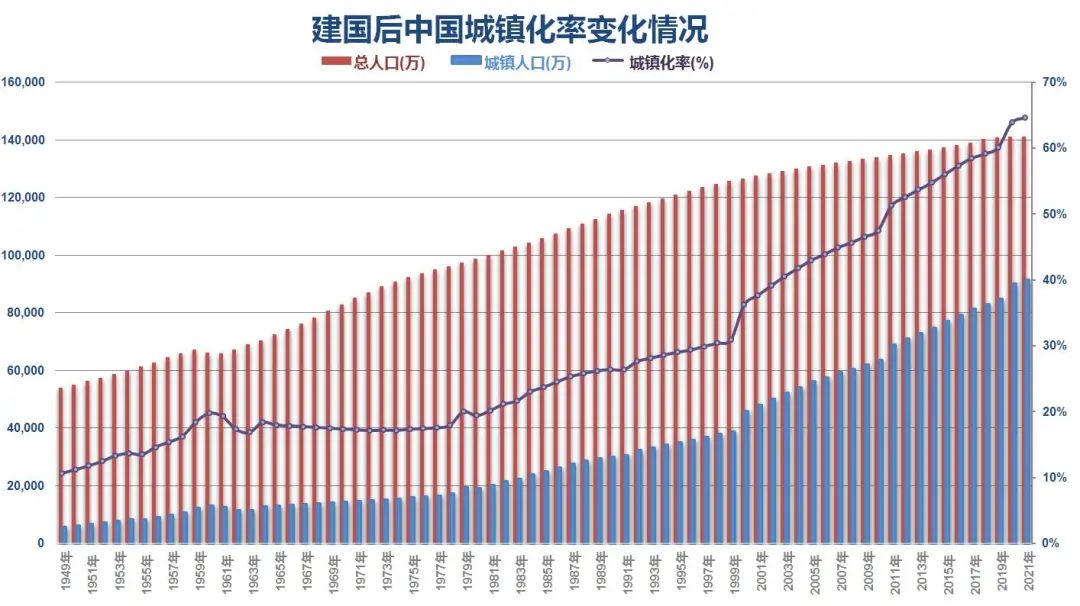
Over the 70 years since the founding of the People's Republic of China, the country has achieved remarkable social and economic development. The urbanization rate has risen from 10.6% in 1949 to 64.7% in 2021. However, there is still a considerable gap to reach the 80% urbanization rate common in developed countries, which indicates significant room for growth. Urbanization is one of the core drivers of China's modernization. In particular, the new-type urbanization currently promoted by the state provides new opportunities for market expansion and industrial upgrading in the urban lighting sector.
Significant Potential
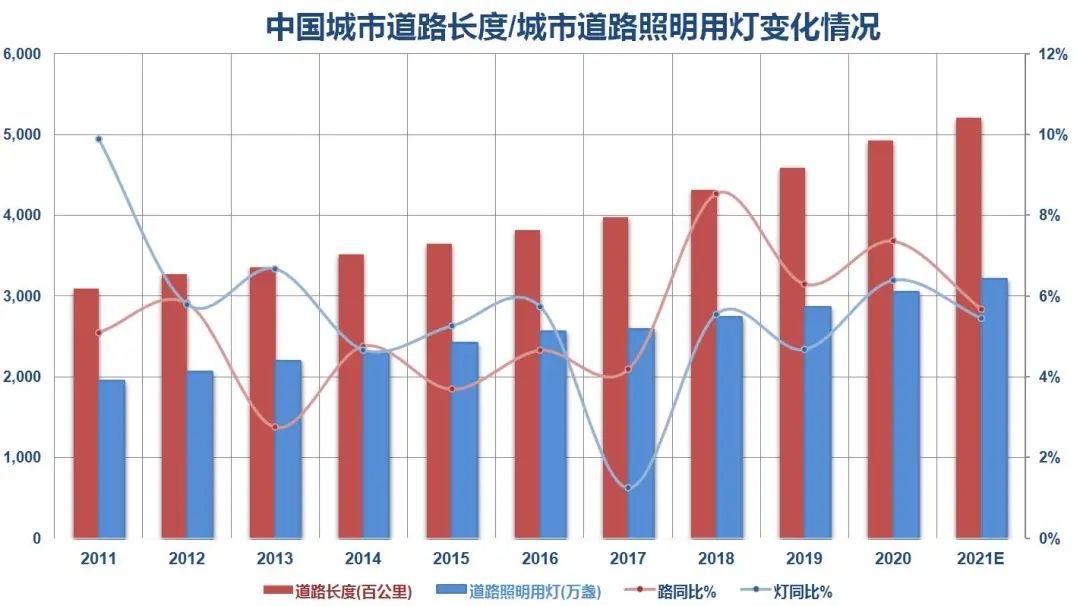
Road lighting fixtures dominate urban functional lighting. By 2020, the length of urban roads in China approached 500,000 kilometers, with over 30 million road lighting lamps installed. The basic market demand is substantial, maintaining a growth rate of around 5% in the past five years, with relatively stable incremental growth. As new-type urbanization deepens, the demand for high-quality urban road lighting will continue to rise.
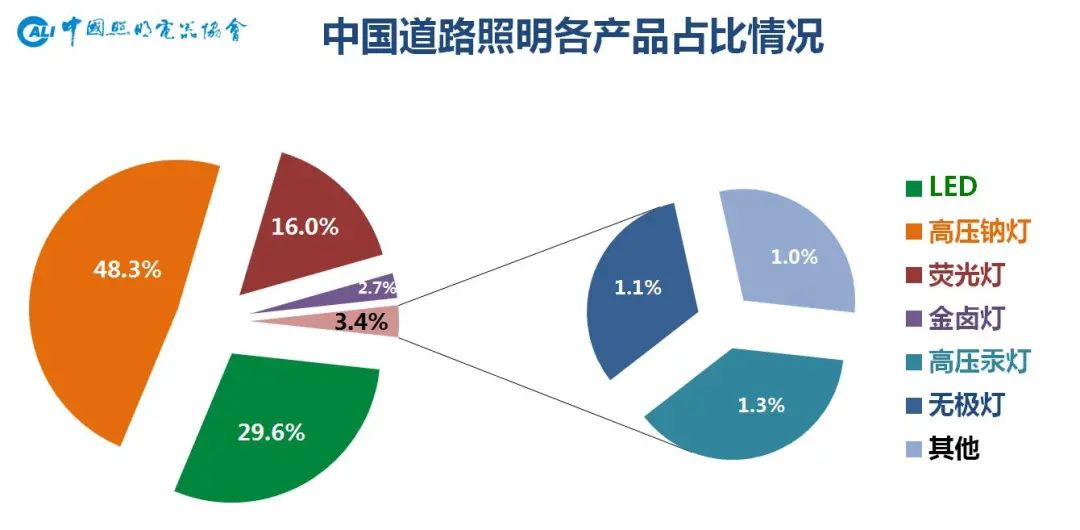
According to statistics from China's street light management departments, high-pressure sodium lamps (HPS) remain the mainstream product in road lighting applications in China. After years of gradual substitution, LED lighting products still account for only 30%. This reflects that in the field of road lighting, there are still over 20 million street lights in China that are not LED. Globally, the penetration rate of LED street lights is even lower, not exceeding 15%. Therefore, whether focusing on China or looking globally, while LEDs hold a high share in the incremental market, the much larger existing stock market still holds significant replacement potential.
03 Industry Landscape
From the perspective of market structure, some changes have occurred in recent years. Some leading enterprises from ten years ago have gradually declined amid fierce market competition. In contrast, companies represented by Huapu Yongming have focused on R&D and manufacturing, adopting an innovative business model that directly engages with manufacturers rather than end users, achieving significant development. Meanwhile, the Gaoyou street light industrial cluster has rapidly developed in recent times, forming an industrial agglomeration of urban lighting manufacturing, supply chains, and integrators, while maintaining close ties with engineering end-users.
The urban lighting industry in Gaoyou, Jiangsu Province, originated in 1976. After 45 years of development, there are now over 1,000 manufacturers related to luminaires and poles, including more than 30 enterprises with annual sales exceeding 100 million yuan. Industry leaders such as Longteng, Chengxu, Xiandai, and Baode have emerged. In 2008, Gaoyou was awarded the honorary title of "China Street Light Manufacturing Base" by the China Association of Lighting Industry (CALI). Currently, its road lighting luminaire products account for about 30% of the national market, while pole products occupy 70% of the national market.
The current landscape can be summarized as "two concentrations and one dispersion." The "first concentration" refers to the emergence of leading street light enterprises, including scaled companies such as Huapu Yongming, Unilumin, Sansi, Longteng, Xiandai, Jinghe, Jingri, Lianyu, Yashi, Debang, and Samsung. The "second concentration" denotes the formation of manufacturing and supply chain hubs represented by Gaoyou, Jiangsu, driven by leading enterprises like Longteng, Chengxu, and Xiandai, where numerous SMEs cluster into industrial agglomerations. The "one dispersion" indicates that the overall industry concentration of the street light sector remains low, similar to the broader lighting industry. In a street light market sized at approximately RMB 30 billion, the aforementioned leading enterprises are still rare; no company has yet reached the RMB 1 billion revenue level, and those at the RMB 500 million level are few. Meanwhile, SMEs with sales in the tens of millions are numerous and constitute the absolute majority. However, as urban lighting market demands evolve towards complexity, customization, and fragmentation, requirements for R&D, manufacturing, services, and branding will further increase. Consequently, the competitiveness of leading enterprises will be strengthened, and an increase in industry concentration is an inevitable outcome of high-quality development.
Smart Street Light Pole
01 Emerged as the Times Required
Since 2020, the "Two New and One Major" initiative (namely new infrastructure, new-type urbanization, and major projects in transportation, water conservancy, etc.) has become the top priority in China's investment sector. The smart pole industry has aligned with the major trends of new infrastructure and smart city development, flourishing across China. Firstly, "multi-pole integration and multi-purpose use" represents the integrated utilization of various urban resources and is based on the vision for future smart city construction. Its implementation helps reduce costs and improve efficiency in urban management, making it an inevitable trend for high-quality urban development in the future. The light pole serves as a carrier, characterized by its widespread and uniform distribution throughout the city; it is also an electrical terminal with a certain height. In the context of smart city construction, which requires comprehensive sensing and the Internet of Everything, the light pole is also an excellent carrier for sensors that collect data.
02 Policy Driven
Since the national promotion of smart city construction began in 2012, the Ministry of Housing and Urban-Rural Development has successively released three batches of smart city pilot lists. The total number of pilot cities has reached 290, providing many development opportunities for enterprises engaged in smart city-related businesses. In 2019, the Ministry of Industry and Information Technology and the State-owned Assets Supervision and Administration Commission jointly issued the "Implementation Opinions on Promoting the Co-construction and Sharing of Telecommunications Infrastructure to Support 5G Network Construction," requiring telecommunications companies and tower companies to intensively utilize social pole and tower resources, carry out new micro base station construction, and reserve 5G site resources in advance. At the local level, regions such as Beijing, Shanghai, Tianjin, Chongqing, Guangdong, Jiangsu, Zhejiang, Hebei, Shaanxi, Fujian, Hunan, Sichuan, and Anhui have successively introduced relevant policies to promote the construction of smart light poles with "multi-pole integration, one pole for multiple uses" for various urban poles.
It is evident that both central and local governments are making strategic investments in the smart pole sector. As smart poles serve as urban public infrastructure, policy will play a core driving role in their deployment.
03 Large Market
Against the backdrop of national investment in the "Two New and One Major" infrastructure initiative, the total number of smart pole projects reached approximately 200 in 2020, with a total investment scale nearing RMB 50 billion. The average contract value per project surged from the tens of millions to the hundreds of millions. According to relevant data, China currently has nearly 30 million light poles, along with 15 million other poles such as video surveillance poles and communication poles. However, the penetration rate of smart poles remains quite low, indicating significant potential for development.
04 Current Development Status
As a comprehensive smart city infrastructure, smart poles aim to achieve co-construction, sharing, and collaborative governance of information infrastructure. However, as an emerging solution, many issues remain to be addressed, such as cross-industry technology and business models, cross-departmental operations, planning and construction processes, exploration of business models, and the development of standard systems.
Currently, street light, pole, and control system companies are the driving force behind the adoption of smart poles. From a corporate perspective, smart pole projects will generate multiple revenue streams, such as manufacturing, installation, energy saving, operation and maintenance, advertising, charging, rent, and data, all of which can create added value. Manufacturers and operators have different value propositions. For most manufacturing enterprises in the lighting industry, their scale makes it difficult to achieve integration capabilities; however, they can actively invest in R&D to expand industrial application scenarios and functions on demand, leveraging R&D and manufacturing advantages to secure patents and enhance core competitiveness, thereby improving themselves to seek integration. In addition, the model of forming solutions through products from various ends of the supply chain to 'go global together' is also highly encouraged.
For operators such as engineering companies, in addition to leveraging their professional expertise and familiarity to secure project contracts, they must also consider business extension—transforming from engineering contractors into comprehensive urban service providers to pursue sustainable development. It is worth noting that within the urban lighting industry of Gaoyou, known as the "China Street Light Manufacturing Base," its pole products are more competitive than its luminaire products, accounting for up to 70% of the national market share. Based on this industrial advantage, a considerable number of Gaoyou enterprises are currently active in the smart pole industry.
As a carrier for information collection, processing, and dissemination, smart street lights not only save urban space and enhance the city's image, but also integrate urban resources and improve operational efficiency. In the future, the smart street light Industry will gradually develop towards a mature stage characterized by specialized demand, standardized design, and diversified applications, presenting historical development opportunities for related enterprises in the value chain.
3. Urban Landscape Lighting
Driven by the deepening urbanization process in China, rising market demand, and major events, urban landscape lighting experienced several years of rapid development after 2016. While becoming a hotspot for capital investment, it also boosted business for manufacturers across the supply chain. However, this rapid growth has given rise to many issues, such as excessive illumination, light interference/light intrusion, homogenized cityscapes, uneven project quality, large advances and accounts receivable, and challenges in sustainable development.
In light of this, at the end of 2019, the Central Leading Group for the "Stay True to Our Original Aspiration and Keep Our Mission Firmly in Mind" thematic education campaign issued the "Notice on Rectifying Issues Such as Excessive 'Landscape Lighting Projects' and Other 'Performance Projects' and 'Vanity Projects'." The core objective is to eliminate excessive lighting and performance/vanity projects. Urban landscape lighting levels should align with the city's economic and social development and its cultural character. In early 2020, the sudden outbreak of the COVID-19 pandemic mainly resulted in stalled project construction and difficulties in business expansion, leading to an overall decline in industry performance and adversely affecting project acceptance and payment collection.
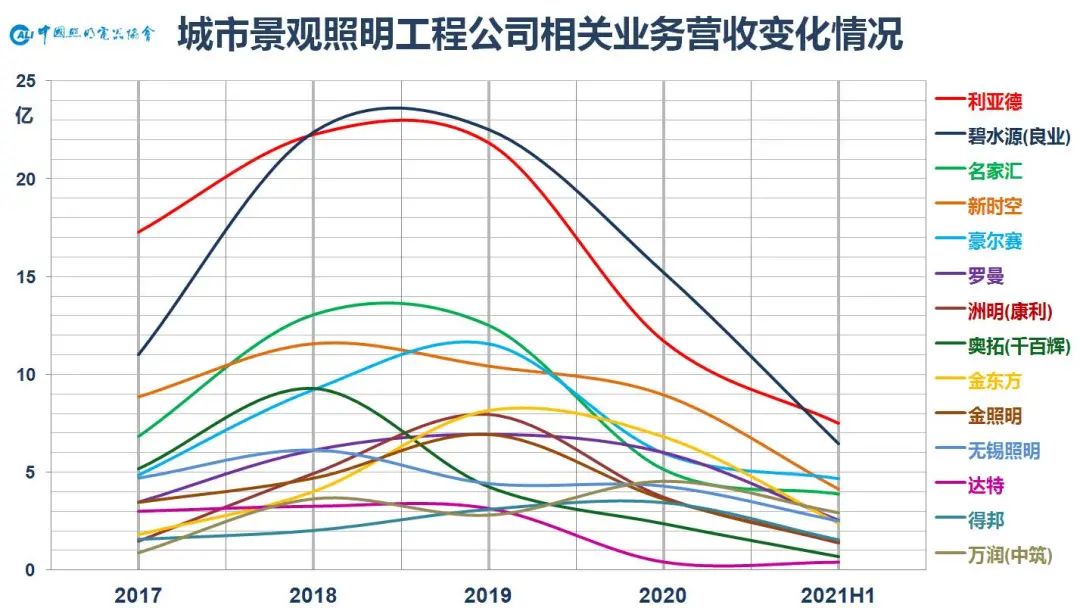
Overall, the impact of the pandemic was only temporary and localized, whereas policy changes have reshaped the landscape, driving the entire nightscape / landscape lighting market into a new normal of rational development. Large-scale city-wide illumination projects are now rare, having been replaced by cultural tourism night tours, commercial real estate, and smart city initiatives as the mainstream. Meanwhile, the trend toward fragmented and customized projects has become more pronounced. This trend imposes higher requirements on manufacturers' capabilities in design, execution, service, and supply chain integration. Companies that excel in these areas will be more competitive in the market.
At the same time, companies in the landscape lighting sector have begun their transformation. Some are pivoting to cultural tourism night tours, others are transitioning toward smart city construction, and some are pursuing both. The cultural tourism night tour direction aligns with the national push to develop the culture and tourism economy to meet people's growing needs for a better life, and it is also an extension of urban nightscape / landscape lighting business models. For lighting engineering firms with strong capabilities in engineering design, construction, and services, as well as rich project experience, transforming into cultural tourism night tours is relatively easier. In contrast, smart poles and even smart city construction constitute a comprehensive industry that spans technologies, disciplines, business models, and departments. Multiple industries are involved, the scope is extremely broad, and there are no precedents to follow. All ends of the value chain are in the early stage of "crossing the river by feeling the stones," and participation entails significant challenges.
Looking ahead, central government rectification documents target excessive brightening and vanity projects, but do not prohibit urban landscape lighting. As China's comprehensive national strength continues to grow, the economy develops steadily, urbanization deepens, and public demand for a better life remains robust, substantial market demand for urban landscape lighting persists. Furthermore, in October 2020, the Global Lighting Association (GLA) released the position statement "Nightscape Lighting: The Importance of Quality Lighting and Nighttime Preservation" (click to view full text), pointing out that high-quality outdoor lighting is a shared responsibility of lighting designers, lighting fixture owners and operators, and lighting manufacturers. Advocating for high-quality urban nightscape lighting through good design and the selection of premium products is also a consensus within the global lighting industry.
In the post-pandemic era, the state continues to maintain strong investment in "two new and one major" projects. Small yet refined cultural tourism night tour projects are emerging rapidly. As an important means to stimulate domestic consumption, landscape lighting will continue to play a significant role in urban development of the night-time economy, and this industry will still have promising development prospects. What the industry needs to do is to better integrate lighting design technology with cultural and artistic content, making landscape lighting a true asset for reflecting the city's spiritual core, promoting urban culture, and driving the urban economy.
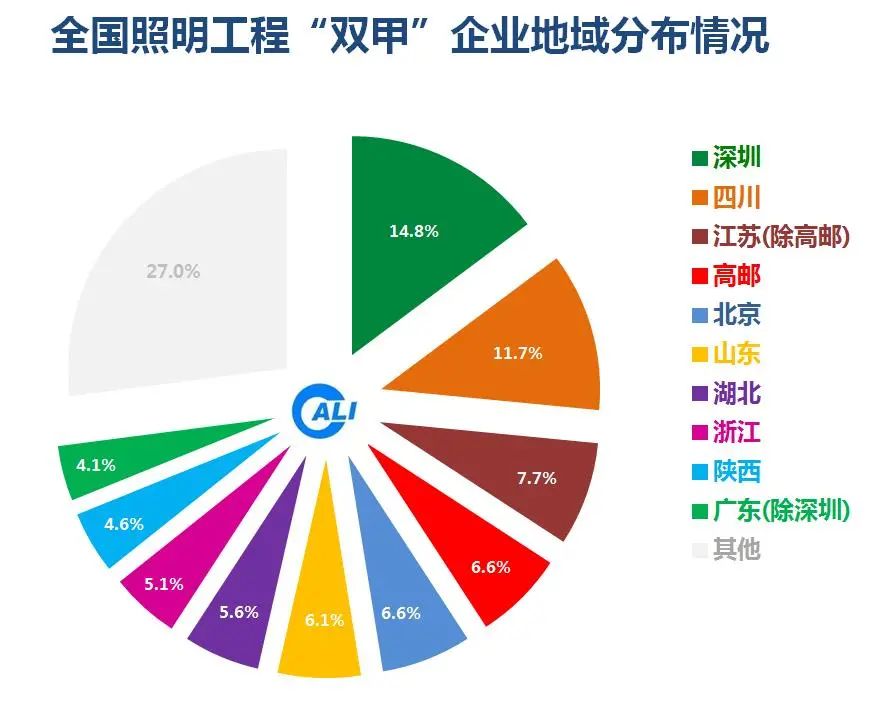
In addition to the manufacturing advantages described above, Gaoyou, known as the "Street light Manufacturing Base of China," is also highly competitive in the lighting engineering sector. To date, only 196 enterprises nationwide hold both the "Class A Special Qualification for Lighting Engineering Design" and the "Grade I Professional Contracting Qualification for Urban and Road lighting." Led by industry leaders in Gaoyou's urban lighting engineering sector such as Longteng, Chengxu, Shenzhou, and Baode, Gaoyou, as a county-level region, accounts for 13 of these qualifications, rivaling the municipality of Beijing. This indicates that Gaoyou is home to urban lighting integrators like Longteng and Chengxu, capable of providing full-process services covering urban lighting scheme design, product R&D and manufacturing, engineering construction and installation, and project operation and maintenance, thereby granting them significant comprehensive competitiveness in the urban lighting field.
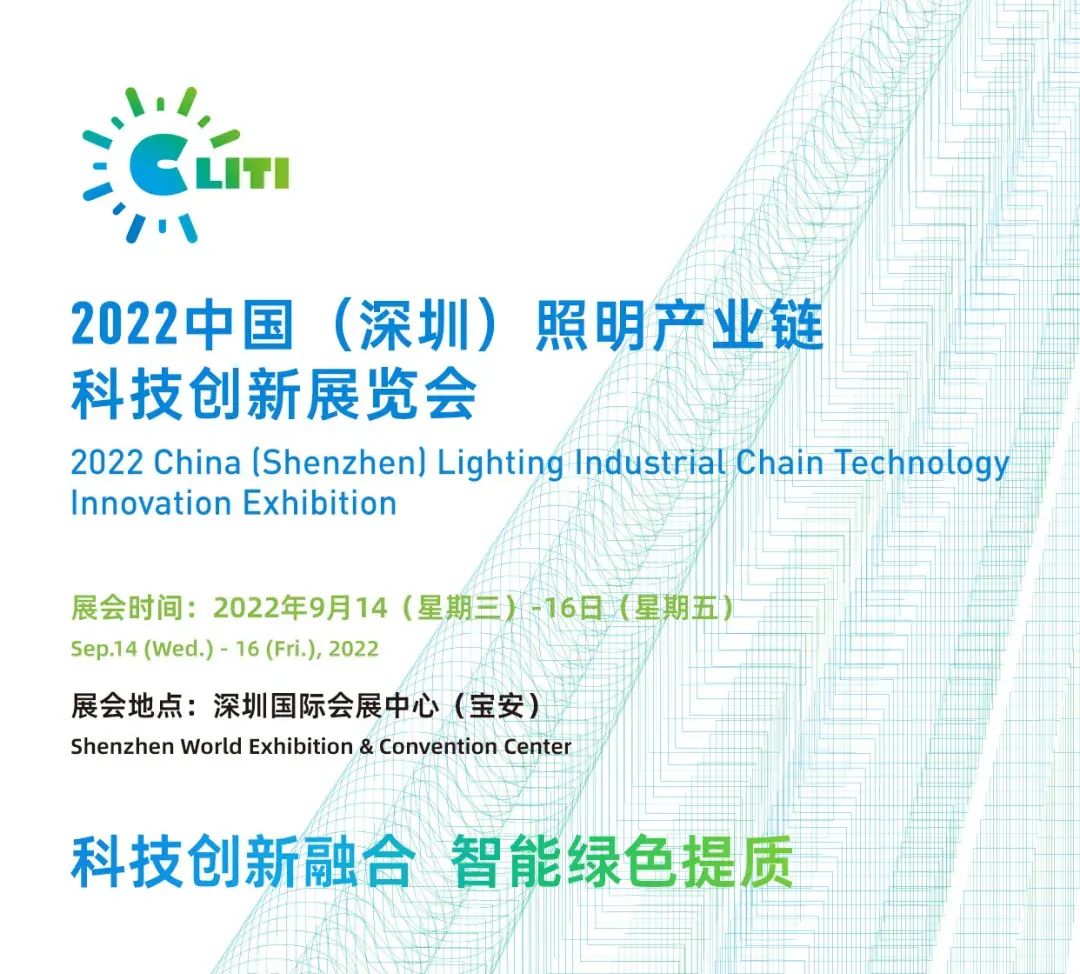
At the "China Lighting Industry Chain Technology Innovation Exhibition" hosted by the China Association of Lighting Industry (CALI) in Shenzhen in September 2022, Gaoyou City, Jiangsu Province, known as the "Street Light Manufacturing Base," will participate as a group to present the "Gaoyou Smart Streetlight Brand Demonstration Zone" to the entire industry and society.
Click the image to learn more
Booth Inquiry:
South China Contact: Liu Chang 13929902769
East China Contact: Gu Jun 13771575253
North China Contact: Qiu Chun 15861553579
Email: qiuchun@cali-light.com