
Light of Speed | Lighting Design for the Beijing National Speed Skating Oval
Text | Chen Tianyu
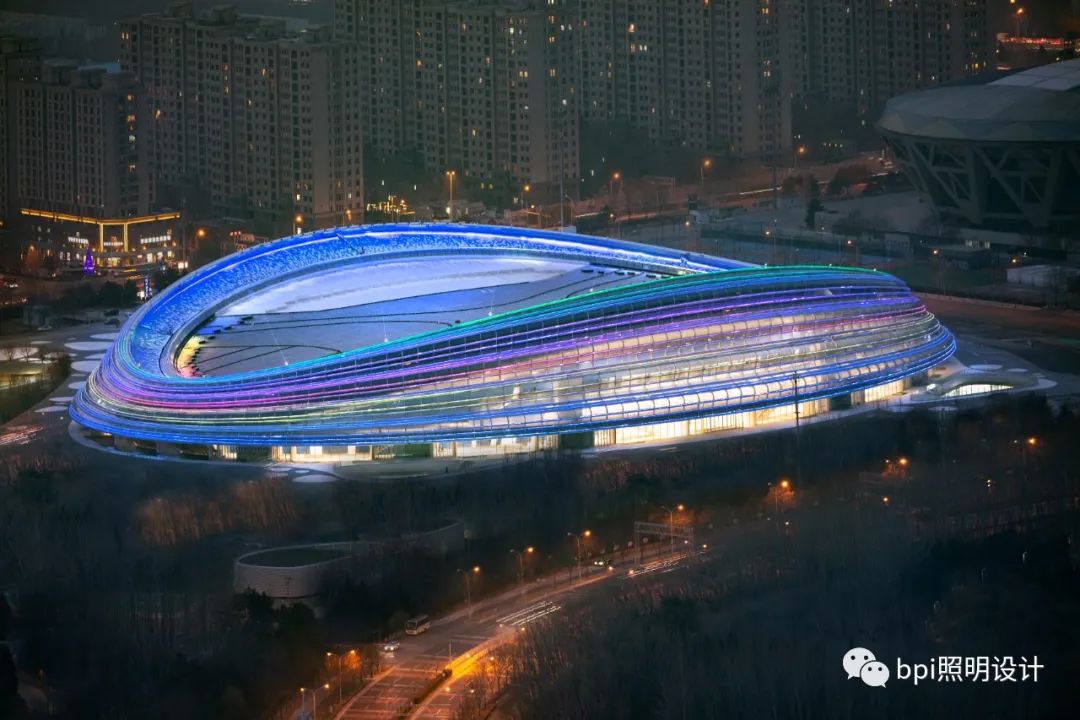
National Speed Skating Oval © Liu Xinghua
The National Speed Skating Oval is located on Lincui Road in Chaoyang District, Beijing, adjacent to the Olympic Park. It features Asia's largest all-ice surface design, covering an area of 12,000 square meters, and can accommodate over 2,000 people simultaneously for ice hockey, speed skating, figure skating, curling, and other ice sports. As the only newly built ice competition venue for the 24th Beijing Winter Olympics in 2022, the National Speed Skating Oval will host long-track speed skating events, awarding a total of 14 gold medals, making it the single venue with the highest number of gold medals at these Winter Games.
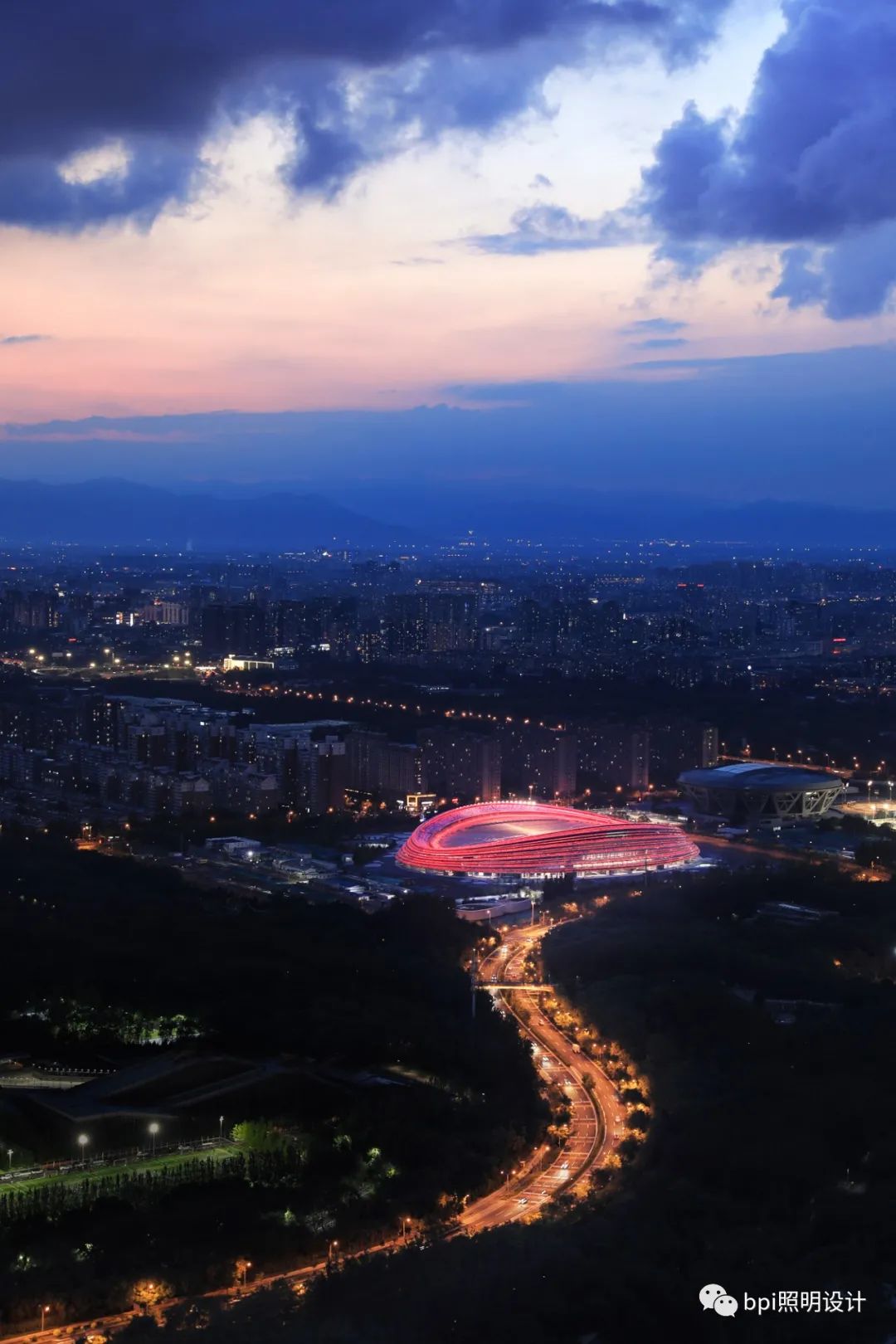
National Speed Skating Oval © Liu Xinghua
Project Owner: Beijing National Speed Skating Oval Operation Co., Ltd.
Architectural Design: Beijing Institute of Architectural Design Co., Ltd., Buro Happold
Curtain Wall Design: Dadi Curtain Wall
Lighting Consultant: bpi
Project Team: Li Qifeng, Chen Tianyu, Kang Yan, Chen Zhen, Pei Xudong, Geng Zhenyu, Pan Haorui
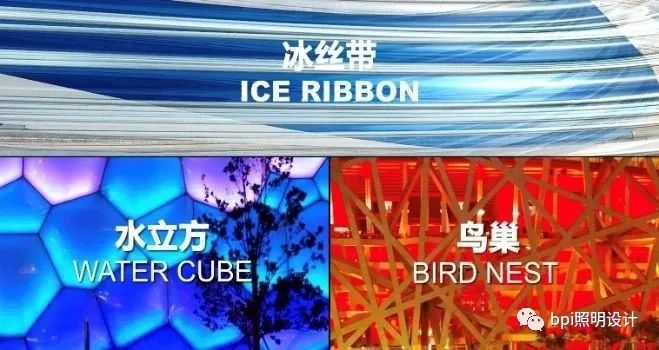
Upon completion, the National Speed Skating Oval, together with the "Bird's Nest" and the "Water Cube", forms the core architecture of the "Dual Olympic" city, becoming an iconic landmark that continues the urban spatial memory and inherits the Olympic cultural heritage.
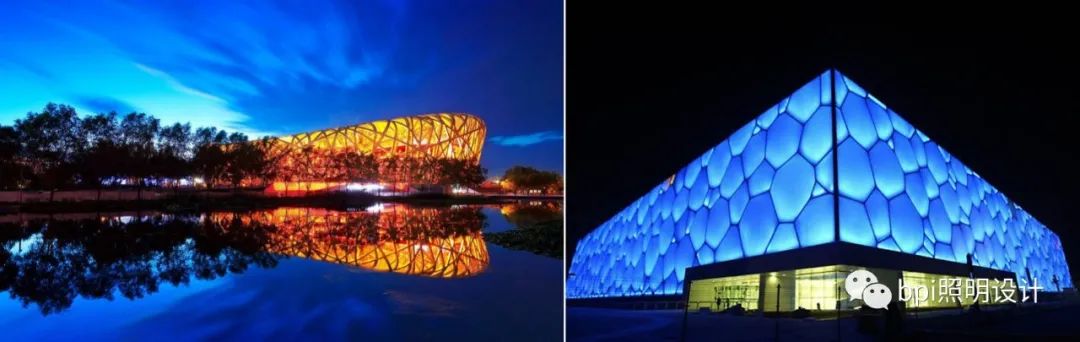
National Stadium "Bird's Nest" & National Aquatics Center "Water Cube" (from the internet)
National Stadium "Bird's Nest" & National Natatorium "Water Cube" (From Internet)
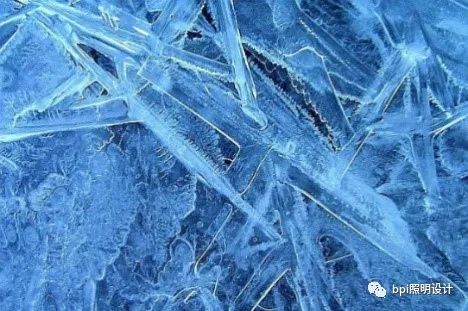
The National Speed Skating Oval takes "ice" and "speed" as its architectural design concepts. The building's facade is encircled by 22 crystal-clear glass tubes, whose rhythmic undulations form the most expressive design language, symbolizing speed and passion and reflecting the theme of speed skating. The design concept represents the perfect combination of the hardness of ice and the smoothness of silk, hence it is also known as the "Ice Ribbon".
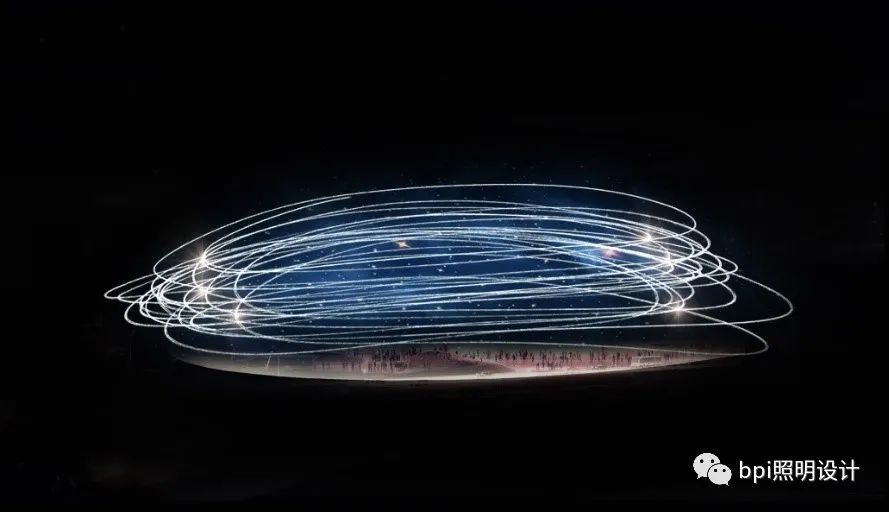
与鸟巢热烈、跃动的气氛以及水立方沉静、流动的气质形成巨大反差的同时,又一脉相承的是建筑照明由内而外散发的场所精神:“冰丝带”追求卓越、不设限的速度之感。
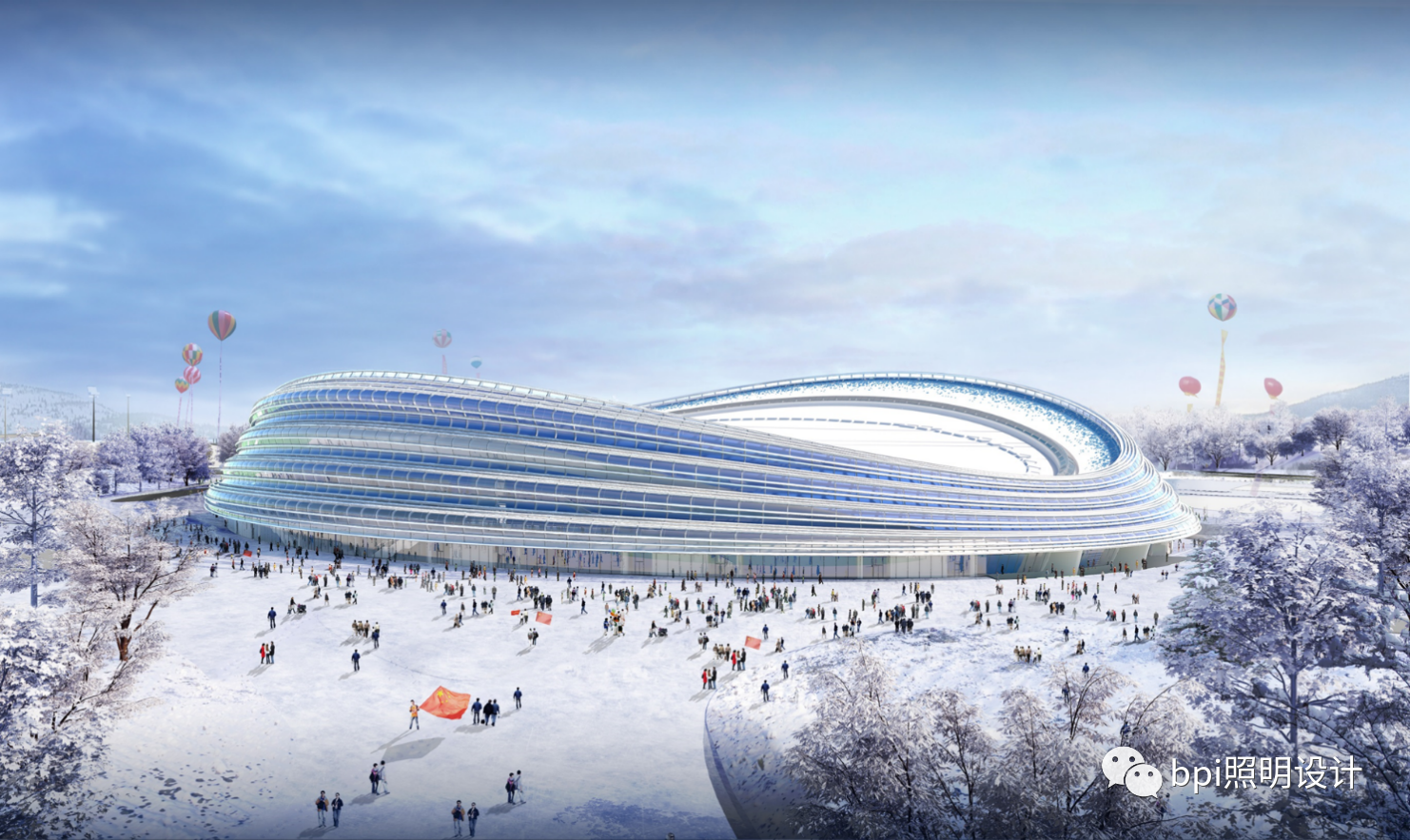
National Speed Skating Hall Architecture Rendering
Seizing the opportunity of the Winter Olympics, the lighting design for the National Speed Skating Oval aims to integrate the core spirit of sportsmanship, infusing the concepts of technological and green lighting into the exterior illumination of this modern sports venue. It is dedicated to creating an imaginative, memorable, and phenomenal work of architectural lighting.
The Speed Skating Oval features a highly transparent curved glass curtain wall and a single-cable-supported grid shell system, creating an overall light and airy appearance. The curved glass curtain wall bends four times along the facade's baseline, forming layered pleats. A total of 22 printed glass tubes with a diameter of 35 cm, known as "Ice Ribbons," are installed on these pleats—densely arranged at the convex points and sparsely at the concave points, creating a rhythmic effect. Through the synergistic action of diagonal curtain wall cables, the cross-section of the vertical mullions is reduced to emphasize the horizontal dimension of the "Ice Ribbons."
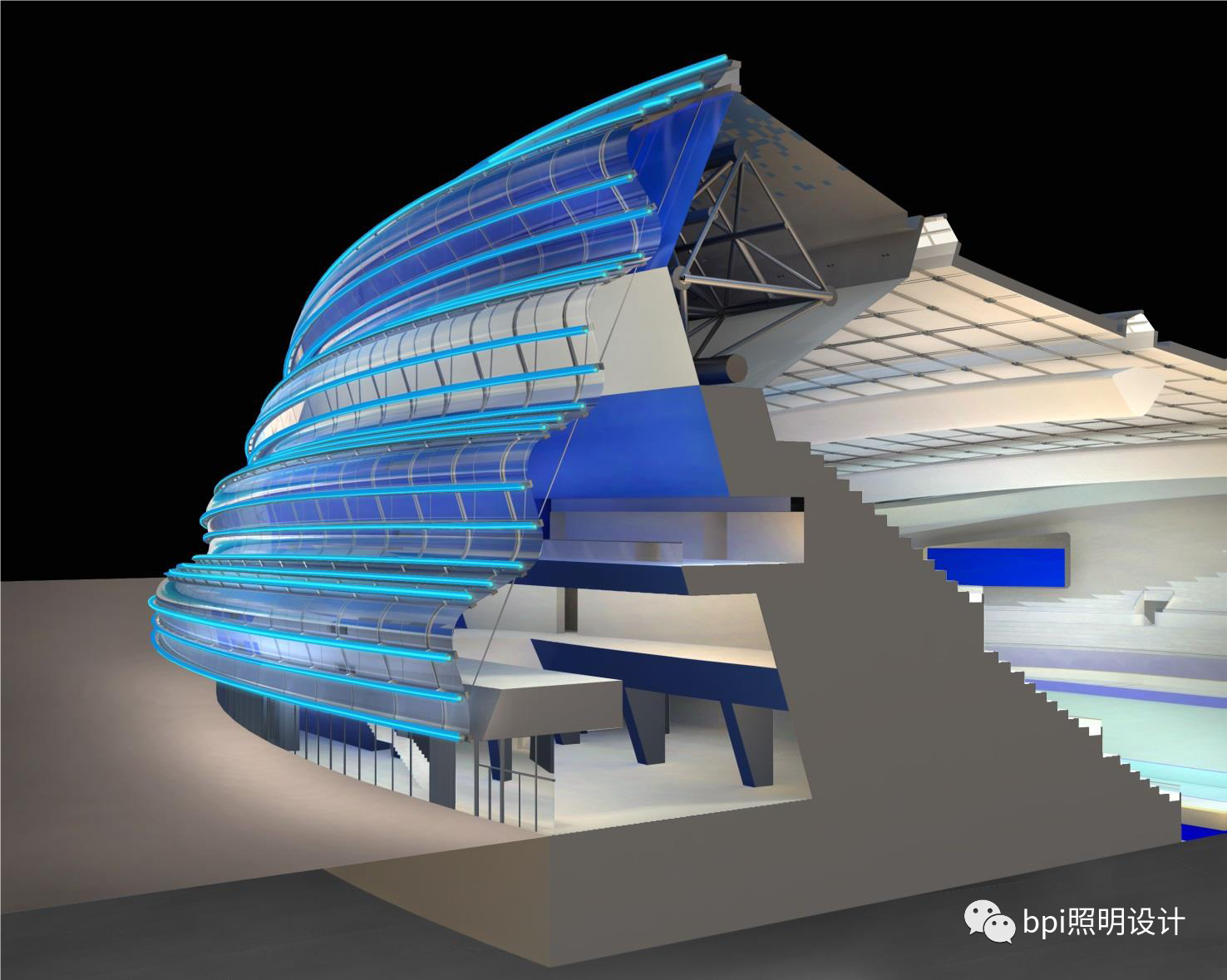
Typical facade and "Ice Ribbon" circular pipe section
半透明的玻璃管与高透明度的曲面玻璃互相映衬,也给予照明设计与建筑设计一体化表达的可能性。建筑整体为椭圆弧线造型,并在南北方向形成长轴低点,以及东西方向形成短轴高点。照明设计需要分别根据建筑在双曲方向上的旋转角度,考虑灯光呈现的方向所形成的视角变化及亮度的关系,同时也需要考虑“冰丝带”亮度和背景亮度之间的合理对比。
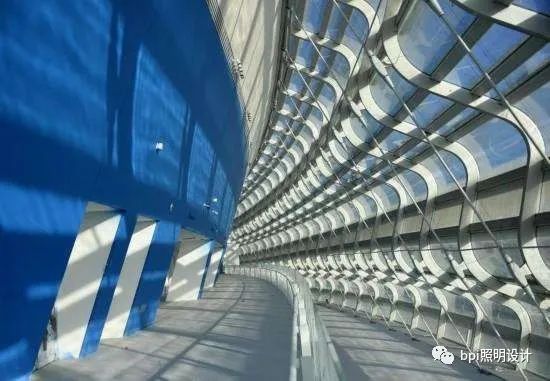
Internal Structure
Along the building's long axis, the arrangement of the glass tubes is gentler, with lighting appearing to project from the top of the tubes toward the ground. Along the short axis, the vertical turns of the glass tubes are more pronounced, with some sections approaching a 90-degree angle, allowing the lighting to be displayed from both sides of the light-transmitting center of the tubes.
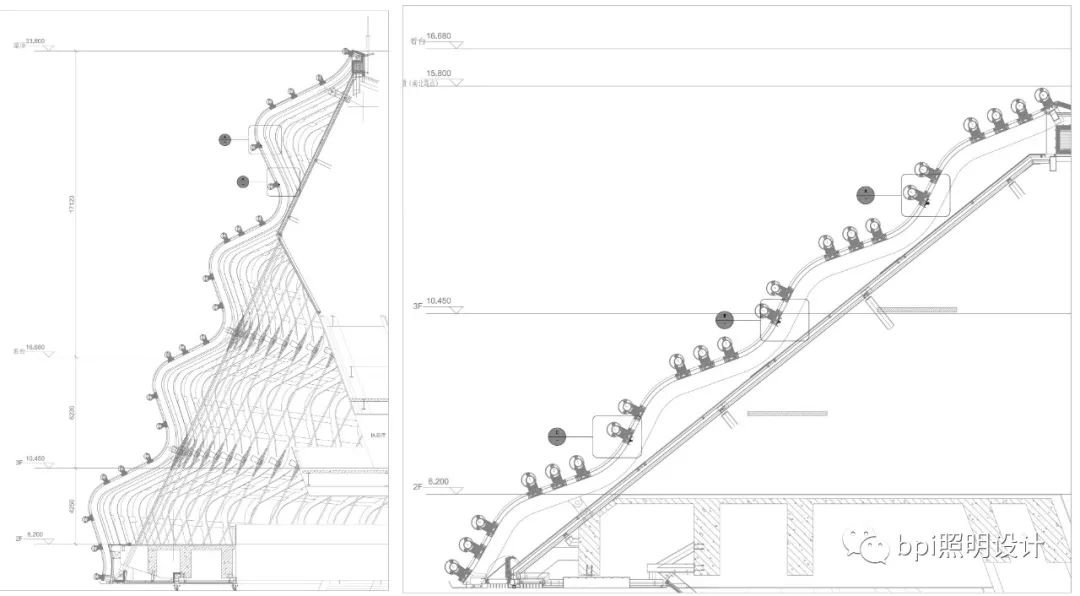
Section along minor axis and major axis
As an important venue for the Beijing Winter Olympics, the "Ice Ribbon" integrates key ice and snow elements into the surface texture design of its glass tubes. The ice-crack pattern, combined with the opacity of the glaze, serves as a perfect medium for lighting. Light undergoes a series of complex transformations within the glass tubes—including shielding, semi-transparency, transparency, and cavity reflection—creating an ideal effect where ice and light blend seamlessly.
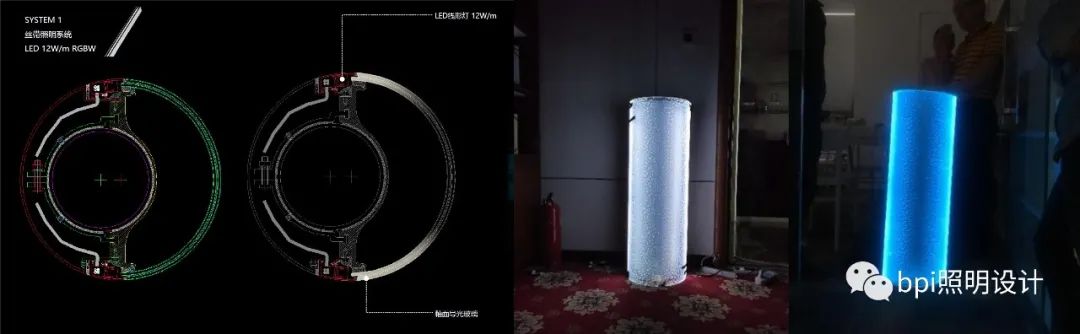
Sample test of glass round tube "ice ribbon"
Twenty-two glass tubes spiral across the facade of the Speed Skating Oval, forming a "Band of Ice Light" with a total length of 27,500 meters. Linear lights are installed along both sides of each glass tube. Each luminaire uses RGBW full-color LED chips to support the diverse display needs during the Winter Olympics and Spring Festival, while deeply expressing the connotations of a high-tech and people-centered Olympic Games.
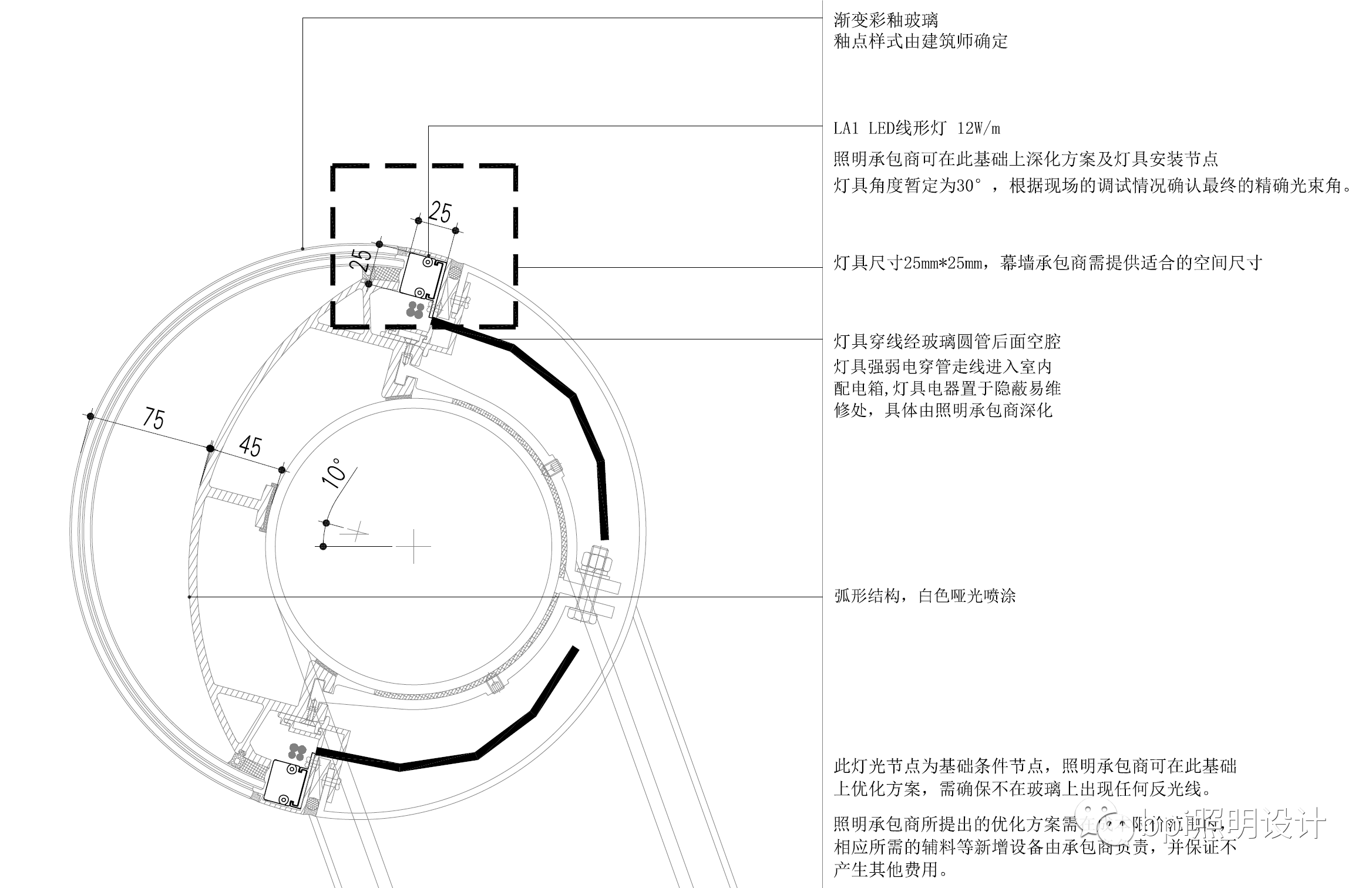
Installation detail of glass round tube luminaire
As a competitive venue with a standard speed skating track, the National Speed Skating Oval has a massive building volume and ample spatial resources. However, following the development trend of modern sports architecture, its double-curved streamlined shape and large-slope glass curtain wall form a ceiling-less cavity space, posing significant challenges for equipment installation and concealment. With 27,500 LED luminaires, each having 8 pixel addresses, and the application of RGBW full-color chips requiring the allocation of 4 color address channels per pixel address, a total of 880,000 address codes are generated.
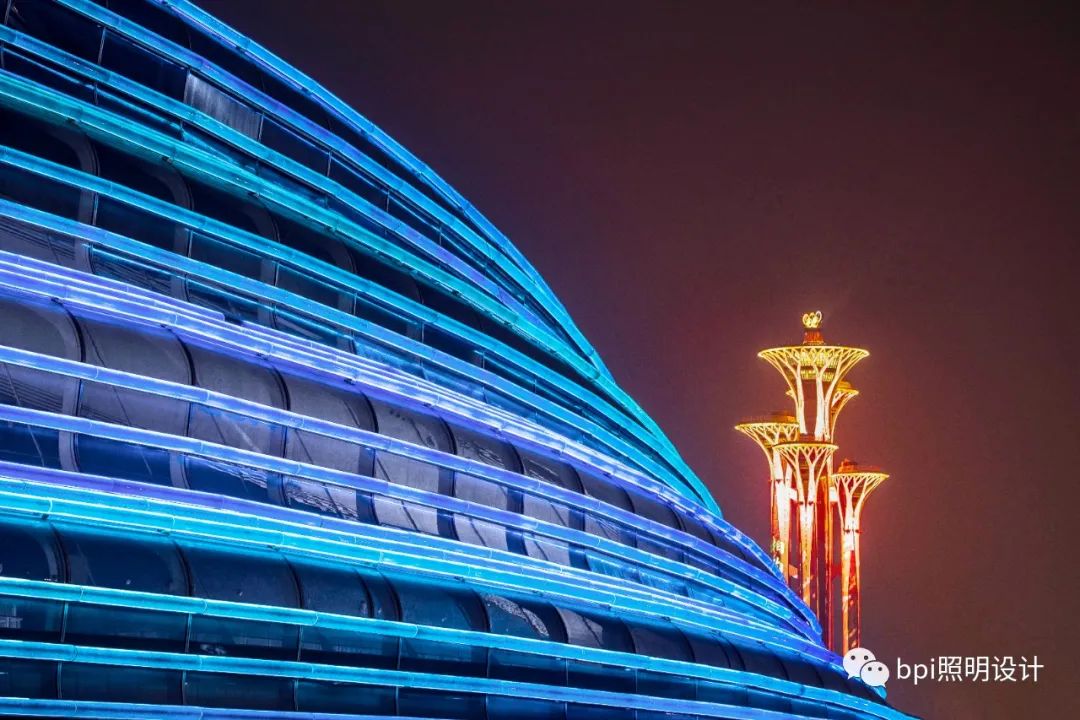
"Ice Ribbon" © Liu Xinghua
By integrating with the S-shaped curtain wall mullion design, over 110,000 distributed control devices were installed along the inner side of the glass curtain wall. This ultimately restored the architectural beauty of the "Ice Ribbon"—pure, pristine, and authentic.
"Ice Ribbon" © Liu Xinghua
Through multidimensional thinking and research, the lighting design of the Speed Skating Oval has achieved an eternal fusion of the "Ice Ribbon", the number "22", and the special year 2022. Twenty-two silky, crystal-clear ice ribbons left the world with a Winter Olympic impression of speed and passion during the Chinese Lunar New Year in the Year of the Tiger.
"Ice Ribbon" © Liu Xinghua