
Overview of the Latest Developments in "Plant Factories" in China, Japan, and the Netherlands
Currently, there are several representative types of "plant factories" worldwide, including precision cultivation factories represented by Japan and large-scale cultivation factories represented by the Netherlands.
Chinese enterprises such as JD.com and COFCO are introducing "plant factory" technologies for experimental cultivation. Through investigation, this report showcases the latest development levels of "plant factories" in China, Japan, and the Netherlands.
The "Chinese Role" in "Plant Factories"
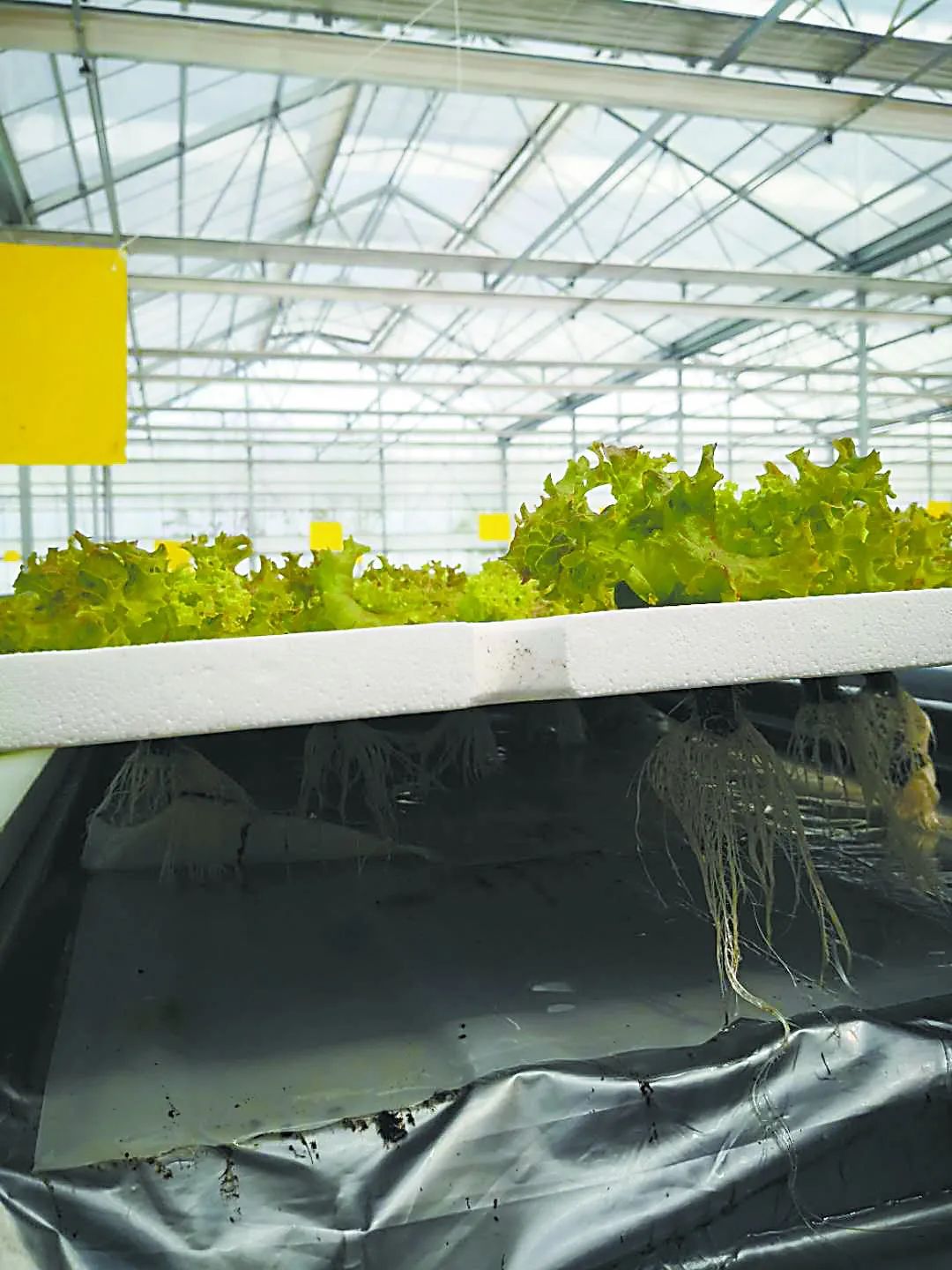
JD.com's "plant factory" in Tongzhou, Beijing is said to be one of the largest in China that combines Japanese technology using both sunlight and artificial light. In this greenhouse covering over 10,000 square meters, you can see how vegetables are grown without soil.
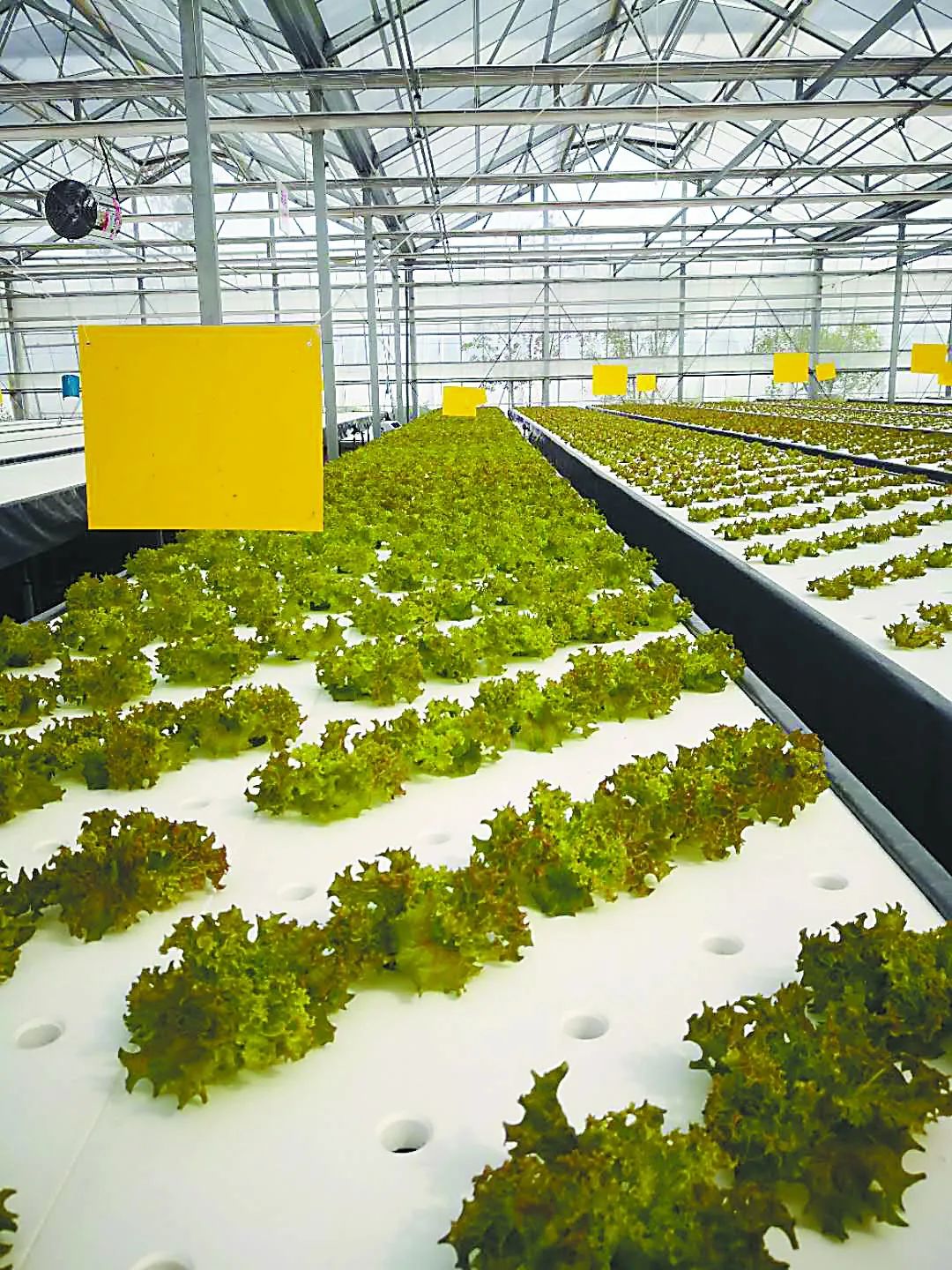
The temperature inside the plant factory is optimal. The vegetables are not grown in soil but are neatly arranged on cultivation beds more than one meter above the ground, with the faint sound of flowing water audible. At first glance, the entire "plant factory" resembles a large laboratory. Lifting the base plate of a lettuce seedling bed reveals a shallow liquid flowing from the top of the bed downward; the well-developed root systems of the lettuce are immersed in this liquid, revealing that the sound of water originates here.
These liquids serve as nutrient solutions for plants, equivalent to "formula milk" for plants. Various nutrients are added to the water according to different plant needs; for example, "since spinach has a higher potassium content, more potassium is added to the nutrient solution." It is reported that the "Plant Factory" adopts Japan's "shallow stream hydroponics" method. This cultivation method allows for controllable nutrient solution temperatures, enables vegetable roots to absorb oxygen effectively, and saves water, achieving a 90% reuse rate of the nutrient solution. Calculations show that approximately one bottle of mineral water is enough to grow one vegetable, with water consumption being only 3% of that in traditional soil cultivation.
In 2018, JD.com introduced "plant factory" related technologies and equipment from Mitsubishi Chemical of Japan, including seeds and nutrient solutions, all sourced from Japan. The biggest advantage of these vegetables is that no pesticides are used. The secret to avoiding pesticide use lies in the "plant factory" isolating pathogens through "soilless cultivation."
JD.com has also introduced core technologies from Mitsubishi of Japan, including seedling boxes. Through the small glass windows on the seedling boxes, you can see rows of multi-tiered racks filled with newly sprouted seedlings. The seedling boxes allow adjustment of light intensity, carbon dioxide concentration, temperature, and humidity. A batch of seedlings can be produced in 8 to 10 days, reducing the traditional seedling cycle by more than half. After leaving the seedling boxes, these seedlings are planted on cultivation beds. After 20 to 30 days of growth, one harvest can be collected. Taking lettuce as an example, 12 to 14 harvests can be achieved per year, compared to approximately 3 to 4 harvests per year for open-field cultivation.
Currently, all vegetable seeds for JD.com's "Plant Factory" are sourced from Japan. JD.com is also conducting breeding experiments with domestic research institutes to prepare for the use of domestically produced seeds. In terms of breeding direction, Japan is more advanced than China; Japanese breeding has moved beyond the stage of pursuing basic sustenance and focuses more on taste and flavor. Most breeding in China still prioritizes yield, but there is a high-end consumer segment that values taste, and the vegetables from the "Plant Factory" target this group.
Lettuce from "plant factories" is indeed more tender and crisp than ordinary lettuce on the market. During the pandemic, vegetables from "plant factories" were in short supply. In terms of price, ordinary organic lettuce on the market sells for about 6 yuan per 200g, while "plant factory" lettuce costs around 7.5 yuan. Consumers can place orders on the JD.com app in the morning and receive their produce as early as the afternoon.
For "plant factories," domestic hardware and software technology levels have reached self-sufficiency, with no "chokehold" bottlenecks. However, achieving higher system control precision and longer equipment lifespan, as seen in the Netherlands and Japan, is not yet possible domestically. "It is like chips: we cannot achieve high-end precision, but can meet basic needs." Furthermore, there is still a certain gap between China and developed countries such as the Netherlands and Japan in the breeding sector.
Dutch "Plant Factory" Offers Customized Solutions
"Dutch agriculture enters the 4.0 era!" Germany's Wirtschaftswoche reported that last year, the export of Dutch agricultural products such as fruits and vegetables hit a new record. Amid the prominent global food crisis, Dutch "plant factories" have gradually entered the stage of mass production and regular supply.
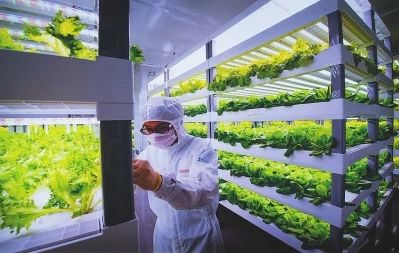
One such example is the GROWx "plant factory" located in a business park southeast of Amsterdam. From the outside, this "plant factory" looks much like any ordinary company. Step inside, however, and you'll find it differs significantly from a glass greenhouse: the space is more enclosed, with an added star player—the grow light.
Visitors entering the planting area must wear blue work uniforms and protective caps. This "plant factory" mainly cultivates spinach, lettuce, kale, and other crops. Although the facility covers an area of 2,000 square meters, it features multiple vertical growing layers, making the actual usable area three to four times the footprint.
In addition to climate chamber control technologies such as temperature, humidity, and ventilation, the most important element is the LED plant growth lights that emit purple light. It is understood that these growth lights are provided by a professional Dutch LED plant growth light manufacturer and can be adjusted according to different plants and growth cycles, allowing vegetables to grow faster and better, and even influencing their taste.
"Plant factories" can avoid the impact of weather changes, and the controllable environment enables crops to achieve high quality and high yield. This stability also allows us to "customize products" according to the needs of retailers and even end customers. You can place orders for "seasonal vegetables" at any time, and we guarantee on-time delivery.
However, "plant factories" also have disadvantages. The main one is the high cost: building the climate-controlled rooms required for a "plant factory" costs about three times as much as a glass greenhouse of the same area, and the LED grow lights that operate 24 hours a day are equally expensive. Compared with traditional agriculture, the upfront investment and operating expenses are several times higher. Secondly, "plant factories" place higher demands on farmers, who must not only know how to cultivate crops but also possess extensive knowledge of botany and environmental science. Due to the various high costs, the prices of the fruits and vegetables grown are several times those of similar products on the market.
However, GROWx is confident about the future prospects. Food shortages have become a global issue, especially in large cities, and "plant factories" are particularly well-suited for urban environments. Currently, many Dutch food companies, large supermarkets, startups, and others are also participating in the construction of "plant factories".
The rise of "plant factories" is inseparable from the drive of many leading Dutch companies, covering numerous stages including climate room construction, seed breeding, fertilization, and lighting. The Netherlands is also home to Wageningen University & Research, the world's top-ranked agricultural university. "Plant factory" projects have also received support from the Dutch government, which aims to establish a nationwide "plant factory" network. In the future, their products will gradually enter ordinary households and expand into Europe and other regions.
"Plant factory" products have entered ordinary Japanese households
In Japan, the "plant factory" is no longer a cutting-edge concept but a tangible part of daily life. In Japanese supermarkets, you can frequently find products from the brand "Vegetus": square, transparent bags containing fresh vegetables that require no washing and are ready for salads or sandwiches. All of these are soilless-grown, sharing the same origin—the "plant factory."
Japanese convenience store chain FamilyMart has partnered with Vitec Vegetable Factory Co., Ltd. to sell sandwiches made with "plant factory" vegetables in over 16,000 stores nationwide. Tech giants such as Tokyo Electric Power Company Holdings, Fujitsu, Panasonic, and Sharp are actively participating in the construction of "plant factories," and even individuals are increasingly viewing "plant factories" as a top investment choice.
Japan first saw the rise of "plant factories" in the 1970s and 1980s. At that time, domestic industry was upgrading, leading to the elimination of large amounts of factory equipment. Meanwhile, Japan's aging population resulted in a declining number of farmers. The Japanese government introduced policies encouraging factories to repurpose obsolete equipment for agricultural use. Consequently, many scientists began researching artificial lighting. To this day, Japan remains a global leader in artificial lighting for "plant factories".
According to a report by Nikkei, Japan is one of the countries with a relatively large number of plant factories worldwide. The Japan Facility Horticulture Association (Chuo Ward, Tokyo) stated that as of February this year, there were 386 "plant factories" in Japan. However, statistics show that many "plant factories" are facing losses due to reasons such as equipment oversupply and companies underestimating the challenges of developing sales channels.
In an interview, Makari Fujimoto, Representative Director of the General Incorporated Association Innoplex, stated that the equipment cost for establishing a "plant factory" is approximately 60 to 70 million yen (100 yen is approximately equivalent to 6.4 RMB). To mitigate the impact of external temperatures, it is necessary to add insulation layers and install air conditioning systems in the building, costing around 20 to 30 million yen. Therefore, the total investment required is between 80 million and 100 million yen. He informed reporters that standard factory buildings or warehouses are suitable, provided the ceiling height is between 2.5 and 3 meters and the area ranges from 600 to 700 square meters.
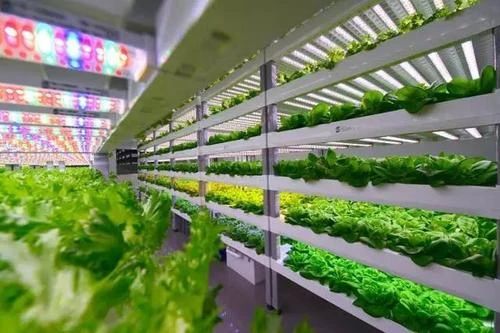
Reports indicate that in recent years, as technologies for reducing water, electricity, heating, and labor costs, along with cultivation knowledge, have continued to accumulate, the scale of "plant factories" has grown larger. The price of energy-efficient Light-emitting diode (LED) lighting has also become increasingly affordable, and "profits are beginning to show promise." Japan is the country with the fastest development of LED lighting globally. In 2014, two Japanese scientists and one Japanese-American scientist were awarded the Nobel Prize for their work on blue LEDs. Since 2017, more than 95% of newly built "plant factories" in Japan have adopted LED technology.
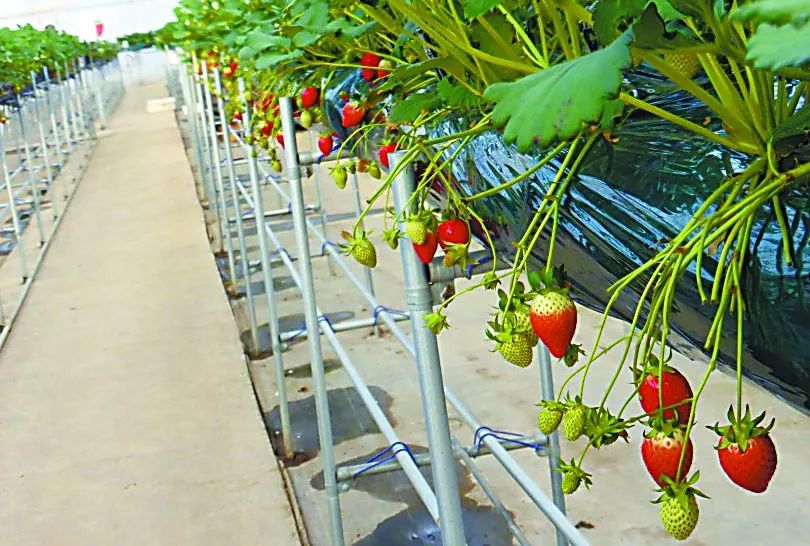
In addition to requiring substantial startup capital, the equipment technology for Japanese "plant factories" is not yet mature. Currently, over 90% of production in Japanese "plant factories" consists of leafy vegetables such as lettuce. It is difficult to achieve mass production of fruit vegetables like tomatoes or root crops like potatoes in "plant factories," because lighting is required not only from above but also from the sides. At present, research laboratories at Chiba University in Japan are still experimenting with the stable production of strawberries in "plant factories." Although strawberries are a type of fruit, their vines grow horizontally rather than vertically, making it easier for them to receive light evenly. Currently, strawberries used for cake production in Japan are imported from overseas. Once the cultivation technology for "plant factory" strawberries matures, there will be significant market potential.