
Seoul Semiconductor's SunLike technology receives the world's first UL Market Claim Verification certificate for lighting light quality
On November 6, 2021, during the 4th China International Import Expo, UL awarded Seoul Semiconductor Co., Ltd. (hereinafter referred to as "Seoul Semiconductor") the world's first UL Market Claim Verification Certificate for lighting light quality for its SunLike technology. At the same time, a signing ceremony for the framework agreement on in-depth cooperation between Seoul Semiconductor and UL in SunLike, UV, and horticultural lighting was held at the expo site.
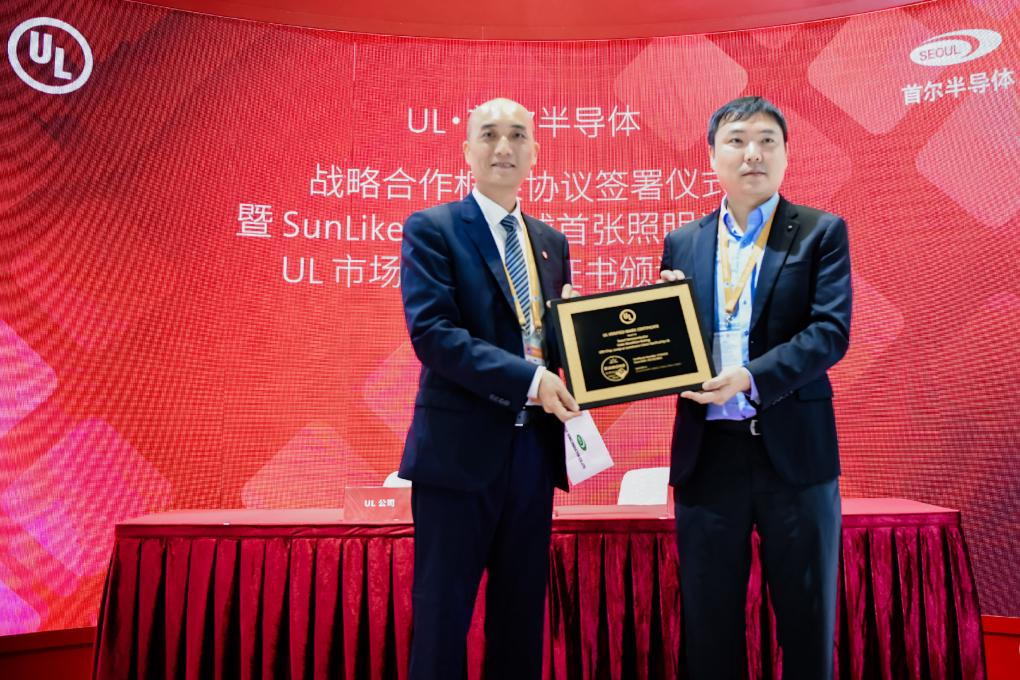
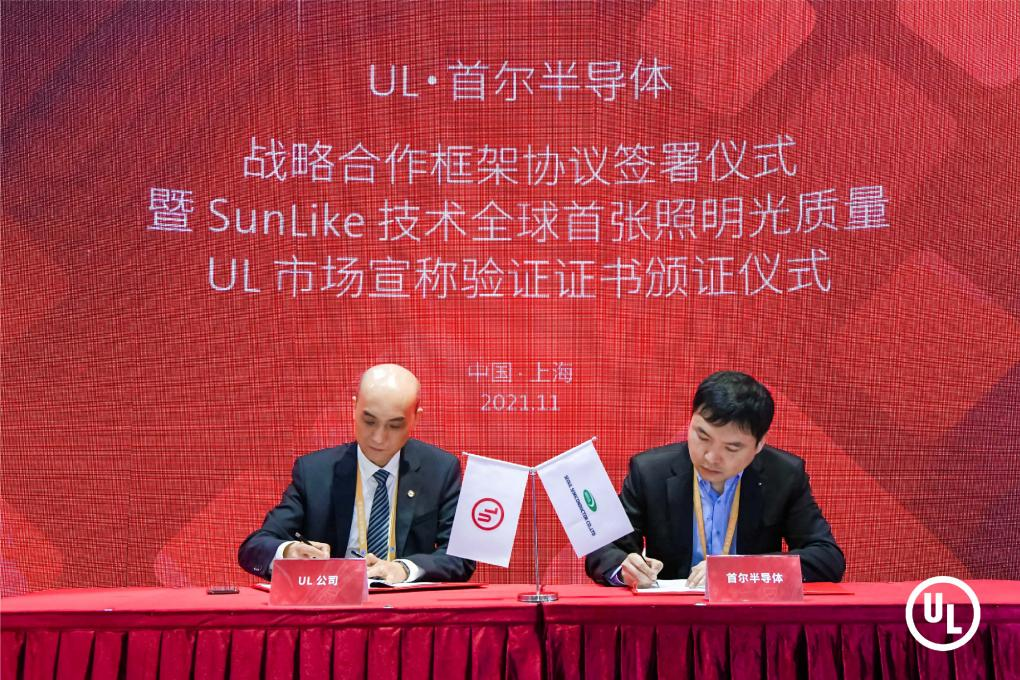
Left: Jingqi Kang, Vice President of UL Global and General Manager of the Home Appliances, HVAC, and Lighting Division; Right: JONG KOOK Lee, Chief Technology Officer of the Lighting Business Unit at Seoul Semiconductor
What does the world's first UL market claim verification certificate for lighting light quality mean?
SunLike technology is an advanced LED technology developed by Seoul Semiconductor for Human centric lighting (HCL). It aims to provide light close to the solar spectrum, offering lighting beneficial to the human body. It achieves industry-leading LED light quality, including regulating the circadian rhythm and providing high color rendering and highly saturated colors, opening the door to Human centric lighting (HCL).
As a scientifically rigorous and impartial third-party testing and certification organization, UL enjoys high credibility worldwide. It helps customers promote new products in the global market and win consumer trust. UL Marketing Claim Verification is a new service launched by UL in recent years, covering comfort, health, energy efficiency, reliability, intelligence, sustainability, hygiene, and more. It aims to help customers gain a competitive edge in product promotion.
Seoul Semiconductor has been awarded the world's first UL Market Claim Verification certificate for lighting light quality based on SunLike technology, which will significantly boost its global market promotion and brand influence.
Mr. Wu Sen, Vice President of Sales and Marketing at Seoul Semiconductor, said in an interview:
"SunLike was launched to the market in June 2017. Since this technology was exhibited at the Frankfurt trade fair in March 2018, it has received very positive market feedback and won numerous awards from both academic institutions and media outlets domestically and internationally. However, this is the first time we have received a certificate issued by an internationally authoritative verification body, which holds a different significance from the awards and achievements we have previously obtained. This also proves that the industry places greater emphasis on Human centric lighting (HCL), future non-visual lighting, and the interactive impact of light on humans. I believe this will guide more lighting manufacturers to consider this issue, and the entire industry will move towards healthy development."
Keeping pace with the times, UL provides services that further drive innovation
It is not just about Human Centric Lighting (HCL) technology; the lighting industry is expanding into more specialized areas, including Smart lighting, Healthy lighting, Horticultural lighting, and UVC for disinfection and sterilization. In response, UL is keeping pace with the times by promptly issuing standards to guide the market.
Kang Jingqi, UL Global Vice President and General Manager of the Home Appliances, HVAC, and Lighting Division, illustrated this with examples from UV sterilization and horticultural lighting.
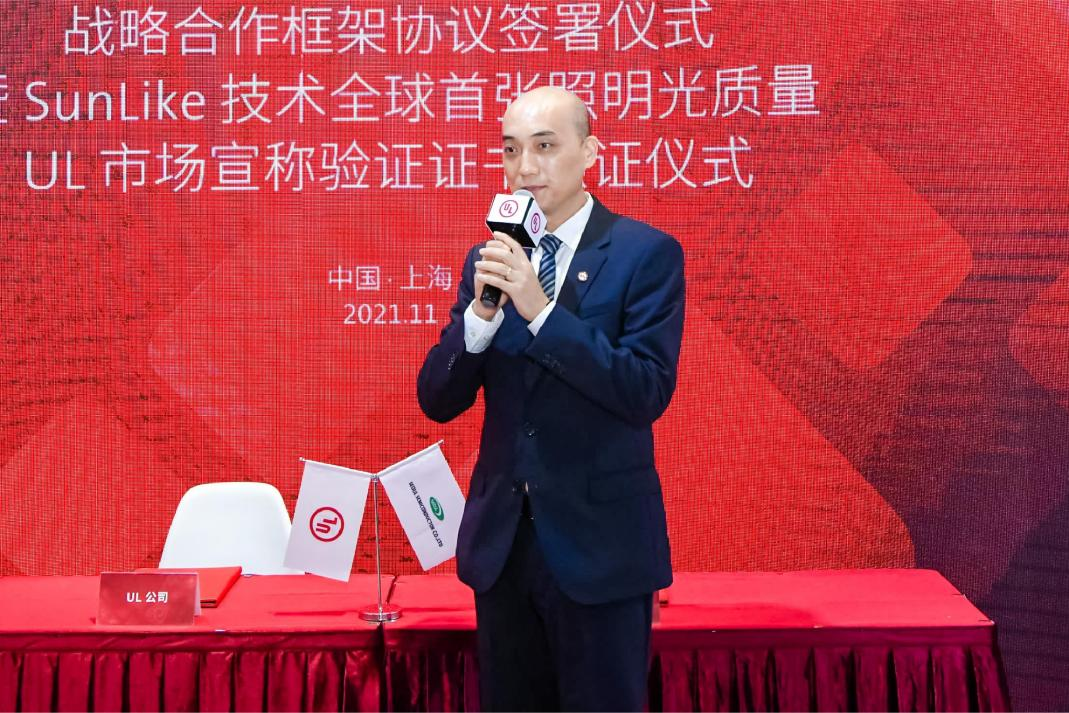
Image: Kang Jingqi, Global Vice President of UL and General Manager of the Home Appliances, HVAC, and Lighting Division
UVC Sterilization Product Standards
UL has completed its research on ultraviolet light and, against the backdrop of the COVID-19 pandemic, introduced two new standards: UL 8802 and UL 8803, which are specifically designed for UVC disinfection products. In this process, UL collaborated with major research institutions and industry experts such as Seoul Viosys. UL is also keen to work with industry peers to further deepen this research and subsequently develop corresponding standards.
Horticultural lighting product standards
Horticultural lighting differs significantly from traditional lighting in technical parameters. Horticultural lighting products emphasize spectrum formulation, high luminous efficacy, and high PPE/PPFD. Moreover, the light requirements of different plants vary greatly across different growth stages, involving aspects such as the ratio of red to white light and the addition of UV or green light. Currently, there is a lack of unified industry standards.
Kang Jingqi said:
Horticultural lighting involves different plants, and different plants prefer different spectra. Even for the same plant, the spectrum required varies throughout the day and across different stages of its life cycle. There are three dimensions of requirements here. What kind of support is needed for different plants? Scientists, including those in agricultural research, are developing light recipes in this area, which is critical in horticultural lighting. Therefore, horticultural lighting is not just about illumination; it also involves factors such as humidity, temperature, air flow, and pollen pollination. Currently, UL has launched a system-level certification or standard for horticultural lighting systems. We are actively working to establish and launch system-level standards for plant factories that cover lighting and other aspects, based on the overall needs of plant factories.
Some horticultural lighting incorporates UV, and also involves PPE-related aspects such as blue light that may cause harm to the human body. How to control these risks is also a consideration for UL.
For horticultural lighting, the first aspect is to promote photosynthesis in plants. This photosynthetic process corresponds to an absorption range of chlorophyll, primarily from 450 nm to 650 nm. This is a matter of spectrum and is extremely important. Some new studies suggest that, in addition to red and blue light, green light also has a certain impact on plant photosynthesis. Moreover, UVA and UVB are increasingly being incorporated; UVA plays a role in plant growth, while UVB affects plant morphology, aroma, as well as the composition and concentration of substances within the plant. This demonstrates the influence of the spectrum, which can be said to be very important.
The second part is PPE, Photosynthetic Photon Efficacy. PPE places very high demands on device manufacturers, as its structure and combination methods have already determined the light extraction efficiency. For upstream manufacturers, such as chip manufacturers and UV packaging manufacturers, improving PPE is a very important task.
In summary, Spectrum and PPE are currently challenges for device manufacturers, as well as key parameters and factors driving the entire Horticultural lighting industry.
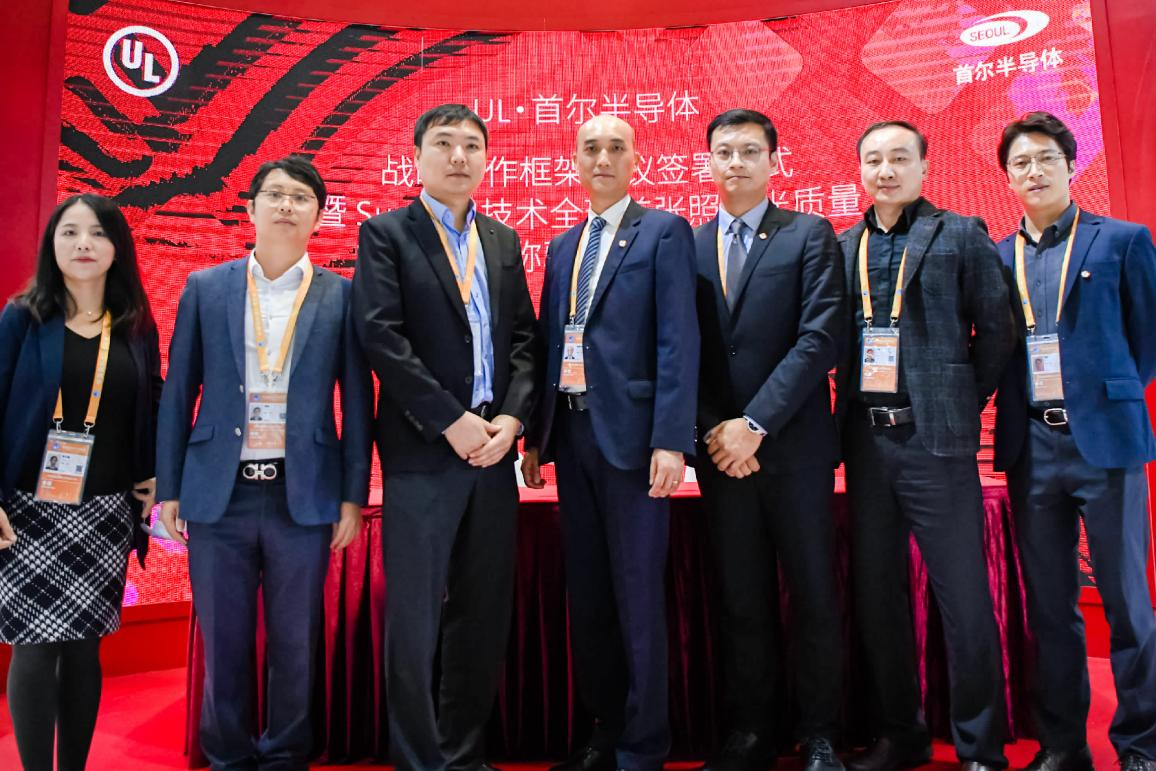
当前,整个市场呈现机遇与挑战共存的状态。对于合作伙伴来说,认证的速度、服务,包括一些新兴产品的标准出台都非常关键。所以UL不仅仅要成为全球准入的合作伙伴,也在努力提升服务品质和服务速度,以及在一些新兴领域的拓展,助力客户通过UL的市场宣称验证服务让产品形成差异化,提升竞争力。
UL will continue to deepen its presence in the Chinese market, increase investment in China, including laboratories, personnel, and standards developed jointly with local partners.