
Forging Ahead Through Adversity—China's Lighting Industry Export Performance in the First Three Quarters of 2021
Author/Wen Qidong
China Association of Lighting Industry(中国照明电器协会)
I. Overview
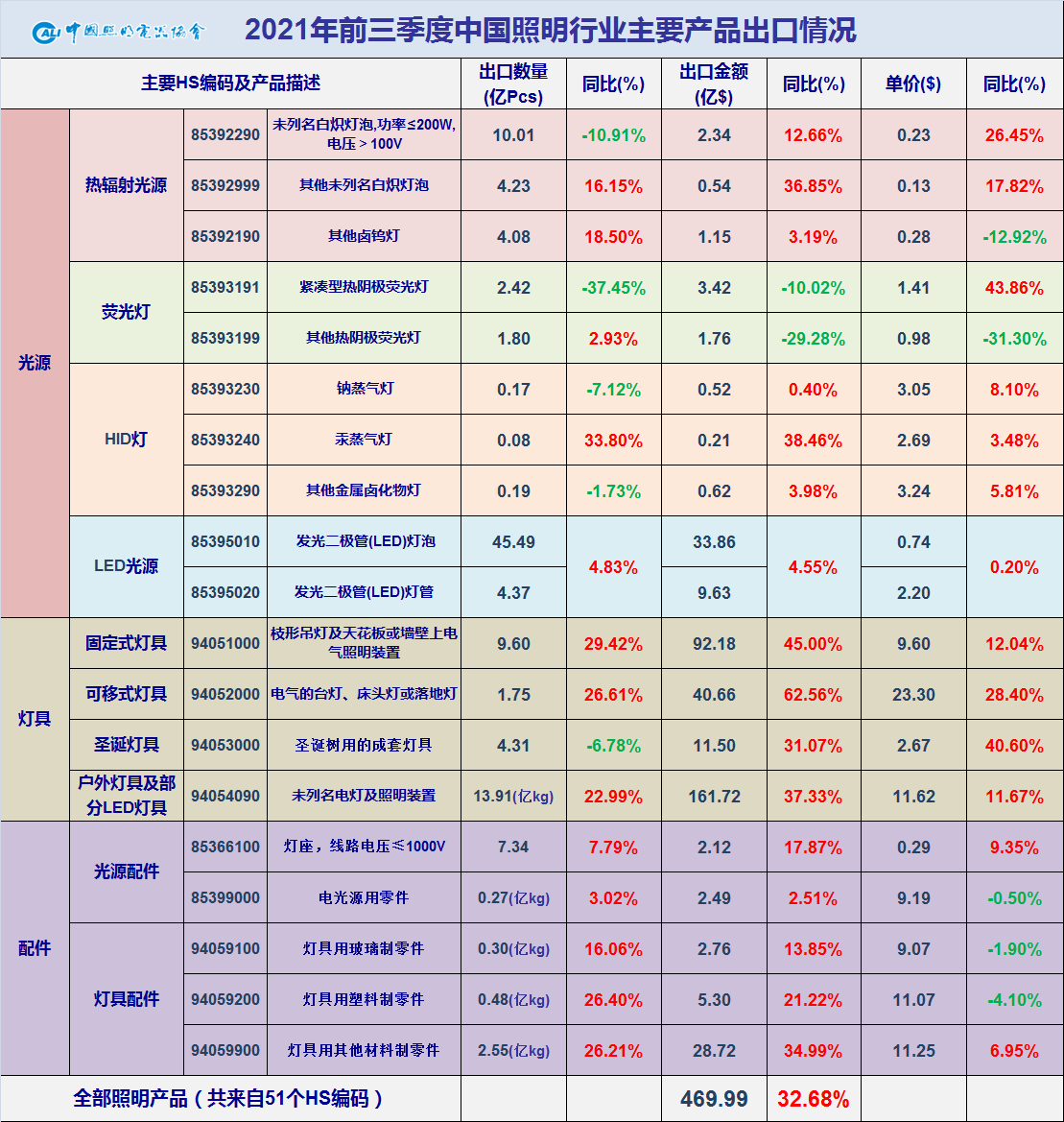
Note: On December 31, 2020, the Tariff Commission of the State Council released the "Import and Export Tariff of the People's Republic of China (2021)". The original 8-digit HS code 85395000 for "Light-emitting diode (LED) bulbs (tubes)" was deleted, and two new 8-digit HS codes were added: 85395010 for "Light-emitting diode (LED) bulbs" and 85395020 for "Light-emitting diode (LED) tubes". This adjustment originated from suggestions submitted by the China Association of Lighting Industry(中国照明电器协会) to relevant departments regarding adjustments to import and export tariff items in the lighting industry, among which the suggestion to separately list HS codes for the aforementioned LED light source products was adopted.
In September 2021, China's lighting product exports reached USD 6.134 billion, the second-highest monthly figure on record, surpassed only by last December. Among these, LED lighting product exports amounted to USD 4.305 billion, with Year-on-year (YoY) growth rates of 19.96% and 24.99%, respectively.
In the third quarter of 2021, China's lighting product Export value reached USD 17.918 billion, with LED lighting product Exports at USD 12.816 billion, representing Year-on-year (YoY) growth of 11.88% and 17.09% respectively, both setting new historical records for Q3 Exports in the lighting industry.
In the first three quarters of 2021, China's total export value of lighting products reached USD 46.999 billion, a year-on-year (YoY) increase of 32.68%, up 40.24% compared to the same period in 2019, with an average annual growth rate of 11.93% over the two years. Among them, the export value of LED lighting products was USD 33.804 billion, a year-on-year (YoY) increase of 35.98%, up 44.51% compared to the same period in 2019, with an average annual growth rate of 13.06% over the two years. The high growth of various luminaire products was the main driving force.
另据海关总署数据显示,2021年前三季度,我国货物贸易出口总值达15.5万亿元人民币,同比增长22.7%,以美元计则达到2.4万亿美元,同比增长达33.0%;其中机电产品9.15万亿元,占出口总值的58.8%,同比增长达23.0%。自去年6月起首度扭负为正之后,照明行业出口表现已连续16个月领先于外贸大盘,为提振整体出口做出了贡献。
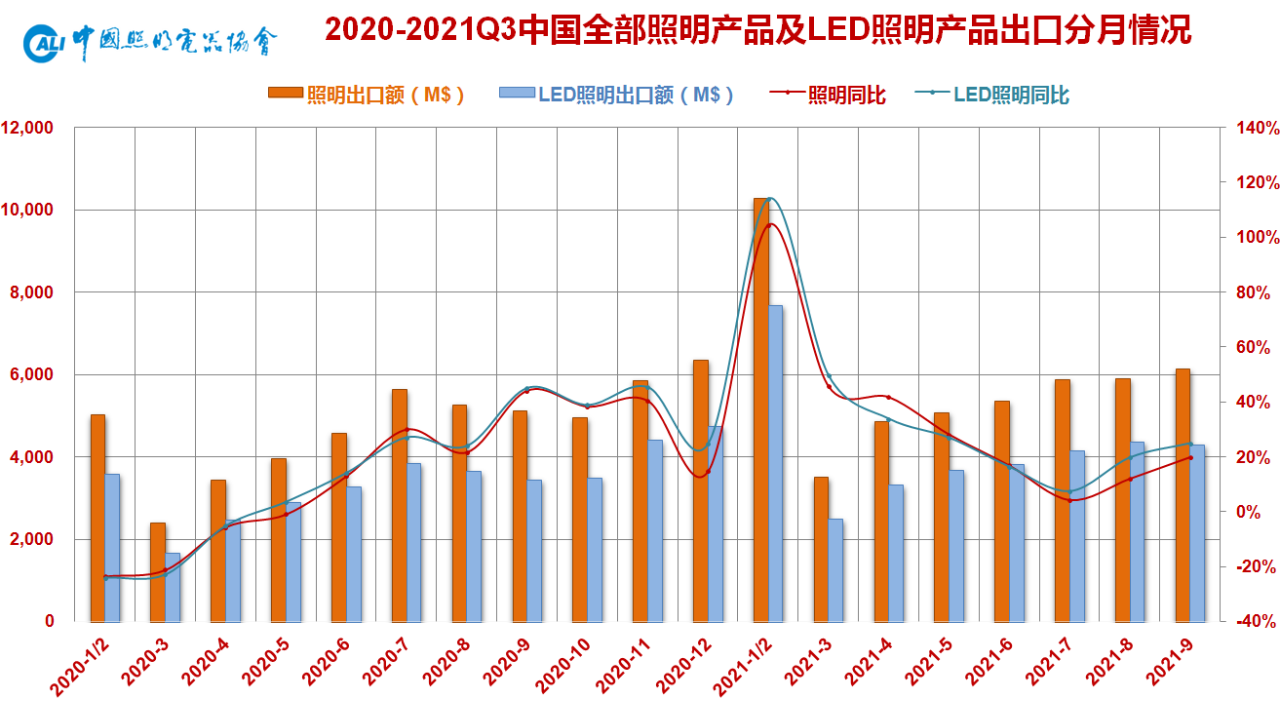
After experiencing a "V"-shaped reversal in 2020, with an initial decline followed by a recovery, China's lighting product exports maintained strong momentum in 2021. Compared to the ultra-high growth in the first quarter, the second quarter showed a clear month-by-month narrowing of growth rates, while the third quarter saw a rebound in momentum. This trend is related to changes in the base comparison from the previous year and is also influenced by the recurring overseas pandemic.
II. Analysis
The reasons for the continued growth in lighting exports in the first three quarters of 2021 are:
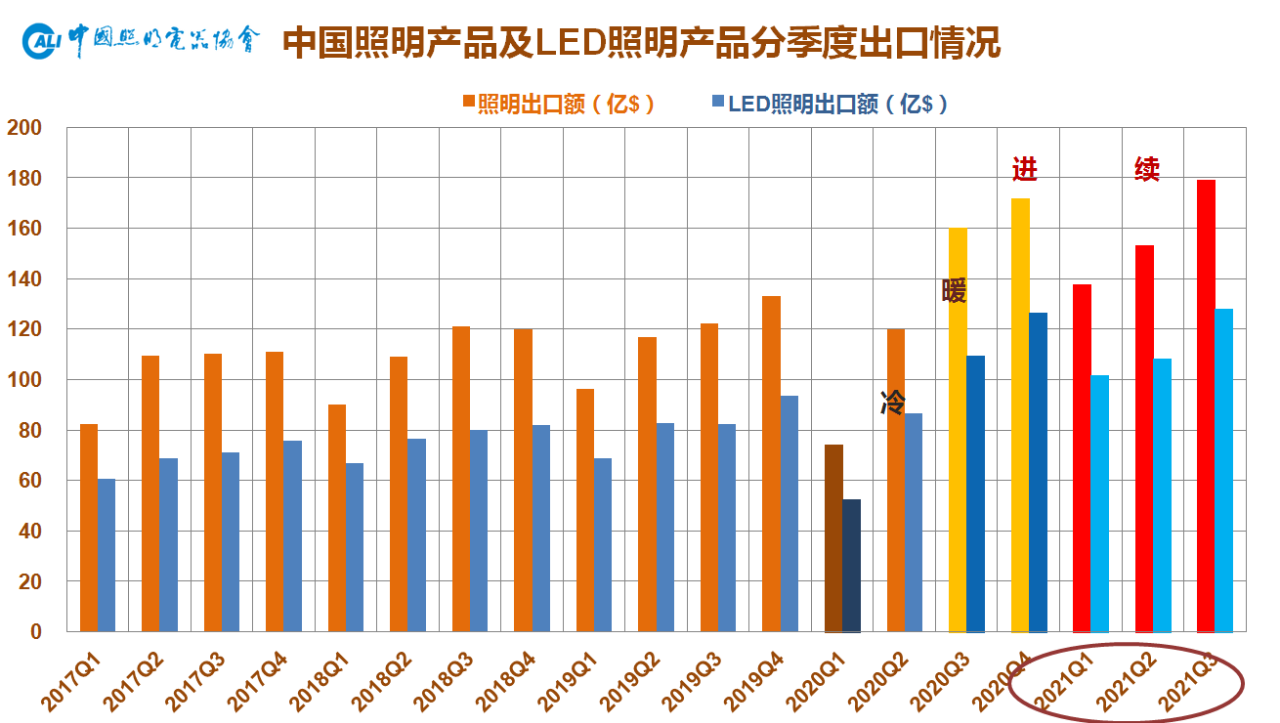
1. The low comparison base from the same period last year, especially in Q1. In Q1 last year, due to the outbreak of the domestic epidemic, manufacturing production capacity and supply chains were severely hindered, making delivery difficult and causing exports to hit rock bottom; this year, the situation has changed dramatically;
2、外需边际持续改善。各主要经济体疫情虽然未得到有效控制,但在疫苗的逐步推广作用下,纷纷承压重启经济,对中国照明出口来说外需边际得到持续改善,同时在诸国货币宽松政策的刺激下,需求端恢复依然强于供给端,消费需求持续释放;
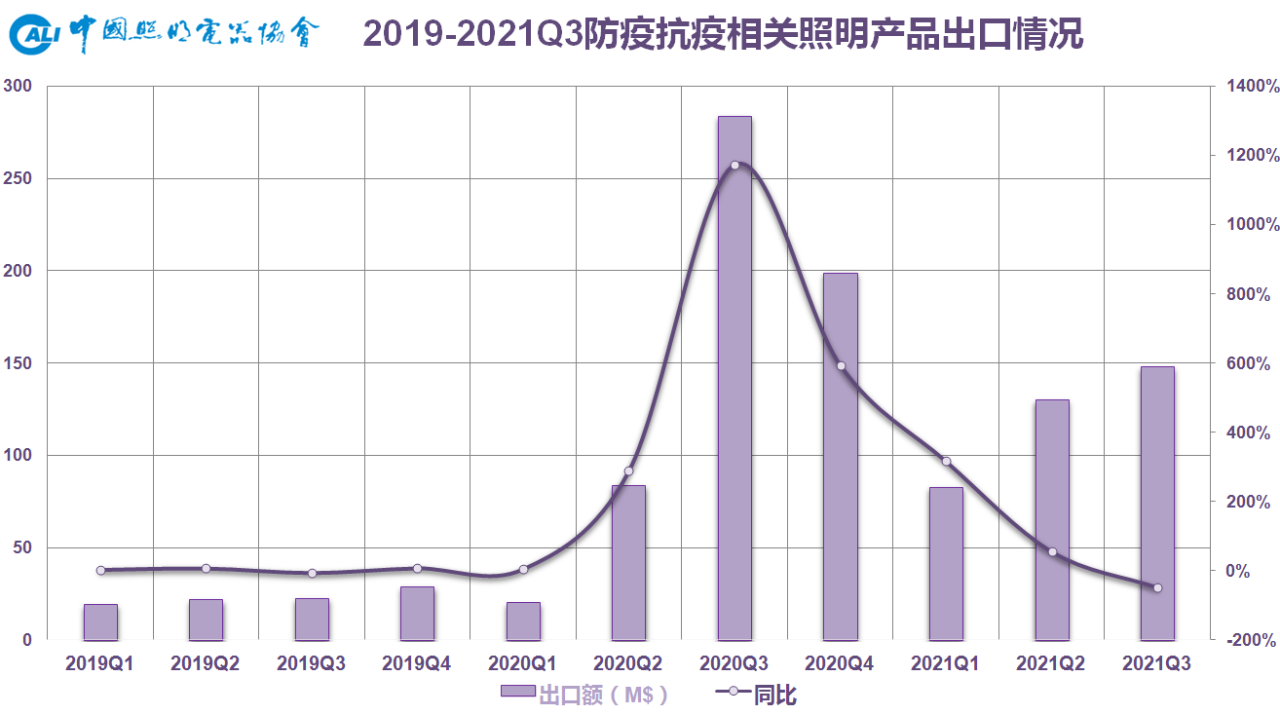
3. Exports of products related to epidemic prevention and control and the stay-at-home economy remain at a relatively high level. However, it is worth noting that exports of epidemic-related lighting products such as scientific research and medical lamps and UV lamps, as well as horticultural lighting products related to the stay-at-home economy, have declined compared to the same period last year. Currently, signs of narrowing growth in these products have emerged, weakening their boost to overall export growth.
4. Advance ordering on the demand side. Many overseas customers, anticipating temporary supply-demand imbalances in the upstream industry / supply chain that lead to "chip and material shortages," generally place orders early and in excess to secure production capacity and materials from Chinese suppliers;
5. Significant cost increases have driven up end-product prices. Although the pass-through of price increases from upstream to downstream exhibits a certain time lag and diminishes at each stage, the sharp rise in raw material and component costs caused by the surge in commodity prices since the fourth quarter of last year, along with skyrocketing ocean freight rates, has substantially pushed up end-product prices.
6. Changes in product structure. Consistent with the development trends of the lighting industry in recent years, the growth of light source products has hit a ceiling, and their proportion of total exports has declined year by year. As this decreases, the share of integrated luminaires with higher unit prices continues to increase, further boosting the overall export value.
7. The "substitution and transfer effect" of China on the global market is still ongoing. This remains the main reason for the continued growth in exports. Starting from the second quarter of last year, as one of the few major economies that fully contained the pandemic, China resumed work and production first. The rapidly recovering Chinese manufacturing sector further highlighted the advantages of being a lighting manufacturing center and supply chain hub, effectively filling the global supply gap caused by the pandemic and replacing other countries' export shares for a certain period. Given that the pandemic continues to surge globally this year, the resumption of work and production in relevant industrial countries remains intermittent, and a full recovery of supply is still far off; therefore, this substitution and transfer effect persists.
Three Challenges
While fundamentals remain positive, the pandemic has triggered excess liquidity due to global monetary easing on one hand, and severely weakened end-user purchasing power on the other. This has led to upstream cost inflation and downstream market deflation, resulting in a situation where, despite robust overall data, many export enterprises face "orders without profits".
Multiple factors currently affecting lighting exports include: sharp increases in raw material prices, chip shortages, soaring freight costs, exchange rate fluctuations, and power rationing. The root cause lies in the impact of the COVID-19 pandemic on global supply chains, characterized by its rapid outbreak, wide reach, long duration, difficulty in control, and profound influence.
01 Raw Materials and Chips
Fluctuations in upstream raw material prices are inherently cyclical events driven by commodities. However, the sudden intervention of the pandemic amplified their impact, completely disrupting production schedules and decision-making logic, leading to phased and structural supply-demand imbalances since the fourth quarter of last year.
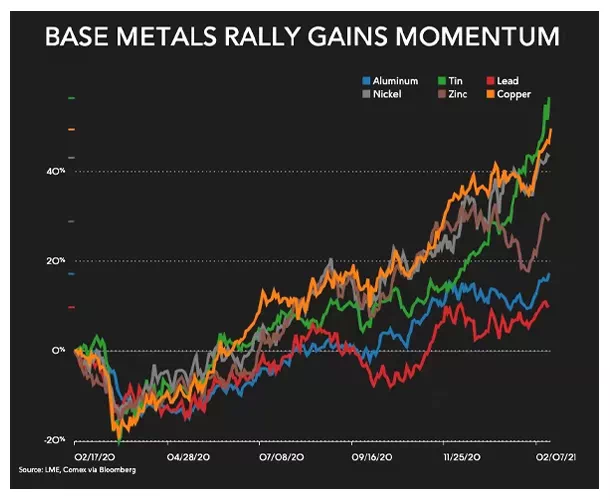
The causes of this round of commodity price surges and the global chip shortage are complex, stemming from multiple factors:
Under the stimulus of global loose monetary policy, the surge in international commodity prices—whether driven by raw material cost pass-through or investment demand—does not fully reflect changes in market supply and demand. Instead, it more accurately reflects excess liquidity resulting from excessive money issuance worldwide.
Disrupted supply chains, sudden outbreaks of the pandemic, tariffs and sanctions resulting from China-US trade friction, as well as some environmental protection production restrictions have exacerbated supply shortages;
Stockpiling and reluctance to sell, driven by soaring prices of raw materials and components as well as supply shortages, have naturally triggered market hoarding—whether active or passive—and the叠加 of genuine and speculative demand. This has further exacerbated price increases and product shortages to a certain extent.
Demand growth: The pandemic accelerated the digital transformation of demand. Under the impact of the pandemic, global demand for consumer electronics related to the stay-at-home economy—such as smartphones, computers, TVs, and small home appliances—initially declined before rebounding. Digital demands for remote work/education/medical audio-video systems are also gaining momentum. Meanwhile, the new energy vehicle (NEV) manufacturing boom is in full swing, significantly increasing the demand for core chips. These manufacturing demands rapidly concentrated in China within a short period, exacerbating the supply gap.
Production capacity squeeze: Since the lighting industry entered the LED era, the supply chain has transitioned from being exclusive to the electro-vacuum era to becoming general-purpose within the electronics industry. Especially for non-exclusive components shared with the automotive and consumer electronics sectors, the lighting industry must compete with other high-margin industries for production capacity.
焦虑传导,乱局之下,下游厂商若恐慌式买入,实行重复下单,多处下单,甚至虚构订单的做法,将进一步加剧紧缺局面,短期内上游价格就会飙升到整个产业链都不能承受之高位;如果下游心态平稳,预期理性,上游价格涨至下游根本无力承受时,价格传导就会停止。所以讲芯片短缺根源还在于预期,而不在产能。
From another perspective, this wave of market trends is nothing less than a comprehensive assessment of the lighting supply chain. It is a process of identifying high-quality suppliers and customers, as well as an industry reshuffle that separates the genuine from the fake. Each fluctuation in commodity prices effectively raises the industry threshold, providing an opportunity for high-quality enterprises to grow stronger. In the future, limited orders will gradually concentrate towards high-quality production capacity with strong supply chain control capabilities. High-quality supporting enterprises should also plan for the long term, expand cautiously to avoid falling into the production capacity trap, and take this opportunity to optimize customer resources and product structure, further strategically binding with high-quality downstream customers. "These violent delights have violent ends," as Shakespeare said. Therefore, from a long-term perspective, enterprises that can still adhere to basic principles of integrity, business logic, and moral bottom lines amidst the "dazzling chaos" will go further.
As commodity prices approach an inflection point, supply chains are being restructured, production capacity on the supply side is being released, demand growth is slowing, and market expectations are returning to rationality. As we predicted in our first-half report, the sharp rise in raw material prices and chip shortages have been alleviated to a considerable extent.
02 Logistics
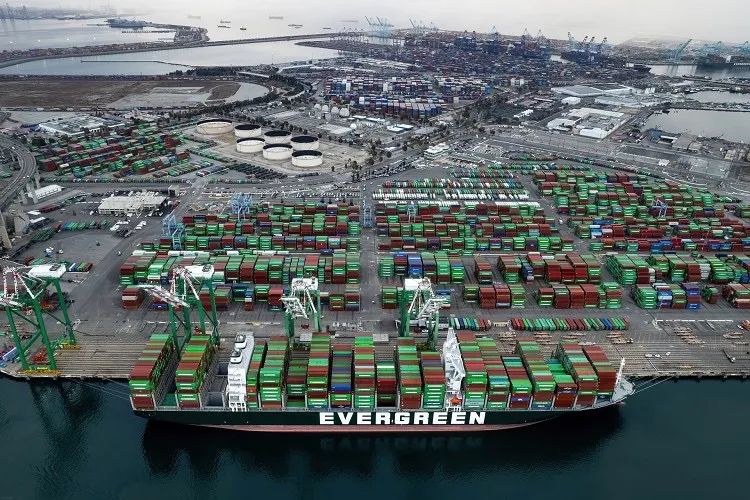
Since the fourth quarter of last year, the pandemic has caused global manufacturing demand to first decline and then rebound. The accumulation of large volumes of cargo, combined with reduced port efficiency, has made space shortages, container scarcity, and soaring freight rates common in the international shipping industry.
Direct impact of rising ocean freight rates on exports:
从对出口的直接影响来看,主要是影响交付。成本方面,正常的国际贸易报价是FOB,部分厂家可能选择是CFR甚至是CIF,绝大部分照明厂商报价是不需要考虑海运费涨价的直接影响,甚至会在部分订单上将海运费直接单列,以规避海运这个不可控因素。
The indirect impact on exports is:
As ocean freight rates rise, customers will inevitably demand price reductions from lighting export manufacturers, thereby squeezing manufacturers' profits;
Significant increases in ocean freight rates have driven up purchasing and trade costs for overseas end users and traders, dampening procurement or consumption willingness and reducing orders.
Containers face a "one-way trip with no return, severe shortage" situation, making it difficult for overseas customers to book space and slowing down cargo pickup. This increases the likelihood of cargo abandonment and raises the risks of delivery and payment collection for low-value product exports.
Disruptions in the international maritime shipping system have led to longer delivery and payment collection cycles, affecting cash flow velocity and increasing liquidity risks for small and medium-sized domestic lighting export enterprises.
Overseas clients postponed signing the annual shipping agreement, causing a large volume of products to accumulate in domestic factory warehouses and severely stalling overall operational turnover.
Under these circumstances, export enterprises have limited options and broader measures are needed, such as improving the operational efficiency of major domestic ports and central state-owned shipping enterprises; reducing domestic port warehouse storage fees to alleviate the burden on export enterprises; enabling local governments in relevant industrial clusters to provide free or low-cost warehouses, or offering working capital loans to enterprises; most importantly, controlling disorderly price hikes and cracking down on scalpers hoarding containers.
03 Exchange Rate
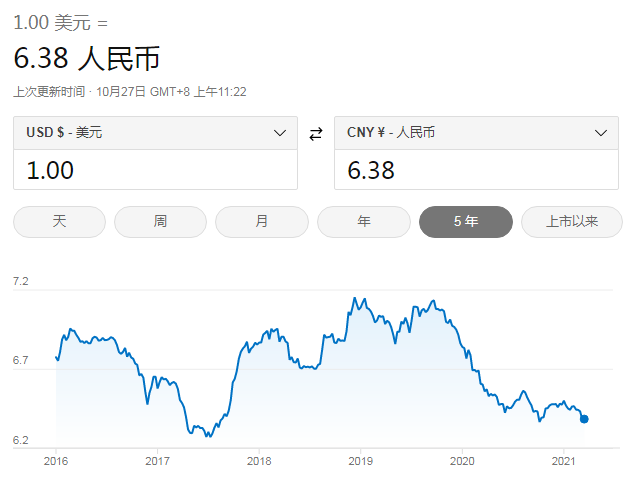
The RMB/USD exchange rate appreciated from 7.2 last year to 6.3 at one point. The significant appreciation of the RMB against the USD was a major source of profit losses for export enterprises in 2020, while the current situation is relatively stable. Future exchange rate fluctuations will continue to concern export enterprises.
04 Energy
Not long ago, the National Development and Reform Commission issued the "Plan for Improving the Dual Control System for Energy Consumption Intensity and Total Volume." It pointed out that high-energy-consuming and high-emission projects must be strictly controlled, and the results of dual energy consumption control will serve as an important basis for assessing provincial people's governments. Subsequently, large-scale power rationing began to sweep across the national manufacturing industry. This round of restrictions on industrial electricity usage is characterized by wide coverage, strong suddenness, and strict enforcement. In particular, major manufacturing provinces such as Jiangsu, Zhejiang, Fujian, and Guangdong have taken strong measures, implementing varying degrees of power rationing and production halts for enterprises under their jurisdiction. As a result, the supply chain coordination and production capacity delivery of a considerable number of lighting enterprises in various regions have been significantly affected.
The main reasons for this round of nationwide power rationing and blackouts are:
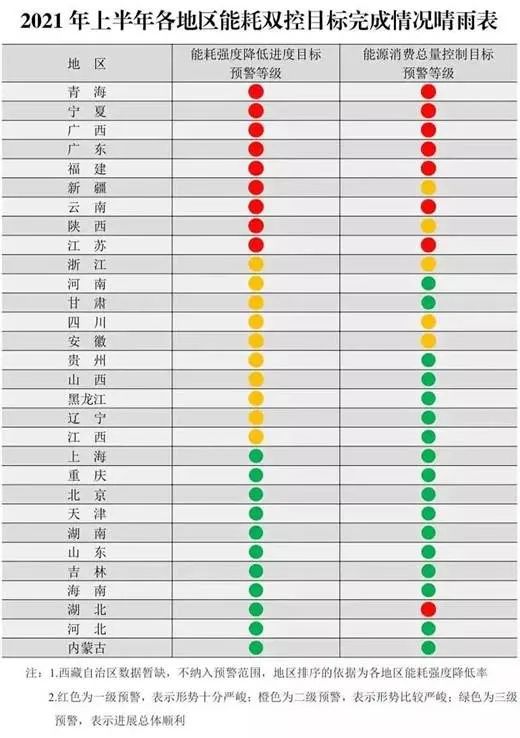
1. Local authorities rushed to meet dual energy consumption control targets. The so-called "dual control" of energy consumption means achieving both high energy efficiency and strict control over total consumption, which better safeguards national energy security. However, some local administrators failed to plan ahead; in order to meet the state's mandatory targets, they hastily completed annual carbon emission tasks by implementing crude, one-size-fits-all power rationing and blackouts against local industrial production sectors.
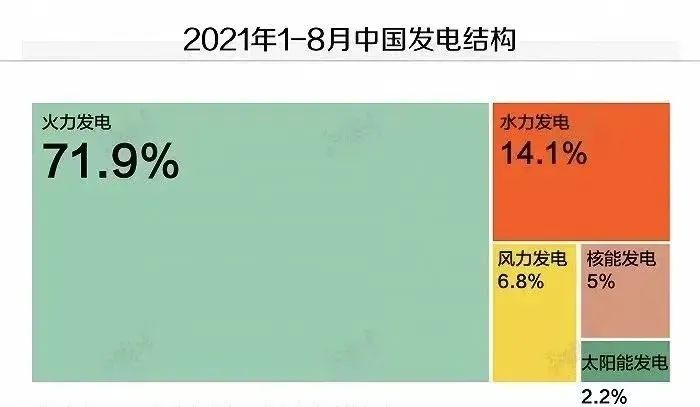
2. Coal shortage and power scarcity. In recent years, China's energy transition has shifted from primarily relying on thermal power to developing clean energy sources such as wind, hydro, and solar power. However, new energy is still in its early stages of development, while the expansion of thermal power is constrained. The prosperity of the manufacturing sector has driven up electricity demand, compounded by soaring coal prices and high coal washing costs. End-user electricity tariffs, which are closely tied to national livelihoods, face limited upward adjustment. This creates a typical scenario of upstream inflation and downstream deflation, leading to operational losses for power companies and ultimately resulting in insufficient thermal power production capacity.
3. Reduce low-end and excess production capacity. Under the pandemic, global manufacturing demand has concentrated in China, which leads in resuming work and production. However, against the backdrop of global monetary easing, factors such as significant price increases for upstream raw materials, soaring ocean freight rates, and exchange rate fluctuations have left many of our manufacturing enterprises with "orders but no profits." The current power rationing is also a proactive measure to reduce low-end and excess production capacity, urging related industries to pursue high-quality development.
The original intent of the dual-control policy on energy consumption is positive, aiming to restrict high energy-consuming industries. However, during implementation, some local authorities have adopted simplistic and crude measures such as indiscriminate and unplanned power rationing, reflecting administrative laziness. On one hand, market-oriented reforms should be further utilized to address campaign-style power restrictions; on the other hand, precise governance should be achieved in execution, implementing humane, planned, differentiated, and step-by-step power rationing.
For lighting companies, short-term response to this power rationing can start from the actual situation of being engaged in low-energy-consumption Industry, strengthening communication with local government management departments to seek more favorable outcomes. On the other hand, measures such as installing self-generated power equipment, energy storage equipment, and solar photovoltaic equipment can be adopted to enhance the utilization of self-generated and self-consumed non-hydro renewable energy to cope with electricity shortages. Larger-scale enterprises may also choose to purchase "green electricity" in the national green electricity market.
In the long run, against the macroeconomic backdrop of national environmental protection policies to reduce production capacity, supply-side reforms, and the "dual reduction and dual control" initiatives, high carbon emissions and energy consumption will be incorporated into production costs in various ways, internalizing negative externalities. In the broader industry context where the lighting industry has entered a period of low growth in the post-LED era, high-quality development is the only viable path. On one hand, it is necessary to increase industry concentration; the concentration and integration level of the lighting industry is relatively low, with fierce competition among domestic enterprises, resulting in weak pricing power for products. On the other hand, while facing the surge in orders driven by transfer and substitution effects during the pandemic, companies should remain clear-headed, expand cautiously, proactively reduce low-end production capacity, optimize product structure, increase product added value, and thereby enhance their own international competitiveness.
05 Requirements
At the same time, the demand side faces significant challenges. On the export front, the sustainability of high growth in demand for pandemic prevention and stay-at-home economy supplies, as well as substitution effects, is weak. Domestically, market recovery under the pandemic has been uneven: infrastructure investment has slowed, real estate investment is constrained by regulatory controls, manufacturing investment remains sluggish, and consumer market recovery is slow. Increased uncertainties regarding future prospects amid the pandemic have also made decision-making and planning difficult for enterprises.
Amid the global pandemic, the lighting industry faced successive challenges on both the supply and demand sides. Nevertheless, the entire sector demonstrated remarkable resilience. The industry scale continued to expand despite numerous difficulties, further consolidating China's position as the global manufacturing center and supply chain hub for lighting. As the saying goes, even in times of hardship and difficulty, we press forward with determination.