
The Forum on Technological Innovation and Development in Non-Visual Lighting was successfully held in Guzhen on October 22.
On October 22, 2021, on the opening day of the 27th China Guzhen International Decorative Lighting Expo, the "Forum on Technological Innovation and Development of Non-Visual Lighting" was grandly held in the conference hall on the first floor of the Guzhen Convention and Exhibition Center.
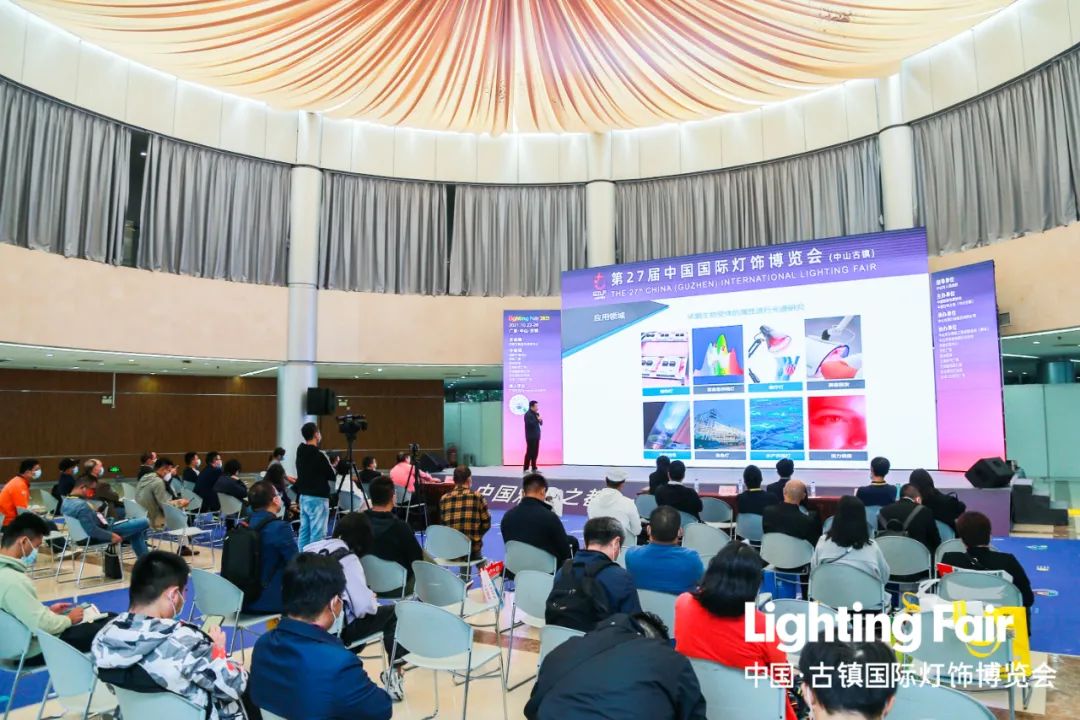
This forum is hosted by the Agricultural Lighting Professional Committee of China Association of Lighting Industry(中国照明电器协会), the Luminaire Professional Committee of China Association of Lighting Industry(中国照明电器协会), and Zhongshan Guzhen Dengdu Expo Co., Ltd. It is organized by Wuxi Lide Shidai Technology Co., Ltd. and Shenzhen Facility Agriculture Industry Association, with strong support from Seoul Semiconductor Co., Ltd., Grand Canyon Smart Lighting, and Guangdong Kaisio Light Health Co., Ltd.
The conference aims to further help researchers and enterprise technical personnel gain a deeper understanding and mastery of the development and innovative applications of non-visual lighting technology in fields such as healthy lighting, agricultural and aquaculture lighting, and UV disinfection. Approximately 100 people attended the on-site meeting, while more than 2,000 others watched the live broadcast via online streaming platforms.
The forum was moderated by Xu Dong, President of the Shenzhen Facility Agriculture Industry Association.
Wang Zhuo, Secretary-General of the China Association of Lighting Industry(中国照明电器协会), delivered an address to the conference on the theme "Overview of the Development of Non-Visual Lighting Technology in Healthy Lighting, Agricultural and Aquaculture Lighting, and UV Disinfection Fields."
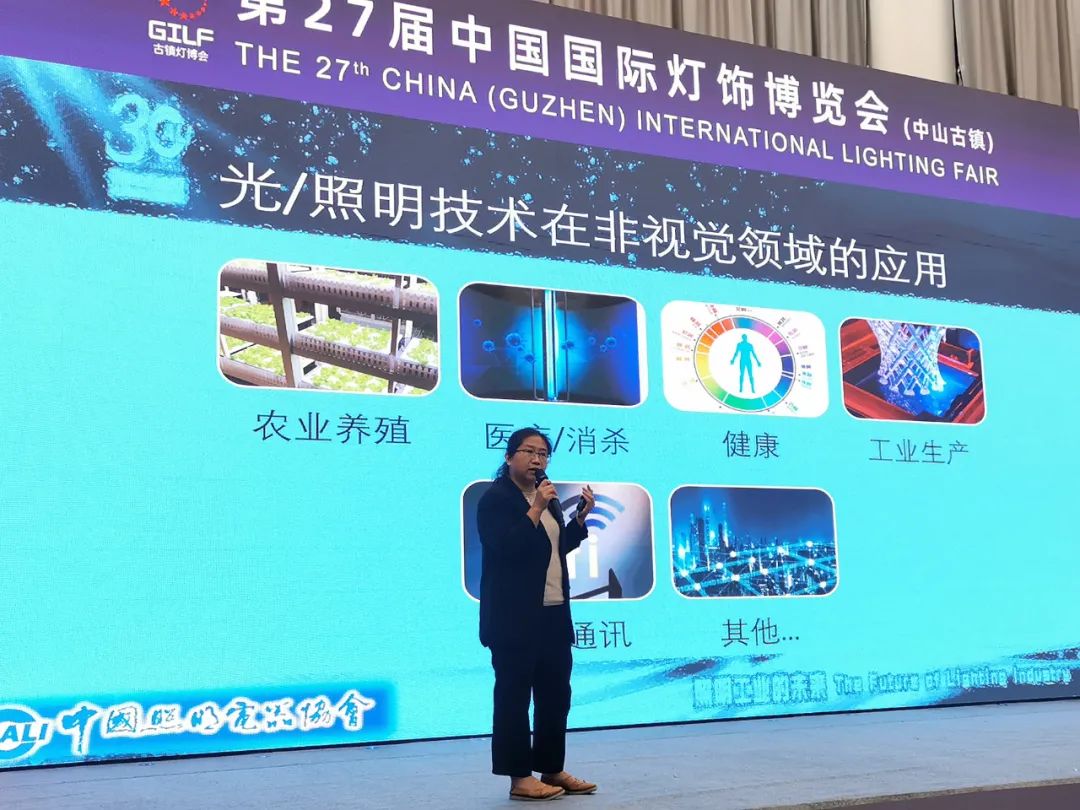
Wang Zhuo, Secretary-General of the China Association of Lighting Industry (CALI)
In his address, Secretary-General Wang Zhuo pointed out that the application of lighting technology in non-visual fields such as agricultural breeding, UV disinfection, industrial production, and healthcare is not a new concept. However, with current technological innovations and growing demand, the market is experiencing rapid development. As a light manufacturing sector, the lighting industry must attach importance to the new value generated by light in non-visual fields, actively promote interaction among industry, academia, research, and application, and integrate with multiple disciplines and industries to meet market demands with more specialized and standardized high-quality products and services.
Subsequently, numerous industry and corporate experts and leaders delivered outstanding keynote reports for the conference.
Sharing Topic: New Trends and Applications in the Development of Non-Visual Lighting Technology
— Xu Dong: President of the Shenzhen Facility Agriculture Industry Association
He conducted an in-depth analysis of the principles and foundations of photobiology, pointing out that the application of light in non-visual fields should be studied scientifically and systematically. Non-visual lighting is not visual; it does not involve or depend on vision or eyesight. Non-visual applications use energy parameters rather than human visual parameters. The main applications of non-visual lighting fall within the scope of bio-optics, as follows:
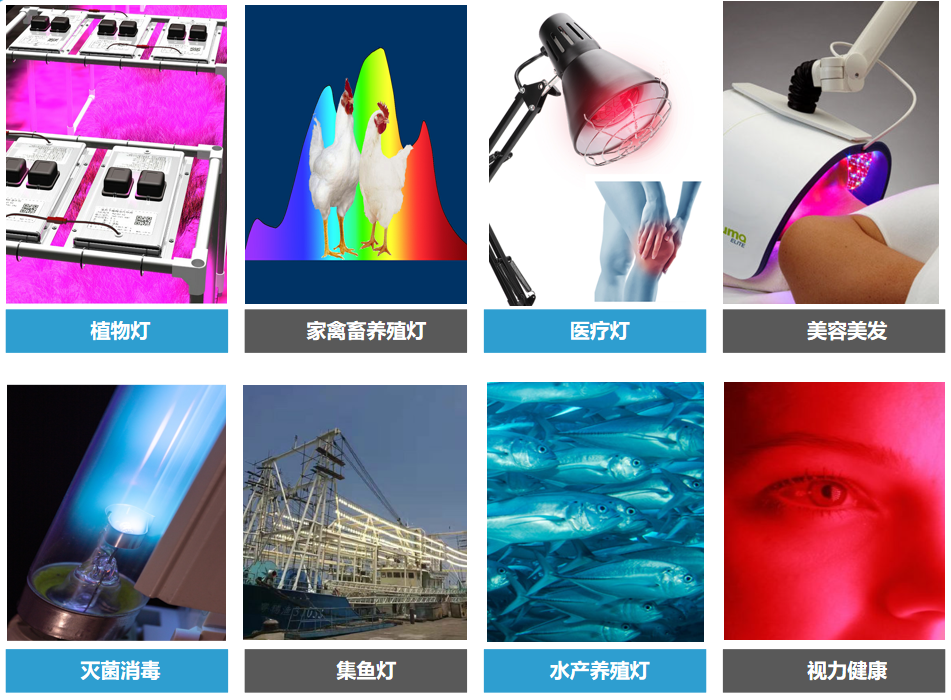
Taking plant grow lights as an example, Xu Dong believes that the problems existing in the development of non-visual lighting technology include:
1. Without breaking free from traditional lighting design thinking, innovation is impossible.
2. Lack of standardized cultivation experimental methods and professional data analysis capabilities
3. Net carbon emissions caused by energy consumption may lead to elimination.
4. Disproportion between technical products and technological investment.
5. Lack of emphasis on dosage research.
The future non-visual lighting market size will surpass that of general lighting; precise control is the key technology, and return on investment is the driving force for development.
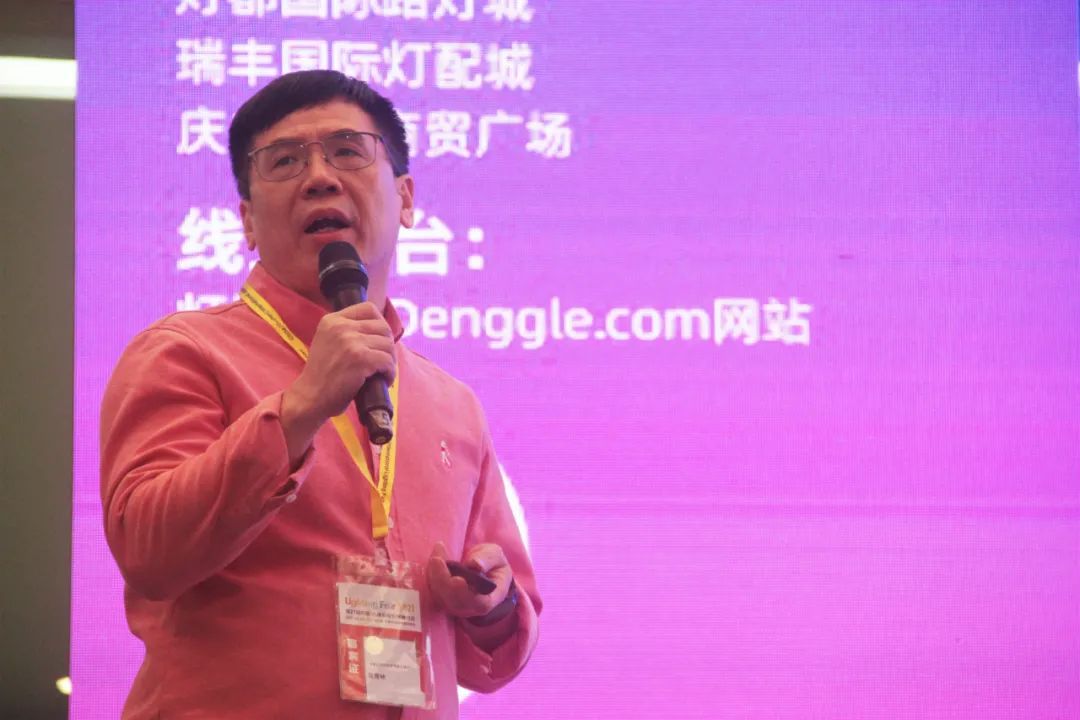
Sharing Topic: Application and Solution of Light Negative Ion Technology
— Wu Yulin: Founder of Guangdong Kaxiou Optical Health Co., Ltd.
Wu Yulin's report highlights research achievements in the field of Healthy lighting and explains the technical application Solution for light negative ions.
Negative ions, also known as "negative oxygen ions," are called "natural conditioning factors." Many studies show that negative oxygen ions have a positive impact on physical and mental health. Light Negative Ions = Simulated Sunlight + Forest Negative Ions. Light Negative Ion technology helps protect vision, purify air, and sterilize.
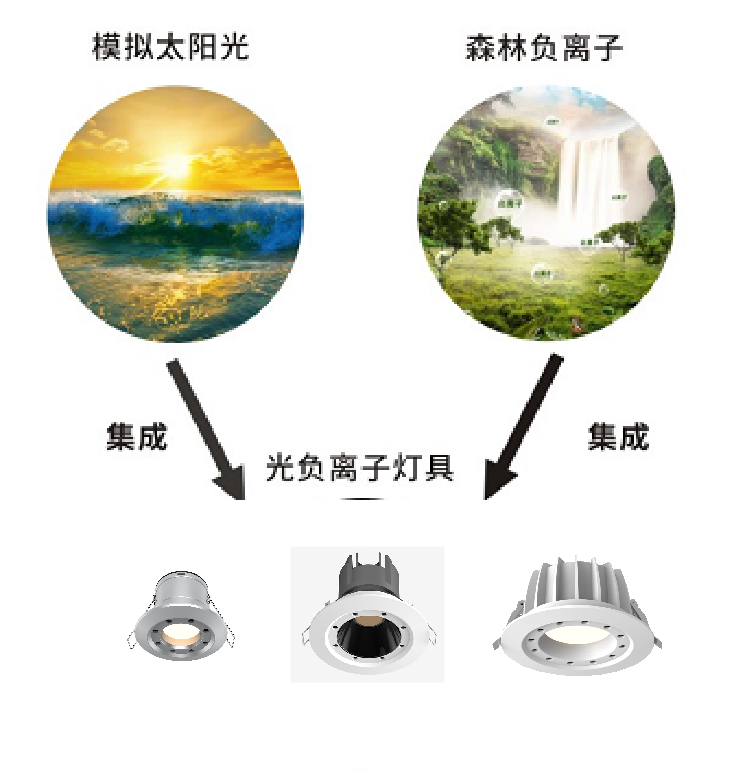
Light negative ions can effectively remove PM2.5 suspended particles from the air, such as dust, smoke, bacteria, and other harmful substances, thereby purifying the air. Meanwhile, negative oxygen ions can react with volatile organic compounds in the air, significantly reducing microorganisms in ambient air, neutralizing odors and specific volatile organic compounds, such as formaldehyde, ammonia, and hydrogen sulfide in the air.
When negative ions in the air come into contact with bacteria, mold, viruses, and other microorganisms, they can reduce the activity of some bacteria and viruses, leading to their death. An appropriate concentration of negative ions is not only harmless to the human body but also beneficial to human health. Therefore, "negative ion sterilization" is a more environmentally friendly sterilization method compared to ozone or ultraviolet sterilization.
Guangdong Kaisio Light Health Co., Ltd. has currently completed the renovation and implementation of a number of projects, including schools and restaurants, significantly improving indoor air quality.
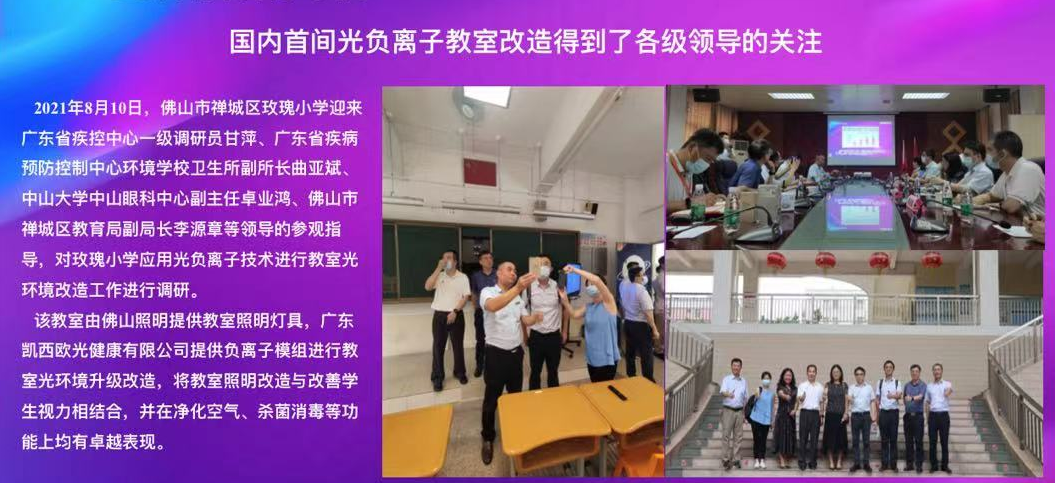
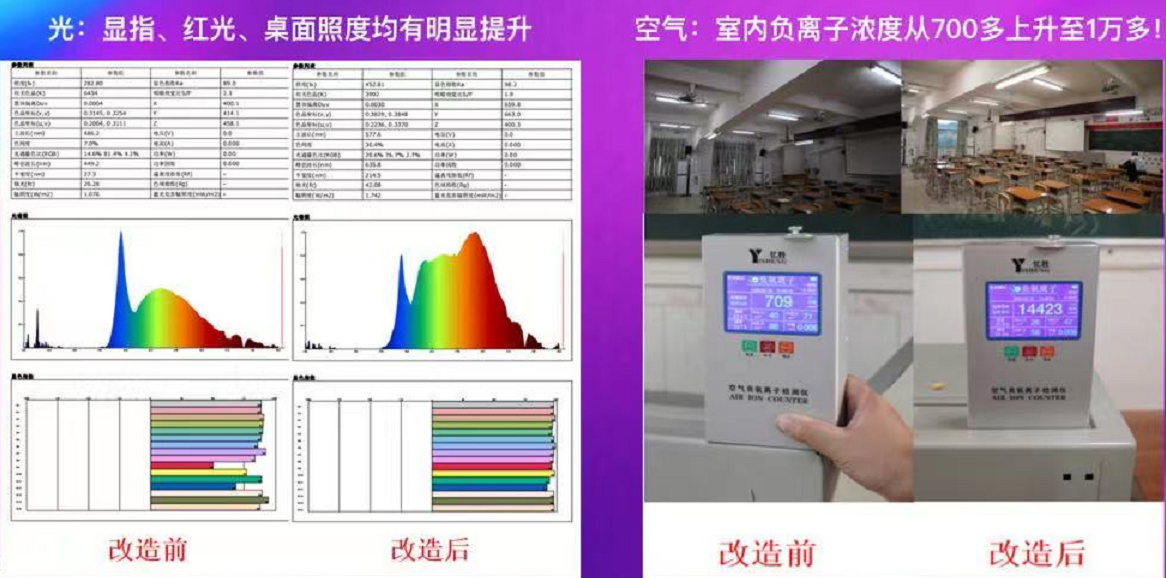
In addition, Kaysio has reached cooperation agreements with suppliers of CRRC Group and elevator manufacturers, providing system solutions and preparing for supply. Applied in high-speed rail, metro, urban rail transit, elevators, and other scenarios, it enables disinfection while people are present, ensuring no harm to humans while achieving sterilization and disinfection.
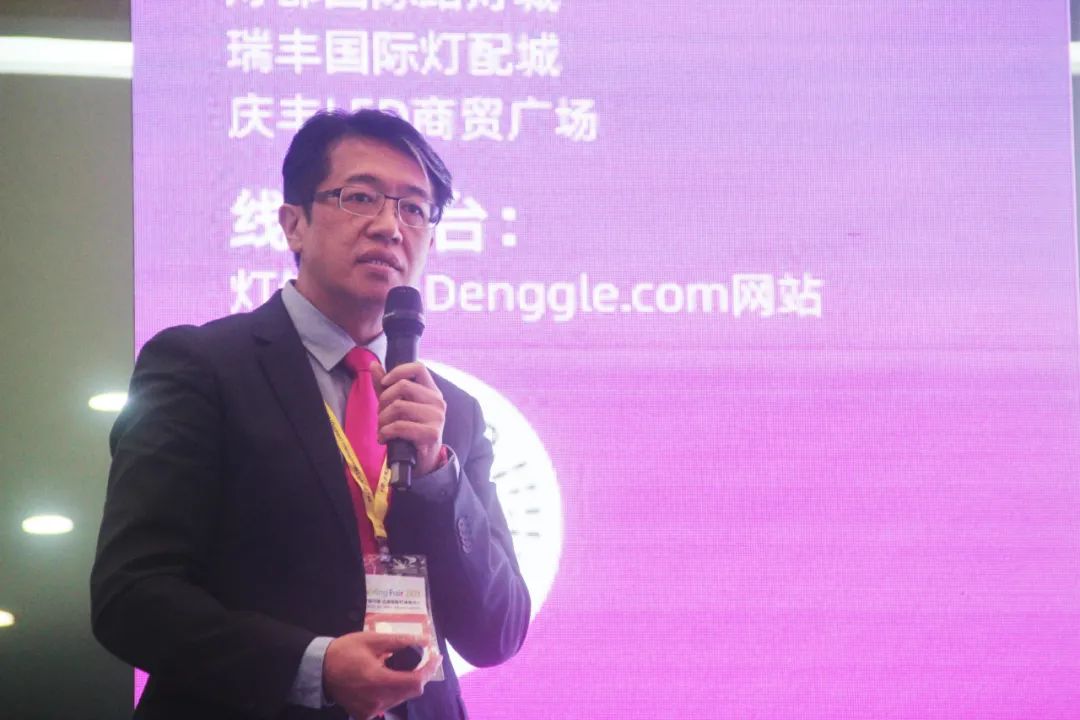
Sharing Topic: Not Just Smart, But Healthier - Giving Meaning to Smart Lighting with Healthy Light Formulas
— Lin Jiliang: CEO, Grand Canyon Smart Lighting
The report closely revolves around the two hot topics of industry development: intelligence and health, endowing smart lighting with new meaning and connotation from the perspective of light recipes.
Grand Canyon Smart Lighting provides one-stop, personalized, and immersive AI lighting solutions for professional and enterprise users. By empowering lighting through the Grand Canyon intelligent ecosystem, it redefines commercial and industry-level smart lighting applications. It offers three major technological pillars: hardware (light sources, luminaires, sensors, drivers), scenarios (scenario designs with high added value to improve psychological and physiological states), and an IoT platform (a cloud-based computing and operation platform).
He presented application examples of Grand Canyon Smart Lighting in scenarios such as conference rooms, public area lighting, and healthcare centers.
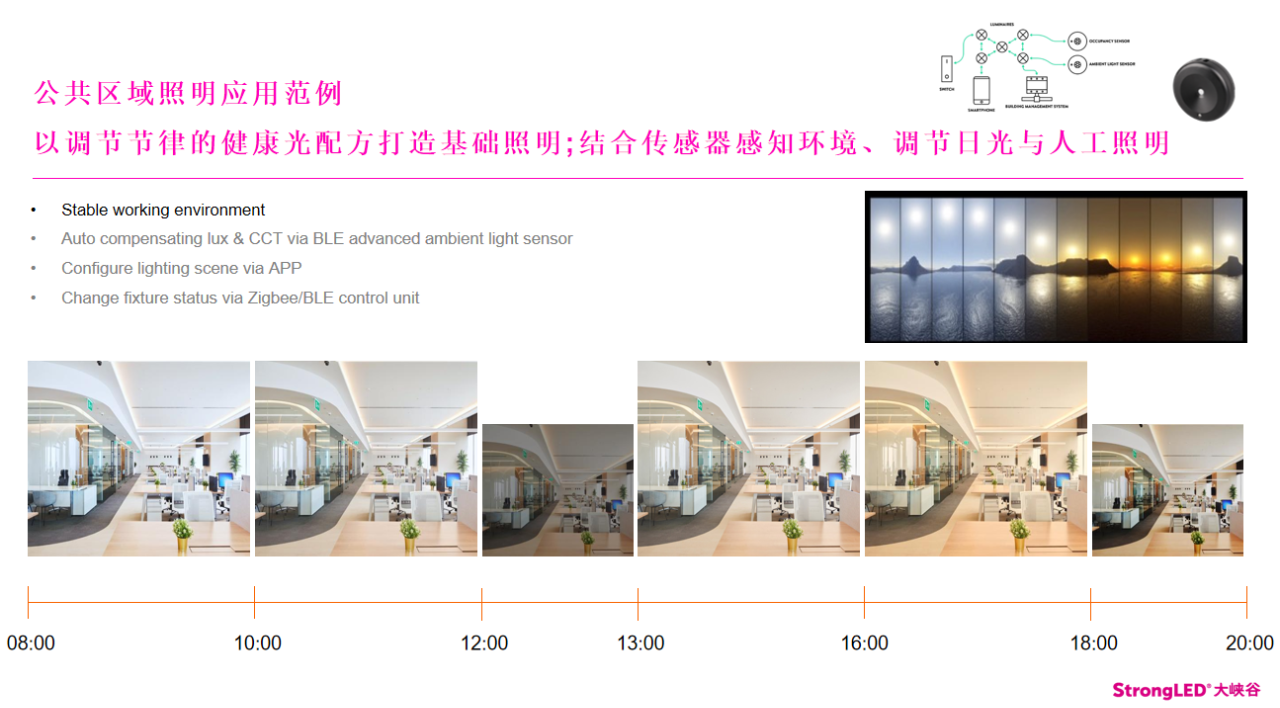
In addition, StrongLED has built a platform that integrates hardware, content, and digital lighting services. It not only establishes a user-oriented SaaS system but also creates a PaaS architecture centered on professional users to meet the needs of co-developers (the designer ecosystem).
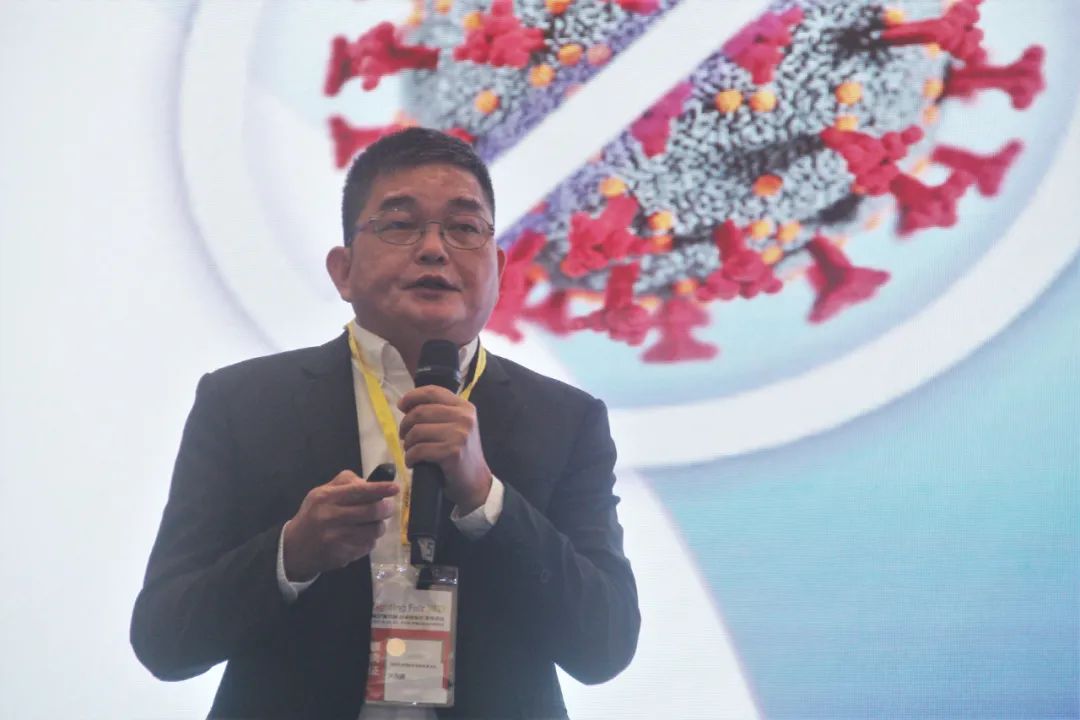
Sharing Topic: Applications of UV Series Products in the Public Health Sector
— Hong Yannan: Chairman and President of Guangmingyuan Optoelectronic Technology Co., Ltd.
Chairman Hong Yannan highlighted application cases of UV products in the public health sector, conducted a comparative analysis of the disinfection efficacy of different spectra, and finally introduced various new product designs and application scenarios.
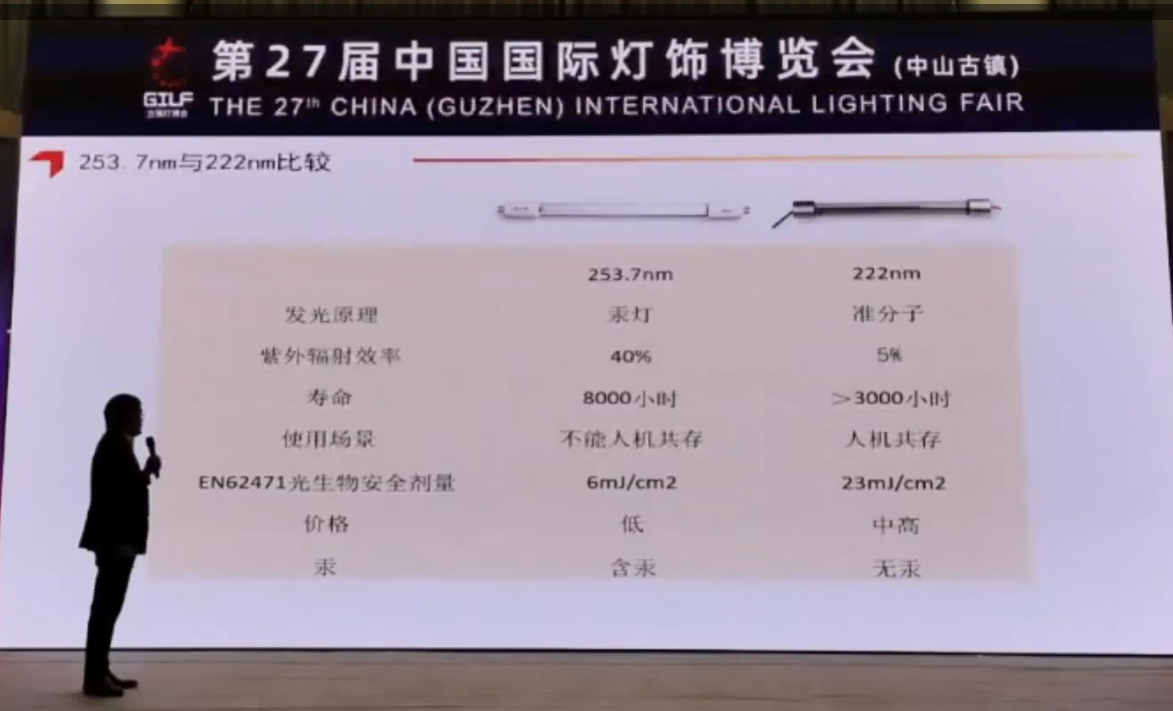
Germicidal ultraviolet, also known as UV-C, has been applied to sterilize air, surfaces, and water. Traditional UV disinfection lamps and tools use 253.7 nm ultraviolet light, which can penetrate the dermis of human skin and the cornea, directly damaging cells; therefore, it must not directly irradiate the human body. Multiple studies have confirmed that 222 nm far-UVC can effectively reduce and kill up to 99.9% of bacteria and pathogens on the body surface, allowing safe coexistence with humans, making it suitable for public places such as hospitals.
At the end of the report, he also introduced Guangmingyuan's series of UV sterilization products, such as portable air purifiers, surface disinfection machines, SAFEGLO™ 222nm far-UVC sterilization doors, and their practical applications in different scenarios.
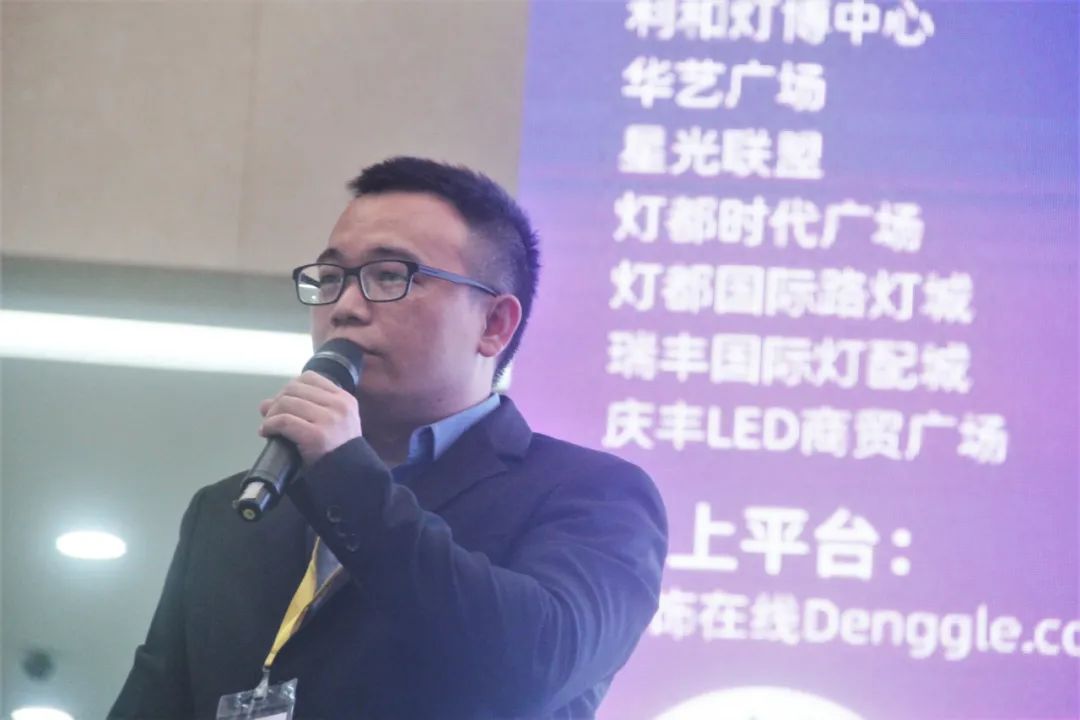
Topic: Market Prospects and Solutions for LED Horticultural Lighting
— Lei Xunjin: Application Technology Manager, Seoul Semiconductor Co., Ltd.
He analyzed the market and prospects of horticultural lighting. With the continuous improvement of LED luminous efficacy, LEDs will be increasingly used in horticultural lighting, and people need to adopt LEDs to replace HPS to achieve higher return on investment.
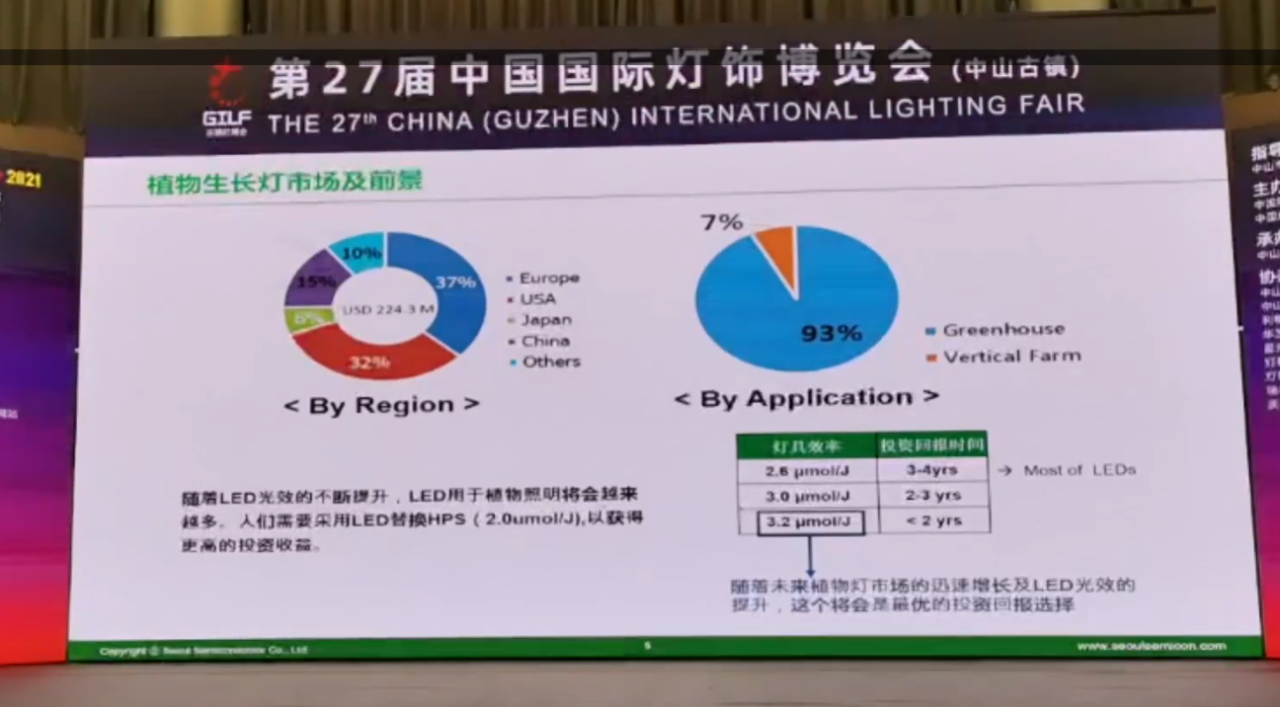
Different colors of light have distinct effects on plant growth; red-blue light, green light, and white light all play special roles during the growth process. Seoul Semiconductor continuously launches competitive new products in horticultural lighting LED/UV, such as the natural spectrum LED "SunLike" and the Horticultural Lighting EMC series, providing ideal solutions for plant growth.
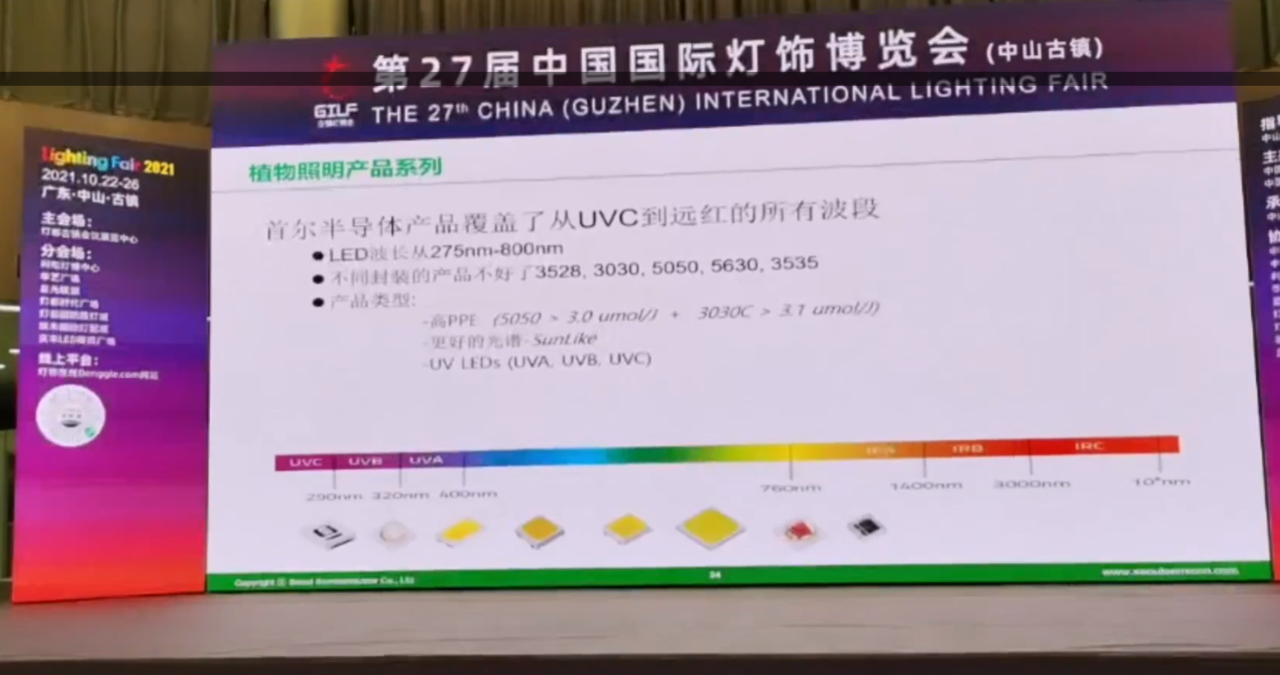
The report highlights Seoul Semiconductor's SSC Horticultural lighting LED/UV product series, EMC series, Sunlike series, and SSC Horticultural lighting solutions (industrial cultivation cases, leafy vegetable cultivation cases).
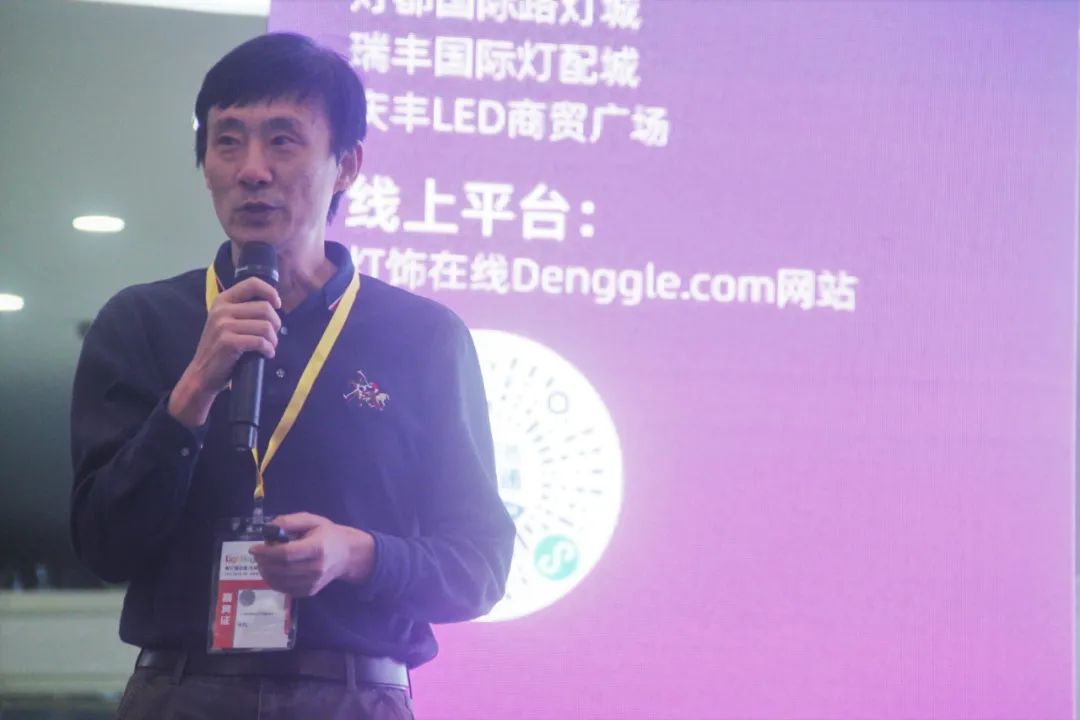
Sharing Topic: Key Design Points for Agricultural Lighting Luminaires
— Xu Hong: Chief Technology Officer of Xiamen Tonghe Technology Co., Ltd.
Based on the actual needs of agricultural production, he analyzed and summarized the key points and principles to be considered in the design of agricultural lighting luminaires, focusing on several major elements of lighting system design: light quality, luminous intensity, photoperiod, and light supply strategy.
For example, for broilers, blue light accelerates growth rate, while green light improves meat quality. For laying hens, red light determines the egg-laying rate, and yellow light extends the peak laying period. (The red light must be pseudo-red light, i.e., R9 < 0).
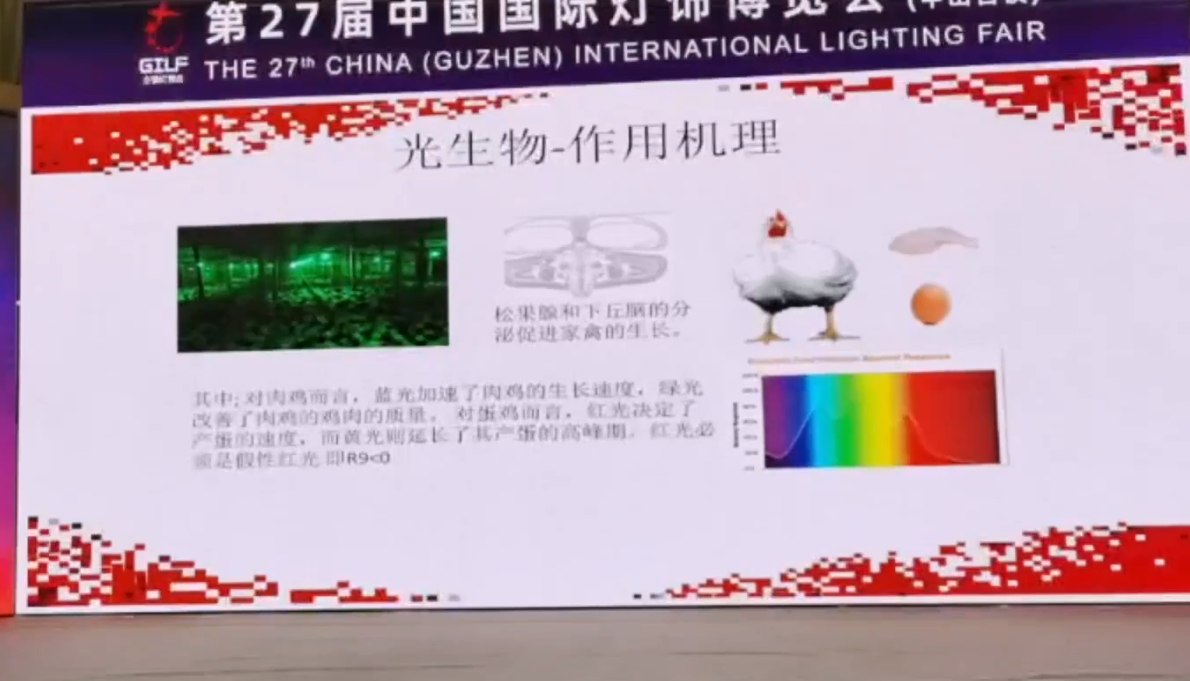
At the same time, aesthetics are also productivity, and intelligence + automation are also an important part of agricultural lighting luminaire design.
The conference was rich in content and diverse in format. Attendees expressed that they benefited greatly, and the Forum achieved complete success. Scan/recognize the QR code below, or click "Read Original" at the end of the article to review the Forum video.

China Light
The official website of the China Association of Lighting Industry and a full-media platform for the lighting sector. We provide authoritative and timely lighting information while striving to be a growth partner for businesses. From brand promotion and channel expansion to consulting, talent training and participation in standards development, we provide comprehensive professional services to help businesses improve quality and efficiency and jointly advance the high-quality development of the lighting industry.
Business Contacts
仇纯 (Ms.): 158 6155 3579
顾君 (Mr.): 137 7157 5253