
Power rationing and production cuts in multiple regions: what is the impact?
Dual Control of Energy Consumption
The "dual control" system for energy consumption refers to the dual control of total energy consumption and intensity. Recently, the state has intensified the dual control policy for energy consumption. On September 16, the National Development and Reform Commission issued the "Plan for Improving the Dual Control System for Energy Consumption Intensity and Total Amount." The notice pointed out that high-energy-consuming and high-emission projects must be strictly controlled. Furthermore, the results of the dual control of energy consumption, after approval by the State Council, will serve as an important basis for assessing provincial people's governments.
Just recently, in mid-August, the National Development and Reform Commission directly named nine provinces and regions at its regular press conference: Qinghai, Ningxia, Guangxi, Guangdong, Fujian, Xinjiang, Yunnan, Shaanxi, and Jiangsu. In the first half of the year, their energy consumption intensity increased Year-on-year (YoY) instead of decreasing!
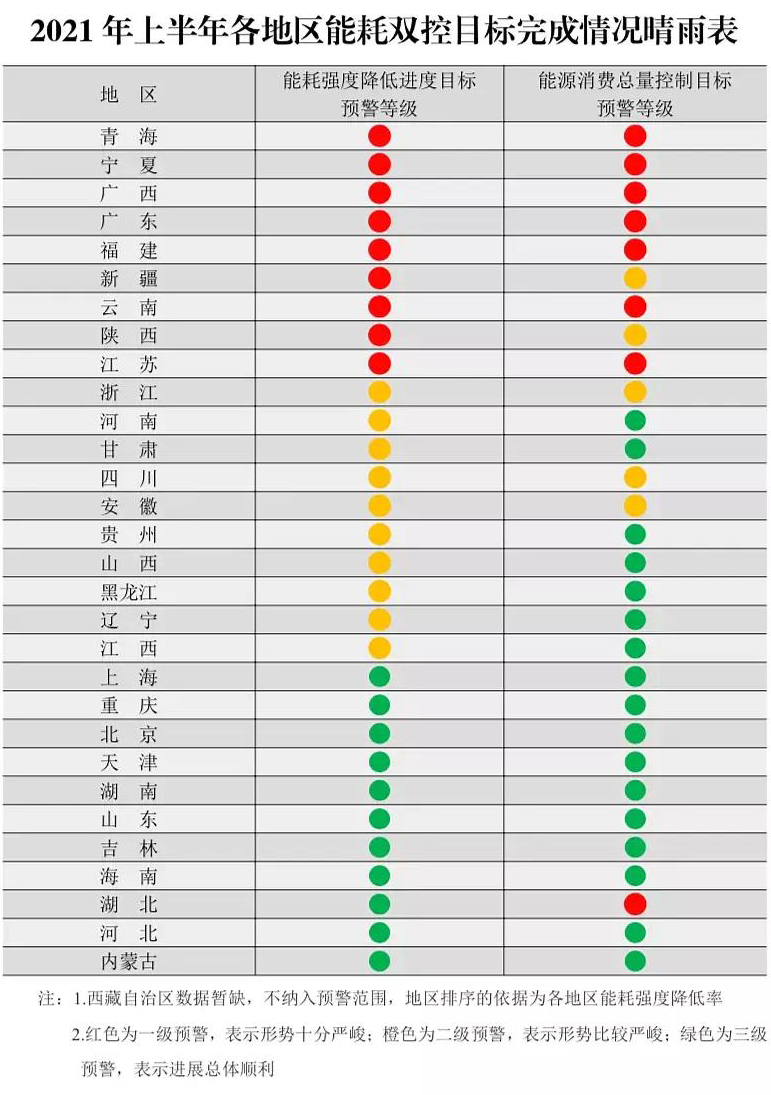
Production cuts due to power rationing
In response to this phenomenon, provinces have actively taken measures, and among these, the most effective and fastest method is power rationing and production cuts!
Qinghai: Power rationing warning issued; scope of power rationing continues to expand.
Ningxia: High energy-consuming enterprises to suspend or limit production for one month.
Yunnan: Two rounds of power rationing have been implemented, with further tightening to follow.
Guangxi: Requires industrial and commercial enterprises to use electricity in an orderly manner and proactively shift consumption away from peak hours.
Sichuan: Suspend non-essential production, lighting, and office loads.
Henan: Some processing enterprises have faced power rationing for more than three weeks.
Chongqing: Some factories suspended production due to power rationing in early August.
Inner Mongolia: Strictly control enterprise power rationing time; electricity price increase shall not exceed 10%.
...
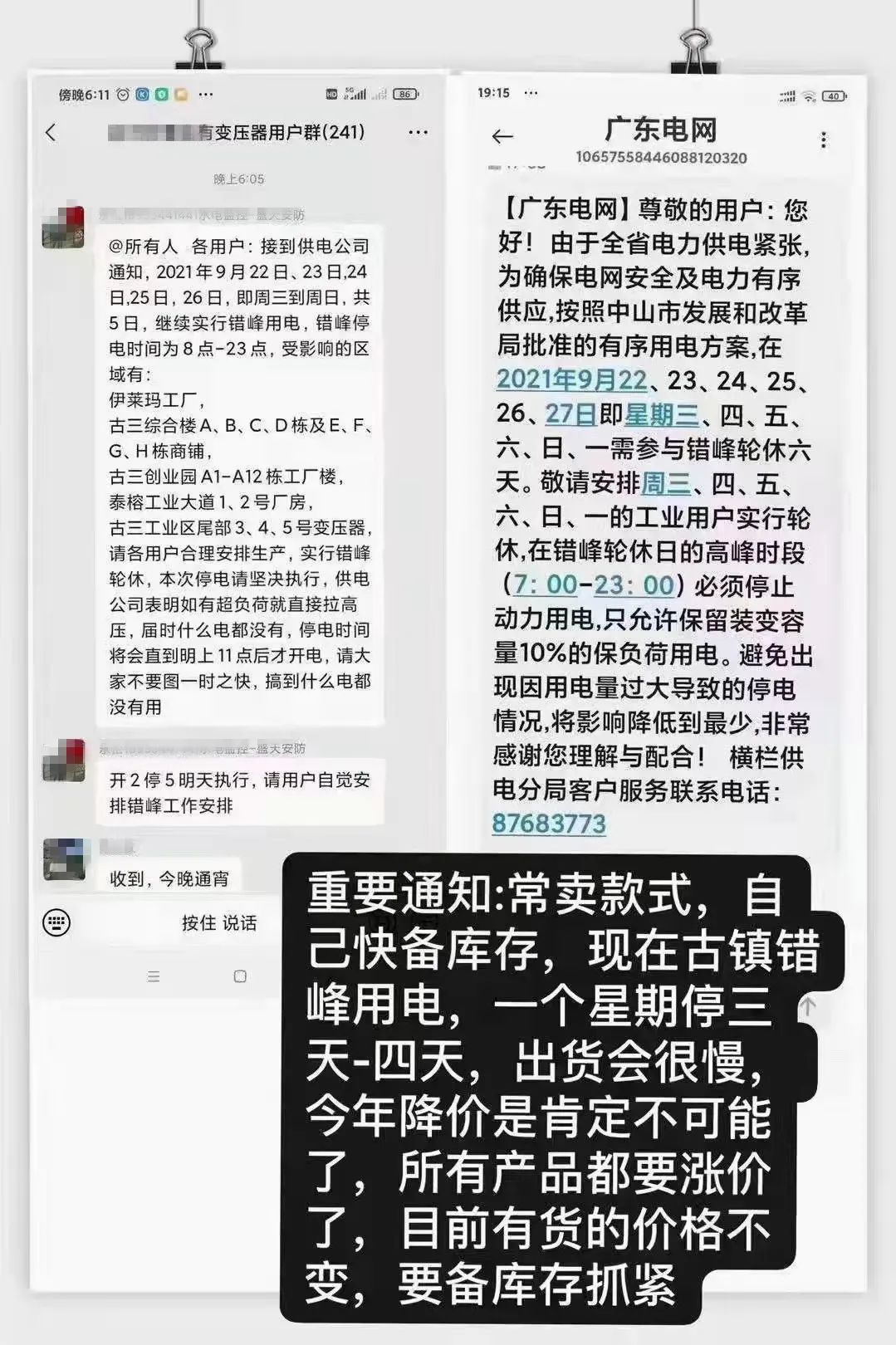
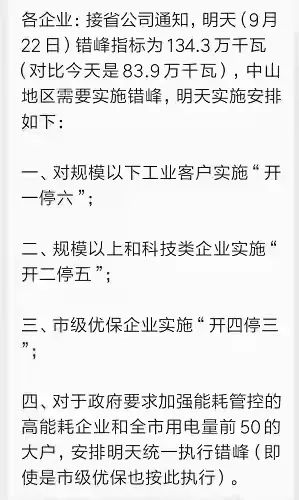
本次对工业用电的限制可以认为是近几年以来最大规模的一次。广东、浙江、江苏等化工大省更是重拳出击,对不少企业采取了“开二停五”、“限产90%”、“几千家企业停限产”等措施,让当地企业顿感措手不及。不配合限电停工的企业,还将面临政府部门强制查封!
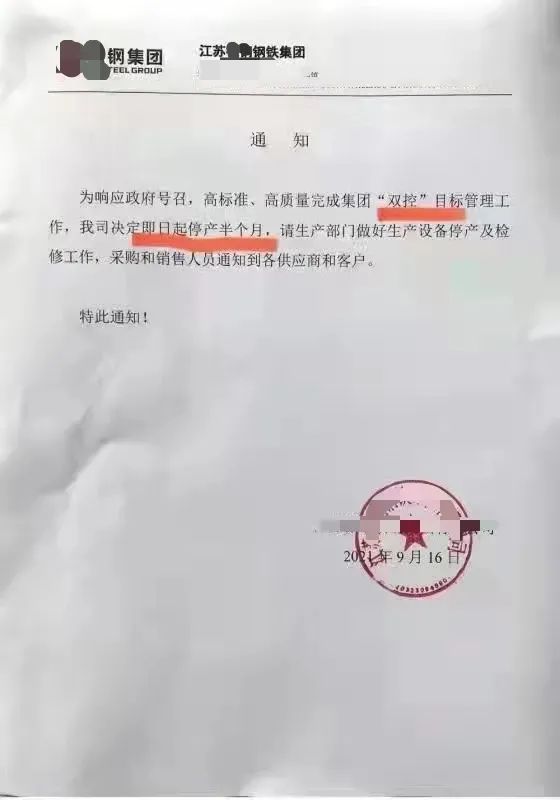
Due to policy documents on dual control of energy consumption issued by multiple local governments, various high-energy-consuming and high-polluting industries have been forced to halt production. Sectors ranging from textiles to chemicals, cement, non-ferrous metals, petrochemicals, and steel are facing significant pressure from power rationing and production restrictions.
For example, on the evening of September 22, Chenhua Shares (300610) announced that, due to tight power supply in Jiangsu Province, its wholly-owned subsidiary Huai'an Chenhua New Materials Co., Ltd. was forced to temporarily suspend all production lines.
Huai'an Chenhua actively responded to the government departments' requirements for power rationing and production restrictions by temporarily suspending production. The affected production facilities are: polyether production facility (35,900 tons/year), terminal amino polyether (polyetheramine) production facility (23,000 tons/year, of which 5,000 tons/year is a fundraising project), flame retardant production facility (20,000 tons/year), and alkyl glycoside production facility (20,000 tons/year, of which 15,000 tons/year is a fundraising project).
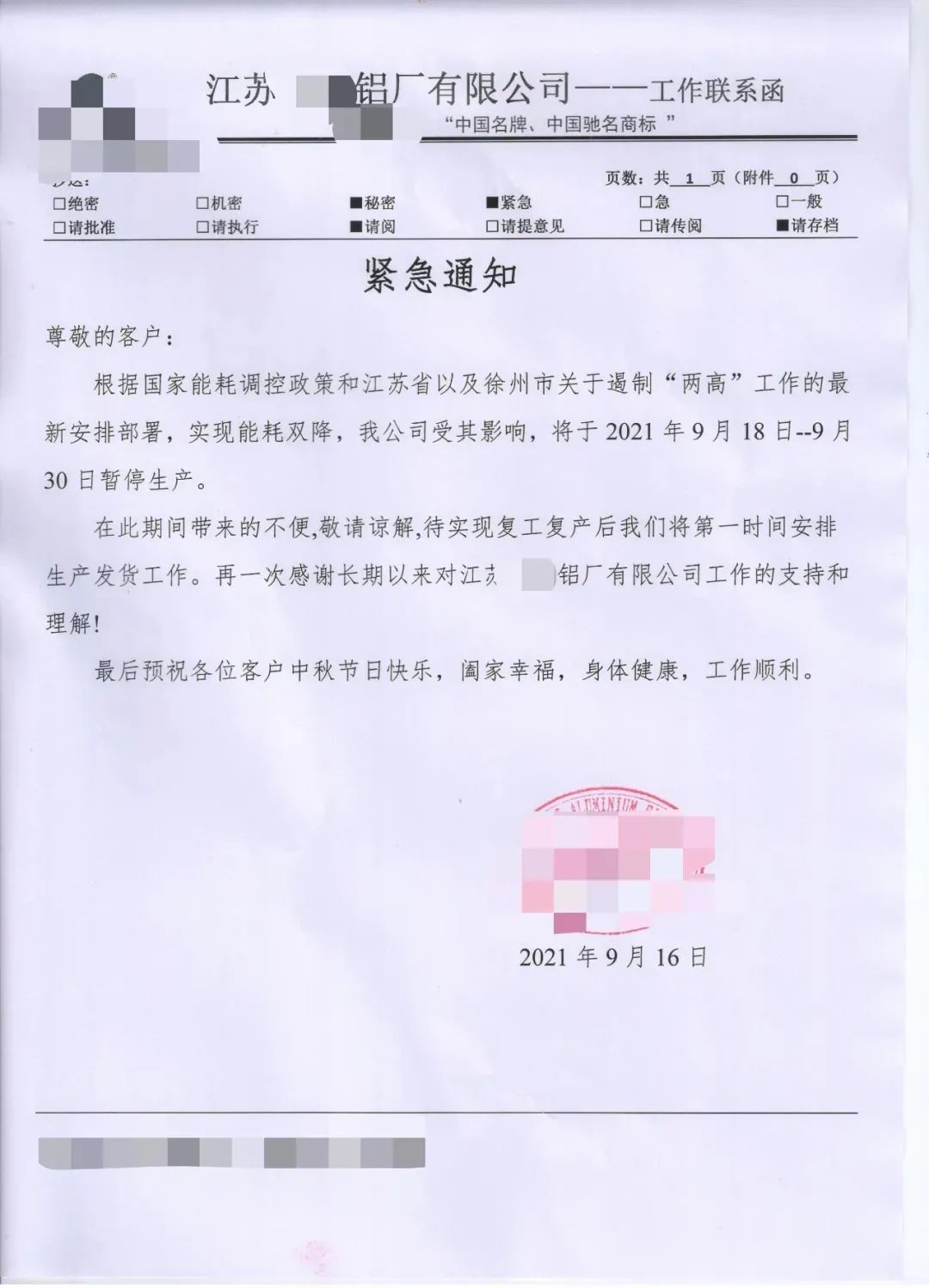
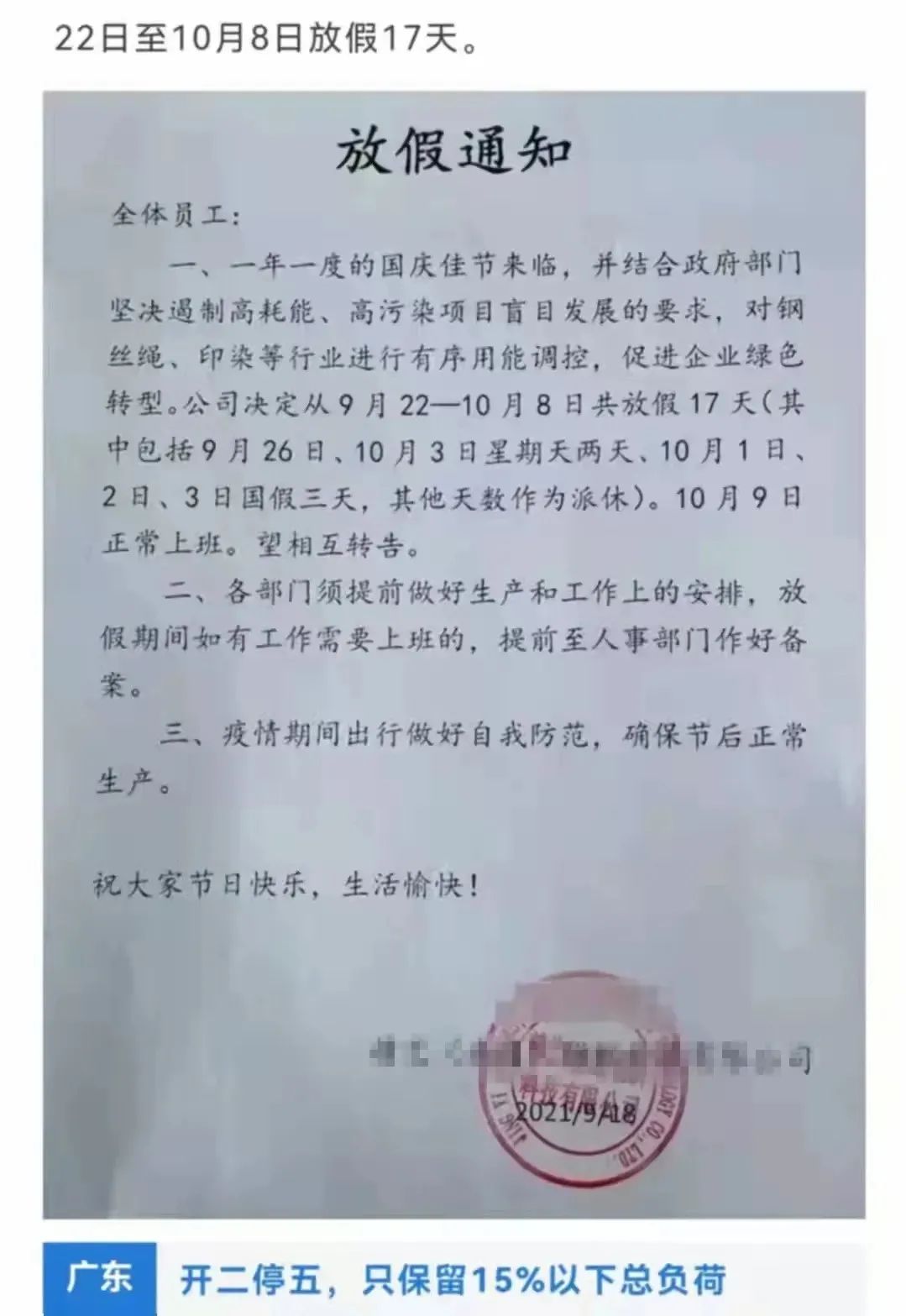
不少地方还发出节约用电倡议书,例如汕头市发展和改革局和汕头供电局的文件指出,各区县政府、市各有关单位要科学制定城市公共照明规划,合理划分城市照明等级,确保以道路照明为主的功能照明;压减公用设施、公共场所和大型建筑物装饰性景观照明;各用电企业要服从电网调度纪律,统筹安排生产经营,积极错峰避峰,全力配合做好有序用电工作。
Lighting Company
Lighting companies everywhere are similarly affected by power rationing requirements.
The manufacturing industry relies heavily on a continuous power supply. For manufacturers, stopping and restarting production lines can incur high costs. Power rationing leads to reduced operating rates. Prolonged power-constrained production not only causes delivery delays but also affects raw material supply and market conditions, resulting in significant losses.
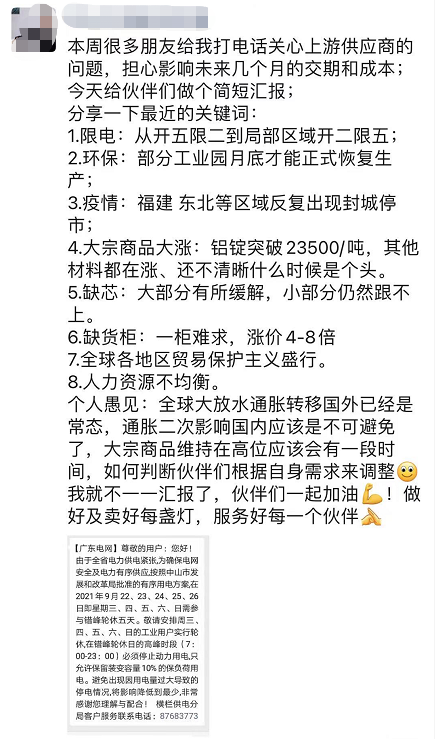
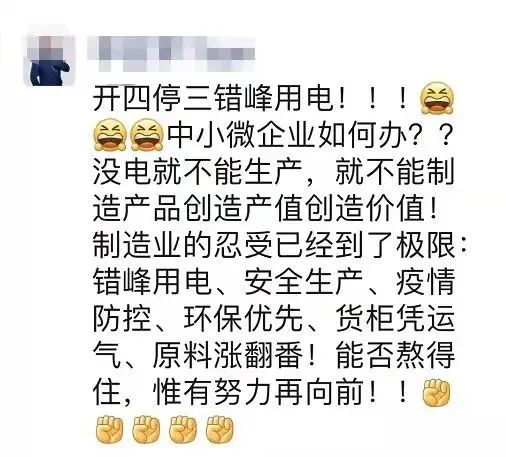
Production and electricity restrictions in various provinces may once again disrupt the supply-demand balance of raw materials in the industry / supply chain, introducing new uncertainties to the profitability and operating rates of mid- and downstream sectors.
According to the detailed rules of the dual-control policies across various regions, the regulatory period lasts from September to December. The focus of regulation covers a variety of bulk commodities, such as ferroalloys, electrolytic aluminum, PVC, ethylene glycol, soda ash, coke, calcium carbide, and thermal power. We remind everyone to carefully respond to the new round of material price fluctuations.
Carbon Neutrality
Behind the power rationing and production halts lie multiple overlapping factors. In addition to energy consumption control measures adopted by some regions due to pressure from dual energy consumption controls, another cause is tight coal supply and high thermal coal prices, leading to strained electricity supply. Under the goals of carbon peaking and carbon neutrality, this round of power rationing and production stoppages particularly highlights the importance of balancing medium- to long-term green transition with short-term stable economic growth.
Of course, netizens, experts, and the media have offered various explanations for this round of power rationing and production restrictions. We welcome you to leave a comment at the end of the article to share your views.
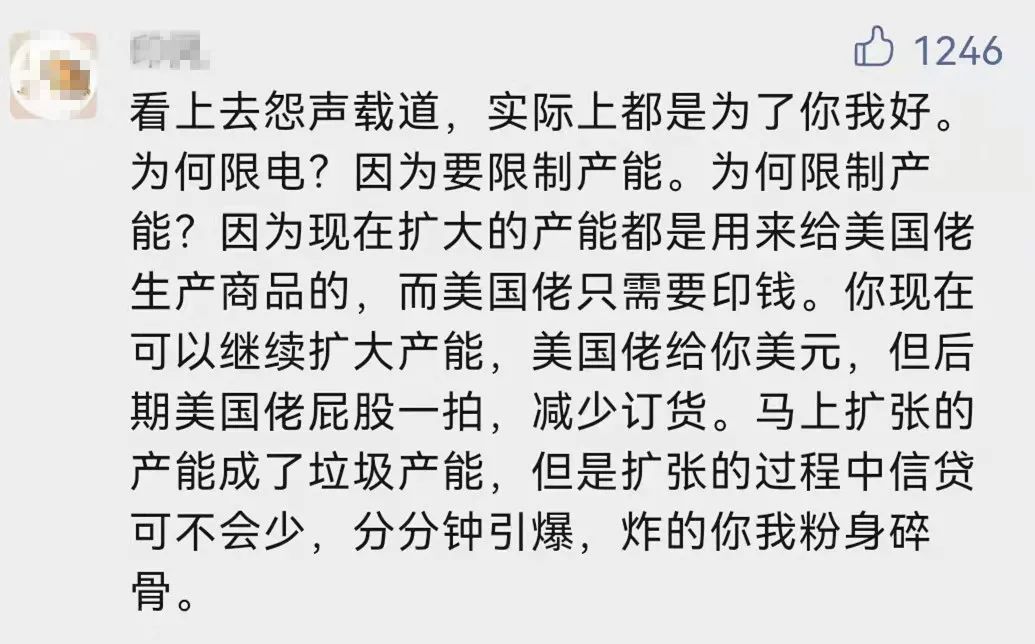
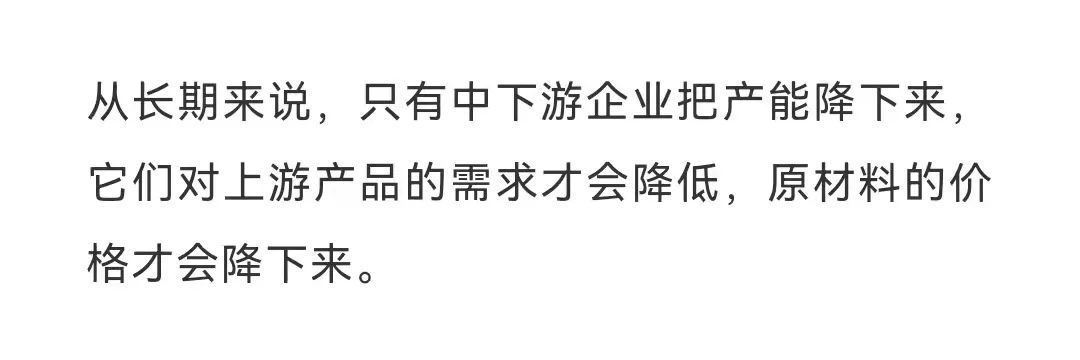
Some experts believe that the administrative orders for blanket shutdowns and production limits in certain regions are somewhat crude. Market-based mechanisms should be adopted more extensively to address energy consumption issues. For example, introducing production quotas, carbon emission allowances, and green electricity trading can help enterprises form long-term, stable expectations regarding their energy consumption. Reasonable trading mechanisms can encourage enterprises to reduce energy consumption and promote the industry's long-term sustainable development.
From a nominal perspective, why are "dual control of energy consumption and dual carbon" given such prominence? Tu Jianjun, a researcher at the Center on Global Energy Policy at Columbia University, stated that although theoretically China's energy consumption still has some room for growth before peaking in 2030, the higher the peak, the greater the difficulty in achieving carbon neutrality by 2060. Therefore, carbon reduction actions must start now.
The "Plan for Improving the Dual Control System for Energy Consumption Intensity and Total Volume" (hereinafter referred to as the "Plan") states that implementing dual control over energy consumption intensity and total volume is an important institutional arrangement by the CPC Central Committee and the State Council to strengthen ecological civilization construction and promote high-quality development, and serves as a key measure to achieve the goals of carbon peaking and carbon neutrality.
Expert analysis highlights two key points in the Plan worth noting: first, encouraging renewable energy consumption, and second, emphasizing a significant reduction in energy intensity.
Recently, many regions have begun to implement power rationing. The dual control targets for energy consumption and intensity aim to align with the broader trend of carbon neutrality. In line with the goal of peaking carbon emissions before 2030, the Plan sets out target requirements in three phases: Phase One aims to achieve a more sound dual-control system for energy consumption by 2025, with more rational allocation of energy resources and significantly improved utilization efficiency. Phase Two aims to further improve the dual-control system by 2030, continue to substantially reduce energy intensity, reasonably control total energy consumption, and further optimize the energy structure. Phase Three aims to achieve mature and standardized systems for optimized allocation of energy resources and comprehensive conservation by 2035, providing strong support for achieving the goal of stabilizing and then reducing carbon emissions after the peak.
LED lighting products feature energy saving and environmental protection attributes, offering significant potential for energy saving and carbon reduction. Expanding the use of LED lighting in residential, road, building, agricultural, and other sectors not only enables more efficient illumination and reduces electricity costs, but also promotes green consumption. It serves as an important pathway for citizens, enterprises, and government institutions to actively contribute to carbon emission reduction and carbon neutrality.
Many regions, as well as technology and lighting companies, are integrating into the "carbon neutrality" blueprint through innovation.
Taking a typical household in Beijing as an example, after replacing all lights with LED lamps, annual carbon dioxide emissions can be reduced by approximately 64 kilograms, and electricity costs can be cut by nearly half. Meanwhile, LED lamps feature semiconductor characteristics, making them easier to control intelligently and enabling on-demand lighting, resulting in more significant energy saving effects.
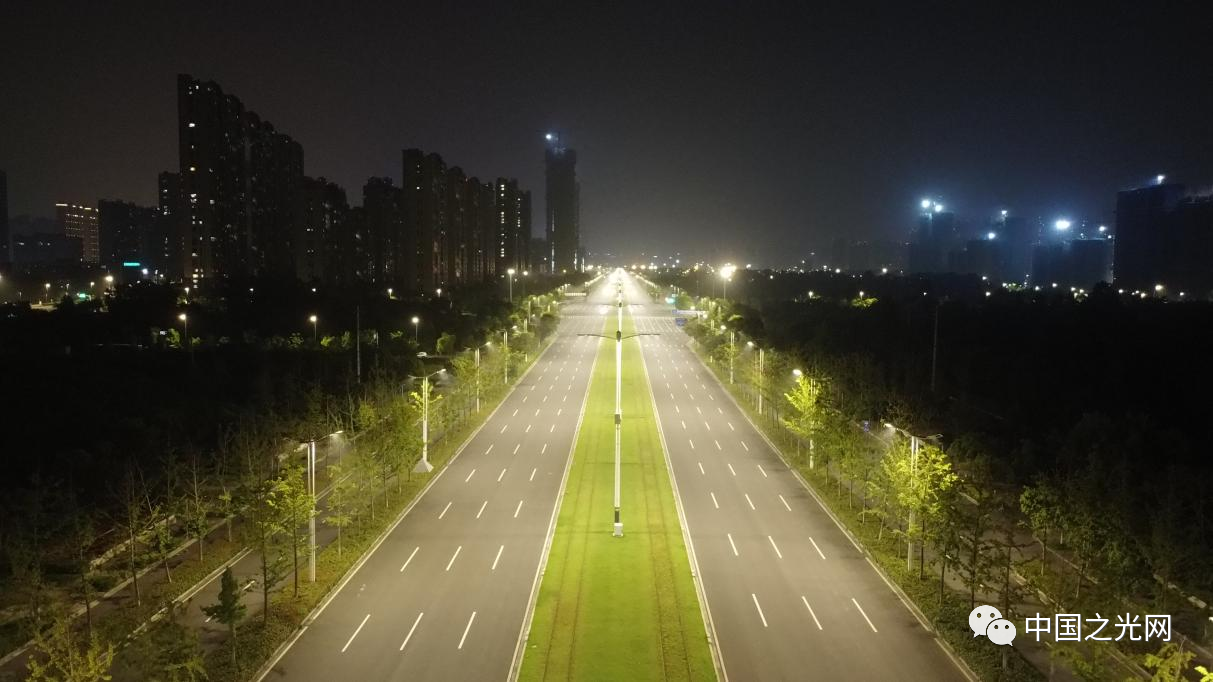
Nanjing street lights are a model of energy saving and carbon reduction in road lighting. Since 2013, the Nanjing Street Light Management Office has gradually promoted the use of mature and reliable LED luminaires on newly built roads. Starting in 2017, it began annual LED energy-saving retrofits for existing facilities. The project mainly includes replacing old high-pressure sodium lamps with LED luminaires and installing single-luminaire control devices.
As of the end of June 2021, approximately 62,000 LED street light retrofit projects and 37,500 new installation projects have been completed, covering the main streets of Nanjing's public transportation network. According to statistics, as of the end of June 2021, the voluntary emission reductions from Nanjing's street light retrofit projects amounted to 38,423.28 tCO2e, while those from new installation projects amounted to 120,680.46 tCO2e, resulting in a total voluntary emission reduction of 159,103.74 tCO2e.
In summary, dual control of energy consumption is a double-edged sword: some companies are harmed while others benefit. Here we highlight two impacts: first, it affects production and raw material prices; second, the demand for green electricity is becoming increasingly prominent!
What is your view on this round of power rationing and production restrictions? Has your company been affected? Feel free to leave a comment.
Compiled and edited by China Light Network