China's first technical standard for luminous floor tiles released
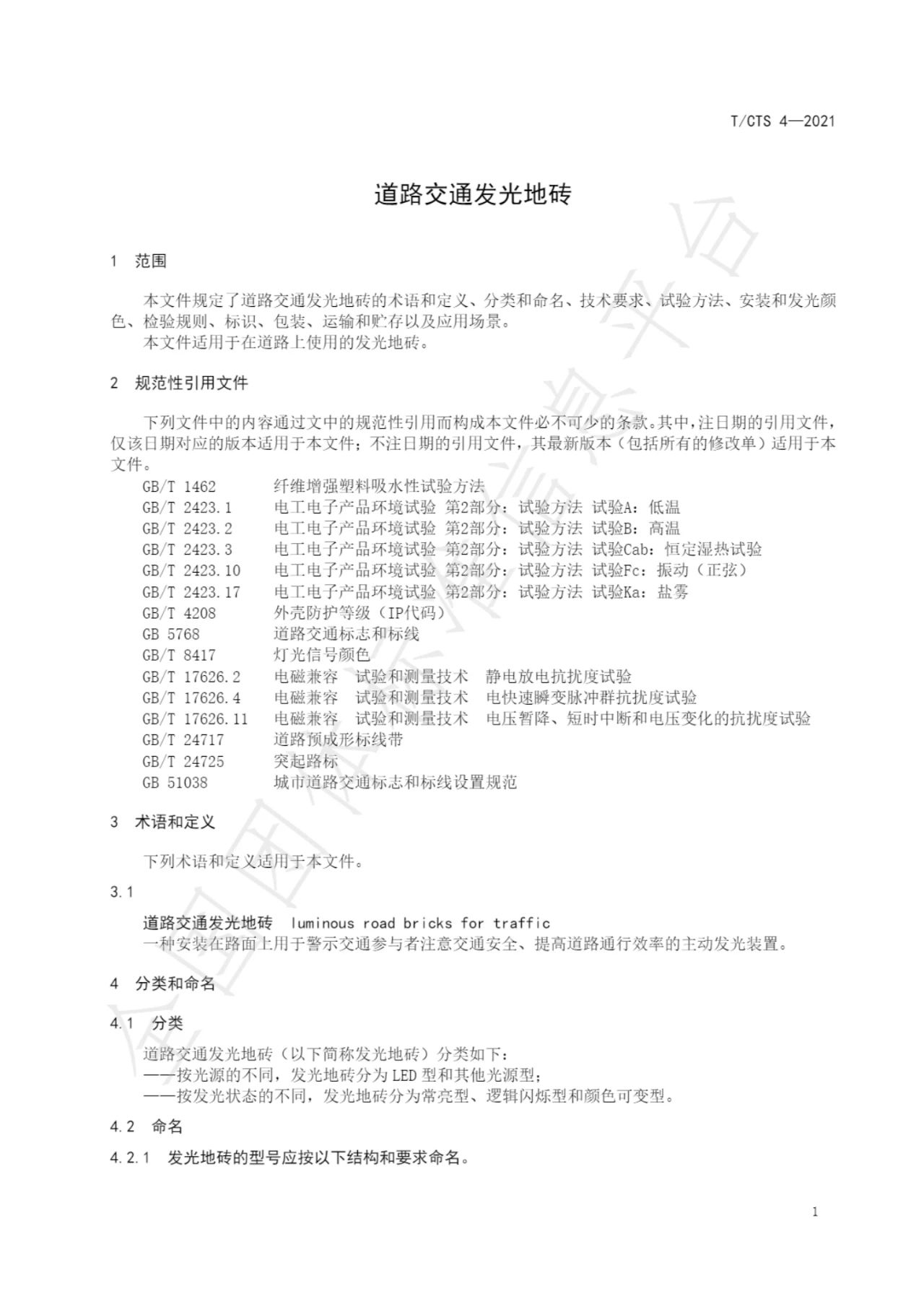
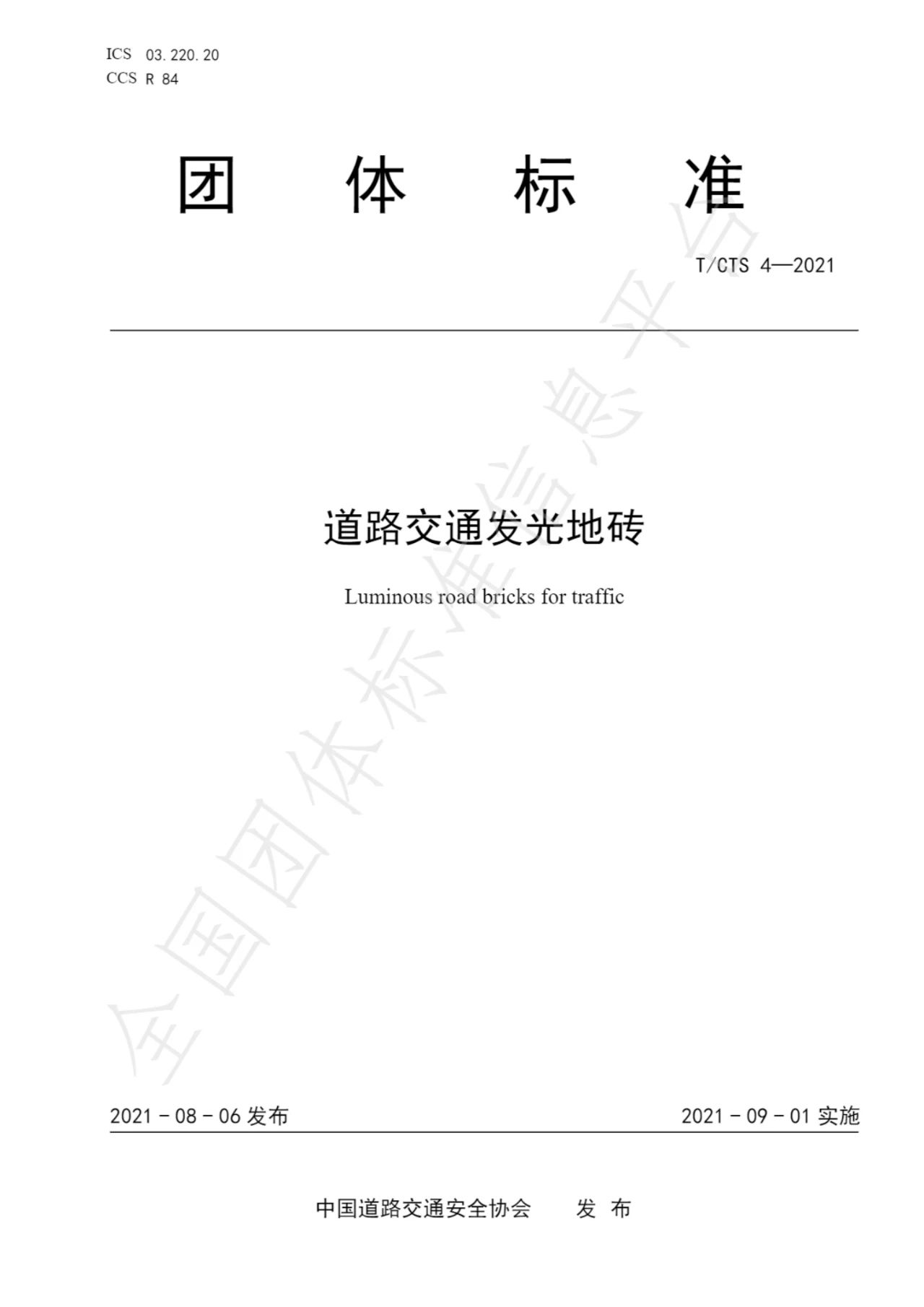
The group standard T/CTS 4-2021 "Luminous Pavement Tiles for Road Traffic" (hereinafter referred to as the Standard), approved and issued by the China Road Traffic Safety Association, has been officially implemented since September 1, 2021. This is the first technical standard regarding luminous pavement tiles in China's road traffic industry.
This standard, led by Nanjing Lantai Traffic Facilities Co., Ltd., provides a normative basis for luminous floor tiles installed on roads for road traffic. It aims to enhance the standardization of urban road traffic equipment implementation, thereby improving the current state of urban road traffic. Meanwhile, it offers certain guidance and reference value for the application of luminous floor tiles in fields such as Nightscape / Landscape lighting and cultural tourism.
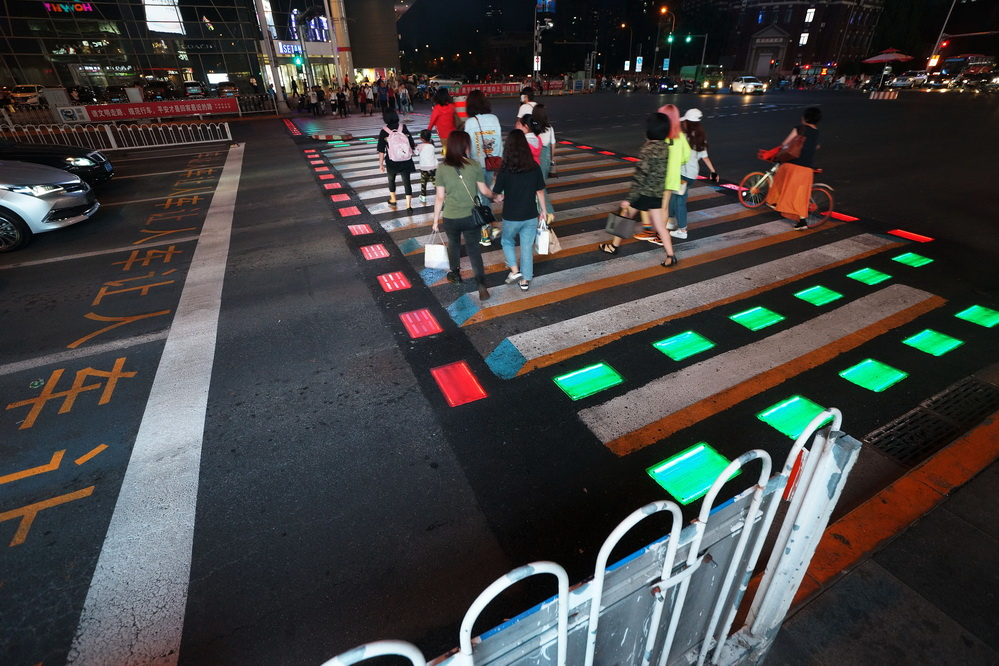
Smart luminous crosswalks are an important application scenario for luminous floor tiles in road traffic. In recent years, smart luminous crosswalks have been implemented in multiple cities across China. While leveraging high technology to safeguard urban traffic safety, they have also attracted significant public attention and become an "internet sensation" due to their ability to enhance the city's nightscape.
As the installation volume of luminous crosswalks increases and their service life extends, product quality varies significantly among manufacturers. Issues such as breakage, pavement subsidence, and inconsistent light colors frequently occur. In this context, there is a growing call within the industry for relevant standards to be introduced, ensuring that the application of luminous floor tiles follows established guidelines and preventing negative effects caused by improper use.
The group standard "Luminous Pavement Tiles for Road Traffic" (CTS 4-2021) was initiated on June 15, 2020. After undergoing multiple rounds of expert review, public consultation, and deliberation voting, it was officially implemented on September 1, 2021, providing municipal and transportation industry design units and competent authorities with clear guidelines and regulations to follow.
This standard was drafted by Nanjing Lantai Traffic Facilities Co., Ltd., Nantong University, the Traffic Police Detachment of Nantong Public Security Bureau, Shanghai Municipal Engineering Design Institute (Group) Co., Ltd., Shanxi Shengshijia Information Technology Co., Ltd., Beijing Peking Qianfang Technology Co., Ltd., the Municipal Engineering Design Institute of East China Architectural Design & Research Institute Co., Ltd., Nantong Tiancheng Optoelectronics Technology Co., Ltd., Fangzhong IoT Technology (Jiangsu) Co., Ltd., and other units.
It is worth noting that this standard involves the use of patents such as "A Luminous Floor Tile" (Patent No. ZL201910355181.2), "A Luminous Floor Tile" (Patent No. ZL201920093826.5), and "Traffic Guidance System for Intersections Under Urban Viaducts" (Patent Application No. 202020691433.7). The holders of the aforementioned patents have committed to the issuing body of this standard that they are willing to license any organization or individual to implement these patents when implementing this standard on fair, reasonable, and non-discriminatory terms.
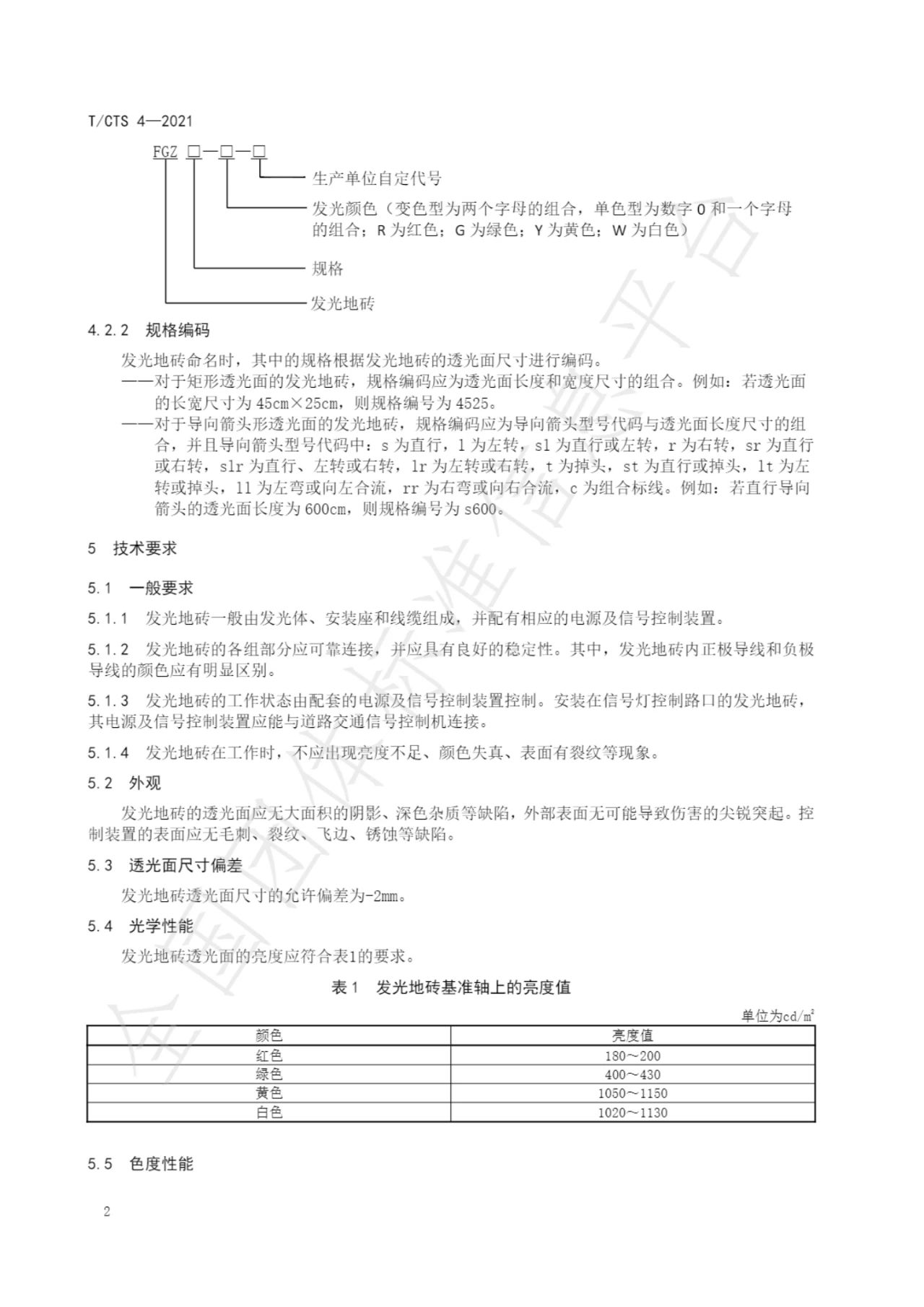
The group standard "Luminous Floor Tiles for Road Traffic" specifies requirements for the scope, normative references, classification and naming, technical requirements, test methods, installation and setup, inspection rules, marking, packaging, transportation and storage, and application scenarios of luminous floor tiles for road traffic.
According to expert interpretation:
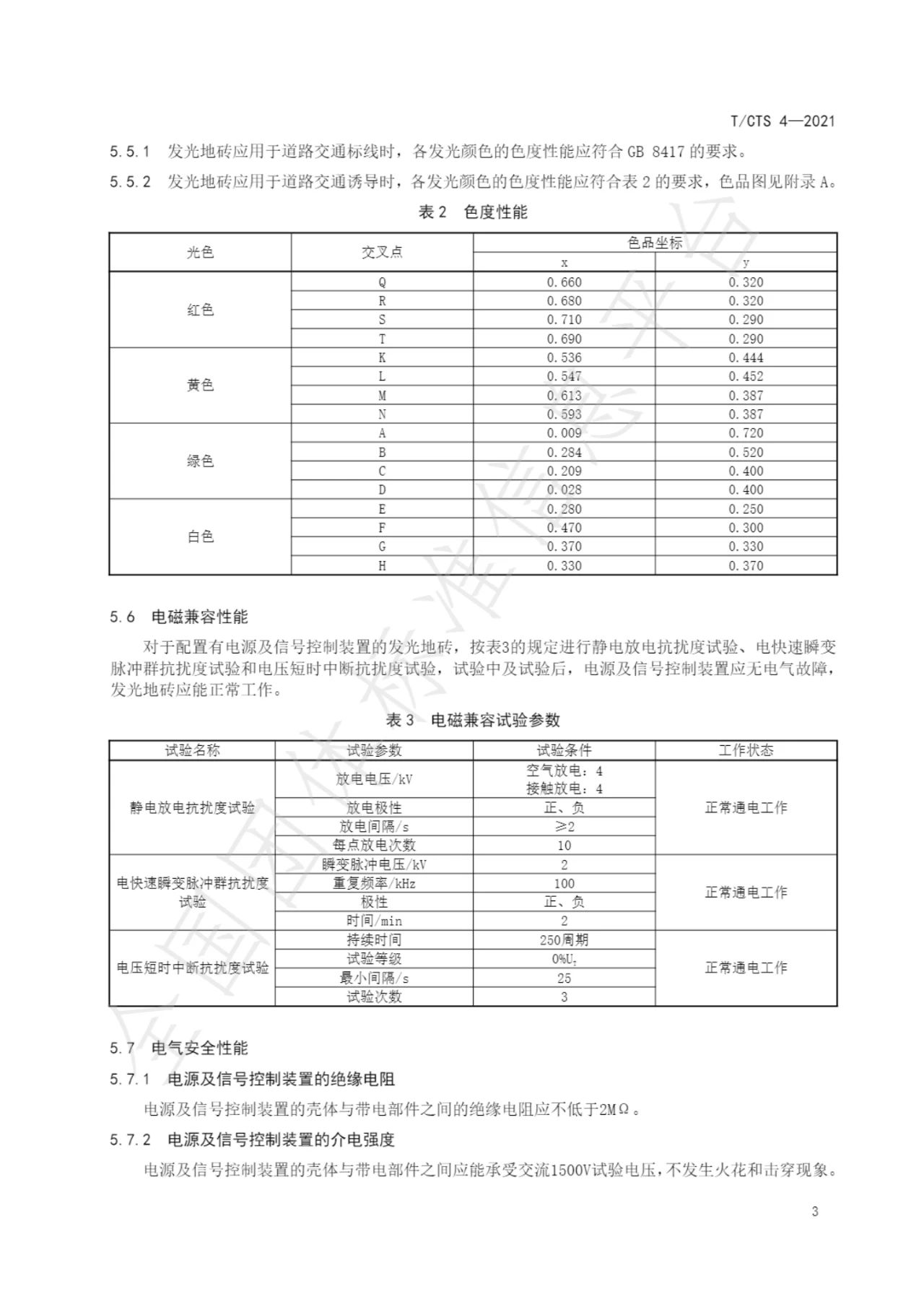
First, the "Road Traffic Luminous Floor Tiles" standard specifies the luminance and chromaticity of luminous tiles. The luminance requirements consider two aspects: excessive brightness causes light pollution that impairs drivers' vision, while insufficient brightness fails to provide adequate warning; the chromaticity values reference those of red, green, and yellow traffic signals.
Secondly, the "Luminous Pavement Tiles for Road Traffic" stipulates that luminous pavement tiles consist of a light-emitting body, a mounting base, and cables, and are equipped with corresponding power supply and signal control devices. Taking directly buried luminous tiles as an example, replacing them after a fault would damage the road and seriously affect its aesthetics, while the use of mounting bases can effectively avoid this problem.
Thirdly, the "Road Traffic Luminous Floor Tiles" standard exemplarily provides application locations for luminous tiles in four colors: red, green, yellow, and white. It also stipulates that "the luminous color of each luminous floor tile in the pedestrian crossing gap shall be white," because using red and green luminous tiles in the "pedestrian crossing gap" can easily interfere with drivers' vision.
In recent years, China has implemented various intelligent traffic measures to improve road safety. While these have achieved some success, most are based on a "vehicle-centric" philosophy, primarily considering traffic issues from the perspective of motor vehicles. This often neglects the interests of pedestrians and non-motorized vehicle users. Coupled with limitations in pedestrian behavior, dangerous actions such as jaywalking and climbing over barriers are common, making safety for pedestrians and non-motorized vehicles still a serious concern. Furthermore, in adverse weather conditions such as at night, during rain, or in fog and haze, drivers' visibility is reduced, lowering the visibility of crosswalks and increasing risk. In such conditions, the accident rate is more than five times higher than usual. Relying solely on public awareness campaigns and punitive measures is clearly limited in reducing accidents at crosswalks.
The application of luminous road tiles for traffic can effectively regulate pedestrian crossing behavior, improve the low visibility of traditional crosswalks in adverse weather, accelerate urban traffic management, and align with the requirements of the Outline for Building a Transport Powerhouse. The implementation of this standard will promote people-oriented, standardized, and sustainable development of the luminous road tile industry. This standard has broad market application prospects and can generate significant economic and social benefits.
Considering the harsh operating environment of luminous road paving tiles, which are mainly installed on outdoor road surfaces and must withstand frequent crushing by pedestrians and vehicles, the standard reasonably specifies more than ten closely related performance indicators (such as optical properties, chromaticity, compressive load, high and low temperature resistance, slip resistance, etc.) to ensure that the quality of luminous road paving tiles meets construction and usage requirements when applied to luminous crosswalks and other scenarios.