
National-level modern agricultural industrial park: successful establishment qualifies for financial subsidies!
As a major project in the field of agriculture and rural development, the National Modern Agricultural Industrial Park has received a cumulative central fiscal investment of 9.1 billion yuan since its establishment was launched in 2017, supporting the construction of 138 national modern agricultural industrial parks. A number of well-developed industrial parks have achieved tangible results, playing an important role in local industry revitalization. During the critical period of effectively linking poverty alleviation with rural revitalization, the top priority is industry revitalization. How can industries be developed to achieve revitalization? With the advancement of the National Modern Agricultural Industrial Park project, many county and district leaders have paid attention to this project and gained a deeper understanding of the importance of National Modern Agricultural Industrial Parks, aiming to use these industrial parks as a key lever to promote rural revitalization.
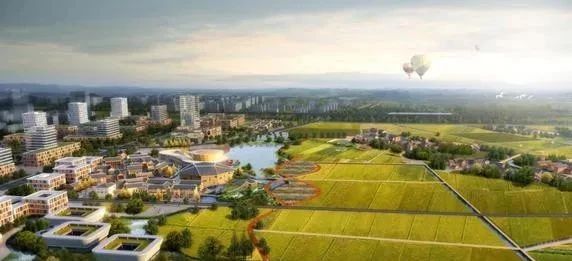
For each National Modern Agricultural Industrial Park approved for establishment, upon approval, the national government provides an upfront subsidy of 100 million yuan, with a provincial matching fund of 100 million yuan for park construction. Provincial modern agricultural industrial parks receive a matching fund of 50 million yuan. Consequently, the National Modern Agricultural Industrial Park has become a popular project, with very high enthusiasm for establishment across various regions.
After 2 to 3 years of establishment, passing the acceptance review and being officially listed, the state provides additional funding rewards ranging from hundreds of millions. The specific reward amount is determined based on the scoring results of the industrial park's establishment approval, but the reward funds will definitely be higher than the initial funding provided upon approval of establishment.
到2025年创建500个左右示范区,形成梯次推进农业现代化的格局。创建现代林业产业示范区。因此,有必要先了解清楚对于现代农业产业园政策和申报创建的具体要求。主导产业特色优势明显 、规划布局科学合理、建设水平区域领先、绿色发展成效突出、带动农民作用显著、政策支持措施有力。
On March 8, 2021, the General Office of the Ministry of Agriculture and Rural Affairs and the General Office of the Ministry of Finance issued the "Notice on Coordinating the Declaration of Agricultural Industry Integration Development Projects for 2021." Centered on "ensuring supply and solidifying security, revitalizing and smoothing circulation," policy tasks and funds for advantageous characteristic industrial clusters and strong agricultural industry towns will focus on leading industries, promote overall coordination, optimize industrial layout, gather resource elements, extend the supply chain, address development shortcomings, improve benefit linkage mechanisms, promote the integrated development of rural industries, enhance the modernization level of the agricultural supply chain, promote high-quality and efficient agriculture, accelerate the construction of a modern agricultural industrial system, and provide strong support for comprehensively promoting rural revitalization and accelerating the modernization of agriculture and rural areas.
As an important lever for promoting rural revitalization and an "engine" driving the integrated development of industries, how can industrial parks stand out among numerous county-level regions nationwide? This requires systematic and in-depth planning. One cannot resort to last-minute efforts; instead, advance planning and a three-year construction period are essential to ultimately meet the certification standards for National Modern Agricultural Industrial Parks.
Creation Steps
Step 1: Establish the foundation for system evaluation
As a competitive selection project, the Industrial Park has specific creation requirements and conditions. The most basic condition is that the total output value of the leading industry within the Industrial Park must exceed RMB 2 billion, and it must be a provincial-level modern agricultural industrial park. Therefore, a scientific and rational approach is required: conduct a self-assessment based on actual conditions and benchmark against the creation requirements and conditions before deciding whether to proceed with the application. If the Industrial Park has a certain work foundation, the leading industry has achieved integrated development of primary, secondary, and tertiary industries, and high-value support policies and measures as well as mechanisms for linking and leading farmers have been explored, with significant effects in driving farmer participation. Additionally, no major violations or disciplinary issues have occurred in the agricultural sector within the past three years (including but not limited to irregularities in the use of national agricultural project funds and illegal use of agricultural land). If such issues exist, application is not recommended.
Before comprehensively advancing the establishment of the industrial park, it is necessary to benchmark against the national modern agricultural industrial park's establishment requirements and conditions. From a self-perspective, analyze the advantages of establishment, industrial characteristics, and the problems and shortcomings in the development of leading industries.
On the other hand, we should actively learn from successful national modern agricultural industrial parks and draw on best practices from other regions to comprehensively assess the current level of the industrial park we are planning. By benchmarking against policies and the market, we can identify further actions to take.
Step 2: Scientifically plan preliminary work
Guided by the challenges faced in industry development and policy requirements, we assess our current status, identify gaps and deficiencies, and commence comprehensive deployment of the establishment of National Modern Agricultural Industrial Parks.
(1) Establish an industrial park construction team to coordinate and address issues in the development of the industrial park. Note that industrial park construction is a comprehensive project that requires coordinating the efforts of multiple departments, including agriculture and rural affairs, relevant townships, natural resources, transportation, culture and tourism, and water resources.
(2) Strategically plan the 5-year construction roadmap for the Industrial Park, clearly defining its core and radiation zones. Clarify the development strategy, construction goals, functional layout, key tasks, and other elements to serve as the guiding document for the Industrial Park's development, providing direction and clarity. Special note: National Modern Agricultural Industrial Parks should be located within a county-level area, involving two or more townships. They cannot cover an entire county, district, or city; the scope must be neither too large nor too small.
(3) Research and introduce a series of support policies to cultivate and strengthen existing business entities, intensify investment promotion efforts, attract entities engaged in the production and operation of leading industries across the country to settle in the industrial park, and simultaneously introduce talent attraction policies to absorb professional groups with expertise in technology, business operations, and management, thereby serving the entire supply chain.
(4) Explore mechanisms for coordinated Industry development. It is not only about building an Industry system, operational system, and production system, but also focusing on platform establishment. While relying on leading enterprises, various models should be explored to attract universities, research institutes, financial institutions, and insurance agencies to participate jointly, creating a complete Supply chain.
Step 3: Carefully prepare the implementation plan
During the inspection of industrial parks, many people mistakenly believe that striving for recognition means preparing relevant work only after the National Modern Agricultural Industrial Park Creation Guidelines are issued (every March). In fact, the main work should be done in advance. Generally, the cycle from document issuance to submission is about one month, leaving less than two weeks for localities to prepare application materials. To develop a solid plan, work must be carried out ahead of time with early planning. Some regions have a strong willingness to compete; all application materials, creation plans, and application forms were studied and demonstrated as early as one or even two years ago and included in the reserve pool. After the document is issued, only the latest creation achievements need to be refined, and the focus and engineering of later-stage construction should be adjusted according to the project's construction progress.
The implementation plan is the top priority in the creation process. During its preparation, carefully consider what to build, how to build it, and how to support the construction.
In 2021, the concept of "ensuring supply and solidifying security, revitalizing and smoothing circulation" was proposed for the integrated development of the agricultural industry. The central government provided financial support for the establishment of 50 new National Modern Agricultural Industrial Parks, encouraging localities to apply for projects led by grain, beef cattle, and the seed industry as dominant industries. National Modern Agricultural Industrial Parks should be based at the county level, relying on large-scale planting and breeding, promoting the integrated development of "production + processing + technology," gathering modern factors and business entities, accelerating upgrades across all industrial links and value addition throughout the entire chain, comprehensively implementing green production methods, innovating technology integration and mechanisms for linking and driving farmers, and striving to build platform carriers that drive rural industrial revitalization and engines for agricultural modernization. Key support areas include large-scale critical infrastructure within the parks, improvement and enhancement of the industry and supply chain, construction of innovation platforms such as collaborative technology initiatives, development of smart agriculture, agricultural product Certification and brand cultivation, and increasing farmers' income through farmer-linking mechanisms.
Declaration Process
Modern agricultural industrial park projects are declared by county-level agricultural authorities. A leading group for the establishment of modern agricultural industrial parks, headed by agricultural leaders, must be formed to actively prioritize and cooperate with related creation work; operating enterprises in the local dominant industry can serve as participants in the establishment.
Local district and county governments can integrate existing resources for planning, select 1-2 industry projects with local advantages and the leading entities responsible for creating industrial parks, to align with national modern agricultural industrial park projects.
1. Create Program
(1) Each locality shall determine the industrial parks proposed for inclusion in the creation list through a process where county-level governments submit applications and provincial-level agriculture and rural affairs and finance departments conduct merit-based selection. After review and approval by the provincial leader in charge, the list shall be submitted to the Ministry of Agriculture and Rural Affairs and the Ministry of Finance. Provincial-level agriculture and rural affairs departments and finance departments shall strictly carry out competitive selection in accordance with the creation criteria, and carefully organize work such as the review of creation plans and construction planning, as well as on-site verification.
(2) The Ministry of Agriculture and Rural Affairs and the Ministry of Finance approve establishment through a combination of documentary review for filing and competitive selection. For certain industrial parks applied for by provinces with outstanding construction results, sound construction systems, and significant investment of provincial fiscal funds, those that meet the conditions after documentary review will be included in the proposed approval list. Competitive selection will be conducted for some industrial parks, where experts organize on-site defenses to select the best candidates for inclusion in the proposed approval list.
(3) After public notice with no objections, the list of proposed industrial parks approved for establishment shall be jointly announced by the Ministry of Agriculture and Rural Affairs and the Ministry of Finance.
2. Create Amount
(1)农业农村部、财政部按照相关因素测算各地开展创建的申报指标。原则上2018年度农林牧渔业总产值7000亿元及以上的省份按2个申报,7000亿元以下的省份按1个申报。新疆生产建设兵团安排1个申报指标。对2019年中央财政资金统筹使用不规范的省份扣减1个指标。黑龙江省农垦总局、广东省农垦总局由所在省统筹安排申报。超指标申请不予受理。
(2)按照种业发展品种布局,支持种业育繁推一体化基础好的北京、河北、福建、新疆、西藏等省区,按确定品种增加申报1个以种业为主导产业的产业园。
(3) To support and encourage provinces to strengthen industrial park construction, provinces that allocated over RMB 1 billion of provincial fiscal own funds for industrial park construction in 2019 may apply to include three provincial-level industrial parks in the national industrial park creation and management system; provinces that allocated between RMB 500 million and RMB 1 billion may apply to include two provincial-level industrial parks; provinces that allocated between RMB 200 million and RMB 500 million may apply to include one provincial-level industrial park. Upon passing evaluation and certification, they will be awarded the title of National Modern Agricultural Industrial Park.
3. Support Methods
The Ministry of Agriculture and Rural Affairs and the Ministry of Finance organize the evaluation and accreditation of industrial parks in the second and third years after approval for establishment, through methods such as regular monitoring, performance evaluation, and on-site verification. The central government provides appropriate support to approved and accredited industrial parks through rewards and subsidies, based on different circumstances.
(1) For the 13 national industrial parks approved for establishment in 2018 but not yet evaluated and certified, another evaluation and certification will be organized before the end of 2020, and the remaining subsidy funds will be allocated after certification. Those that fail to pass will have their establishment qualification revoked, and surplus funds will be reclaimed in accordance with relevant regulations.
(2) For national industrial parks approved for establishment in 2019 and thereafter, subsidy funds will be allocated in three installments. 30% will be allocated upon approval of establishment, 30% after passing the mid-term evaluation, and the remaining subsidy funds will be issued after passing the final assessment and certification. The mid-term evaluation will be conducted in the second year following the approval of establishment.
(3) Provincial industrial parks included in the national industrial park creation and management system will receive appropriate rewards and subsidies after passing evaluation and certification.
(4) Central fiscal reward and subsidy funds shall be used in accordance with the principles of highlighting key priorities, centralized utilization, and innovative approaches. They shall focus on increasing farmers' income through linkage and support within industrial parks, enhancing industrial service capabilities, extending the supply chain, and promoting the upgrading of leading industries. Industrial parks are encouraged to coordinate and integrate relevant funding channels, leveraging more financial and social capital for industrial park development through mechanisms such as Public-Private Partnership (PPP), government purchase of services, and loan interest subsidies.