
Jiangsu Provincial Center for Disease Control and Prevention P3 Laboratory verifies UVC chip inactivates SARS-CoV-2 within seconds
Share two studies:
CDC P3 Laboratory validates UVC chip in seconds, inactivating SARS-CoV-2
It has recently been learned that the UVC LED chips provided by Zhixin Semiconductor (Hangzhou) Co., Ltd., a subsidiary of BeyondSemi, a global leader in UVC LED chips and disinfection equipment, are used in the latest green disinfection equipment from Zhishan Era Intelligent Technology (Beijing) Co., Ltd. After testing for SARS-CoV-2 inactivation at the P3 laboratory of the Jiangsu Provincial Center for Disease Control and Prevention (CDC), the results showed easy inactivation of the SARS-CoV-2 virus, with a second-level inactivation rate of 99.994%.
Professor Sun Wenjun of Tsinghua University, head of the IUVA SARS-CoV-2 Inactivation Working Group, pointed out that this is the first time globally that an official P3 laboratory has verified that UVC LEDs can inactivate SARS-CoV-2 within seconds. This is indeed encouraging and provides an important basis for using UVC LED technology to prevent and control SARS-CoV-2.
Since the outbreak of COVID-19, well-known universities and related testing institutions around the world have successively conducted experiments to verify the inactivation of SARS-CoV-2 by UVC LED, such as Crystal IS (a subsidiary of Asahi Kasei) with Boston University, and Toyoda Gosei collaborating with the Biomedical Science Association in Japan to carry out experiments on inactivating the novel coronavirus. However, within China, no official laboratory test results for SARS-CoV-2 inactivation have been reported in the media.
According to Dr. Huang Xiaohui, COO of Zhixin Semiconductor, "The wavelength of UVC LED is 260nm to 270nm, which is the ideal sterilization range. The company's UVC LED deep ultraviolet chips have recently seen a rapid increase in power, with stable mass production of single units at 100mW, achieving a luminous intensity of 3mW per square centimeter, inactivating the novel coronavirus within seconds, with an inactivation rate exceeding 99.994%."
David Chen, COO of Zhishan Shidai Intelligent Technology (Beijing) Co., Ltd., stated, "The inspected equipment utilizes Zhixin Semiconductor's self-developed and self-produced single UVC LED chip. With its unique patented optical structure, it features a high-directionality, high-efficiency sterilization engine module that can be easily integrated into automatic disinfection devices such as disinfection gimbals and disinfection robots, requiring no human intervention. Alternatively, it can be developed into lightweight handheld disinfection devices for flexible and convenient sterilization, enabling safe human-machine coexistence."
David also introduced, "Recently, disinfection methods and equipment for cold chain logistics have been gradually upgraded. The company's tunnel-type physical cold chain logistics disinfection system integrates this high-efficiency sterilization engine, which can effectively kill bacteria and viruses even in low-temperature environments, with a disinfection efficiency of 500 items per minute across all six sides of objects. While being highly efficient and fast, it effectively solves problems such as secondary pollution and residue caused by traditional chemical spray disinfection." He also said, "Effective innovation often comes from re-innovating existing technologies. We are committed to customer-centricity, continuously innovating and surpassing from the perspective of truly solving customer problems."
It is reported that BeyondSemi's UVC LED sterilization engine can achieve an optical power of up to 4W. The emitted UVC ultraviolet light not only eliminates Escherichia coli, Staphylococcus aureus, H1N1 influenza virus, spores and other drug-resistant bacteria and viruses within seconds, but has also been verified by the CDC P3 laboratory to inactivate the novel coronavirus SARS-CoV-2 within seconds. During the global outbreak of COVID-19 pneumonia, it provides another powerful tool for long-term epidemic prevention.
In the healthcare industry, this technology has been used to disinfect the protective suits of doctors and nursing staff when they enter or leave isolation wards for the novel coronavirus. Doctors and nursing staff are exposed to high-energy, high-quality ultraviolet radiation from all directions for approximately 30 seconds. The selected wavelength alters the viral RNA structure within a short time, inactivating it so that it no longer poses a threat to humans. Since the protective suits prevent ultraviolet radiation from penetrating, there is no harm to the human body. To make the invisible ultraviolet radiation visible during operation, the hood of the protective device is coated with a layer of fluorescent paint, which lights up once the UVC LED is activated, ensuring great safety.
The Zhishan Intelligent UVC LED series disinfection equipment, validated by inactivation tests for the novel coronavirus at the CDC P3 laboratory, can inactivate SARS-CoV-2 within seconds. It will be widely used in public places with high foot traffic, such as medical institutions, hotels, schools, airports, train stations, and airplanes, to prevent the spread of COVID-19 and other respiratory diseases. (Source: Zhishan Semiconductor)
Nankai University fabricated high-performance, large-area quasi-2D perovskite LEDs
Quasi-two-dimensional perovskite thin films have achieved success in light-emitting diode (LED) device applications due to their excellent optical properties. Quasi-two-dimensional perovskite thin films can be obtained via a simple spin-coating method, and their superior electrical and optical properties can be realized by regulating exciton recombination dynamics and crystallization dynamics. However, when the device area is expanded, device performance suffers a severe decline, which greatly hinders the further commercial application of quasi-two-dimensional perovskite LED devices.
Recently, the research group led by Professor Yuan Mingjian at the Key Laboratory of Advanced Energy Materials Chemistry (Ministry of Education), College of Chemistry, Nankai University, has focused on the controllable preparation of high-performance large-area quasi-2D perovskite LEDs. The study found that the traditional "anti-solvent assisted crystallization" technique is difficult to be compatible with the fabrication process of large-area quasi-2D perovskite thin films. Failure mechanism analysis indicates that quasi-2D perovskites exhibit crystallization characteristics where high
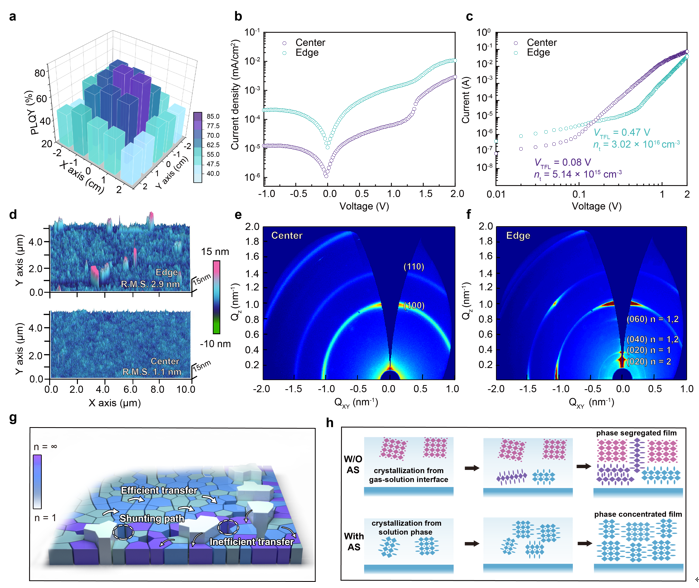
Figure 1. Study on the failure mechanism of the "anti-solvent assisted crystallization" process.
In view of this, the research group proposed an "intermediate phase regulation" strategy. The study found that using amphiphilic amino acids with high binding affinity to inorganic layers—norvaline (NVAL) as surface ligands significantly reduces the formation energy of quasi-2D perovskite phases. This strategy introduces a brand-new, low-barrier nucleation pathway; the introduction of NVAL causes the nucleation and crystallization of quasi-2D perovskite films to start from the quasi-2D phase rather than the 3D perovskite phase, which significantly suppresses phase separation. Using this strategy, without using anti-solvents, researchers obtained high-quality PEA2(FA0.7Cs0.3)4Pb5Br16 quasi-2D perovskite films on large-area substrates of 5.0 × 5.0 cm2.
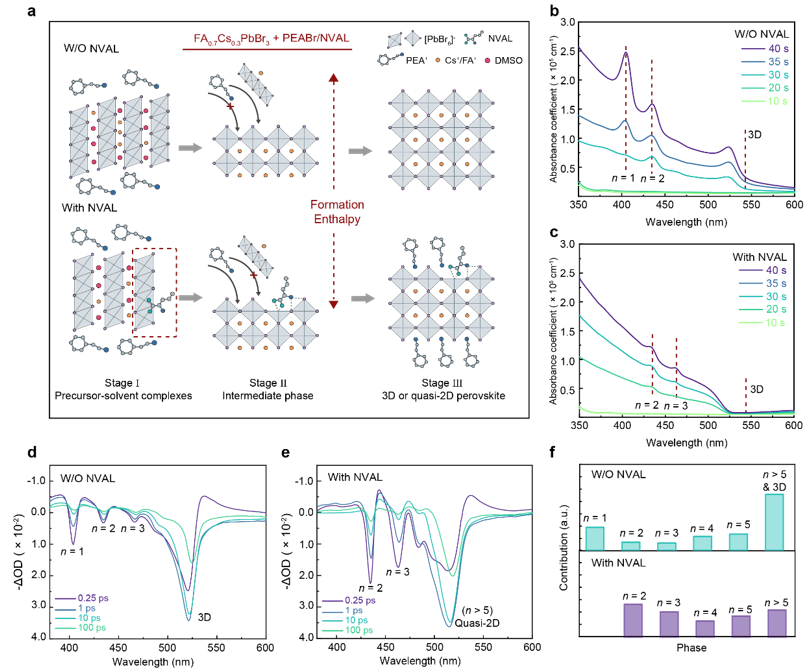
Figure 2. Mesophase regulation strategy.
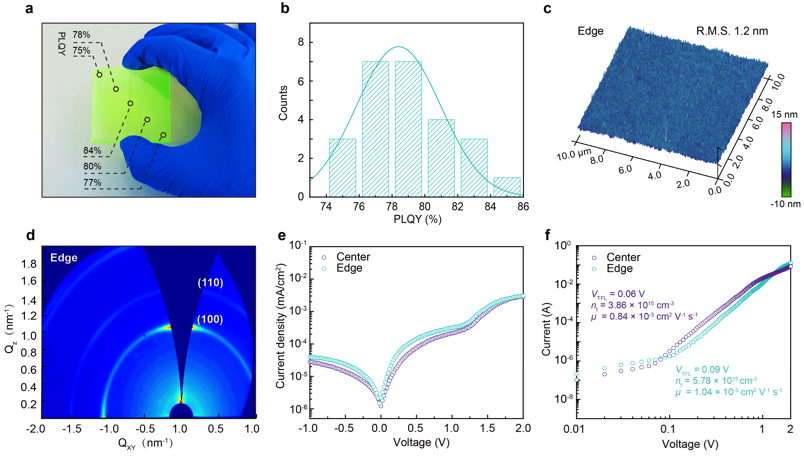
Figure 3. Characteristics of large-area quasi-two-dimensional thin films.
High-quality large-area quasi-2D thin films lay the foundation for constructing high-performance large-area LEDs. However, besides film quality, electroluminescence (EL) behavior largely depends on the carrier recombination characteristics of the material. To achieve precise control over device emission behavior for different application scenarios, a deep understanding of carrier recombination dynamics in the active layer is essential. The structural tunability of quasi-2D perovskites offers the possibility to modulate carrier recombination dynamics. In this work, researchers further demonstrate a method to adjust the exciton binding energy (Eb) by tuning the average
Studies have found a strong correlation between the emission behavior of thin films and Eb. For thin films with low
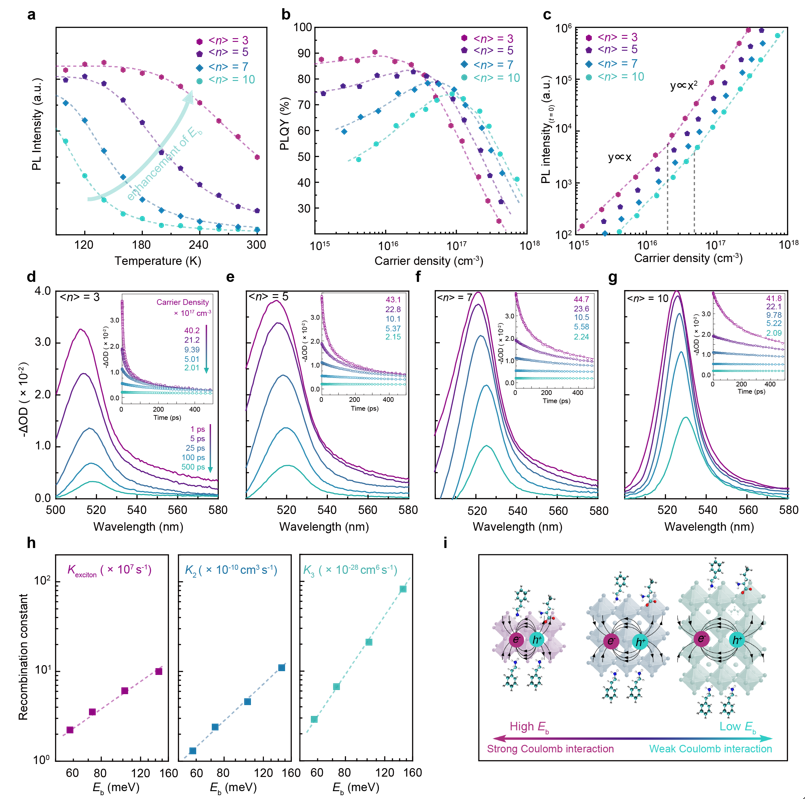
Figure 4. Composite dynamics of quasi-two-dimensional thin films with different Eb.
Furthermore, researchers fabricated large-area (9.0 cm2) perovskite LED devices with different quasi-2D perovskite active layers. All devices exhibited high EL uniformity.
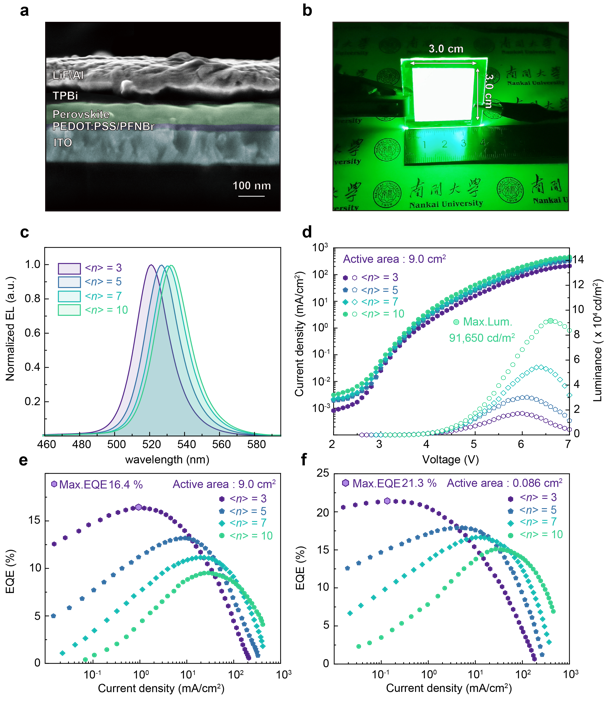
Figure 5 Device performance of quasi-2D perovskite LEDs with different
This achievement was recently published in the journal Nature Communications, with corresponding author Researcher Yuan Mingjian from Nankai University. The co-first authors of the paper are Sun Changjiu, a PhD student, and Jiang Yuanzhi, a postdoctoral researcher, both from Researcher Yuan Mingjian's group at Nankai University. (Source: Nankai University)