
LED chip production capacity is tight, product prices keep rising
The entire lighting industry supply chain is experiencing a chain reaction, from the upstream to the downstream of the supply chain, from raw materials to finished products, with every link echoing "price increases".
"We are temporarily not accepting orders for this product, sorry." "So when will it be in stock?" "It is estimated to be available in the second half of the year. According to last week's notice, our orders are already scheduled until August." On March 31, Manager Wang, who is responsible for procurement at a lighting manufacturer in Wuhan, showed the reporter his inquiry information for the day. The responder was a sales representative from one of the leading domestic LED chip manufacturers.
"Production capacity for some products is indeed quite tight now," said a relevant person in charge at Sanan Optoelectronics on April 1. Huacan Optoelectronics, also an LED chip manufacturer, stated: "Our orders are currently quite full, with full production and sales, and demand exceeds supply for some products."
Supply of some LED chip products is tight. All major manufacturers are operating at full capacity with full sales, and are temporarily not accepting orders for products with low gross margins.
Chip shortages have become the norm in the global market, making price increases for some chips inevitable. Since the outbreak of the pandemic, multiple LED chip companies have issued price adjustment notices, with some adjusting prices for the second or even third time.
It is understood that this round of LED chip price rebound can be traced back to the second half of last year. In November 2020, HC Semitek adjusted the prices of its white light chips for lighting, with an increase ranging from 6% to 8%. Since then, companies such as Changelight, Jucan Optoelectronics, and MTC Semiconductor have also raised their chip prices to varying degrees.
Sanan Optoelectronics, the global leader in LED chips, responded to the price changes by stating that the prices of some of its products (such as low-end chips) have already increased.
Just yesterday, BPS also issued a price adjustment notice, stating that the original prices could no longer meet supply demands. Starting from April 1st, adjustments of varying degrees will be made based on specific product models. "Due to the special circumstances regarding industry production capacity, we have made some adjustments to our product delivery times. We prioritize based on product characteristics and set different delivery times for products of different priorities," the company stated during an investigation.
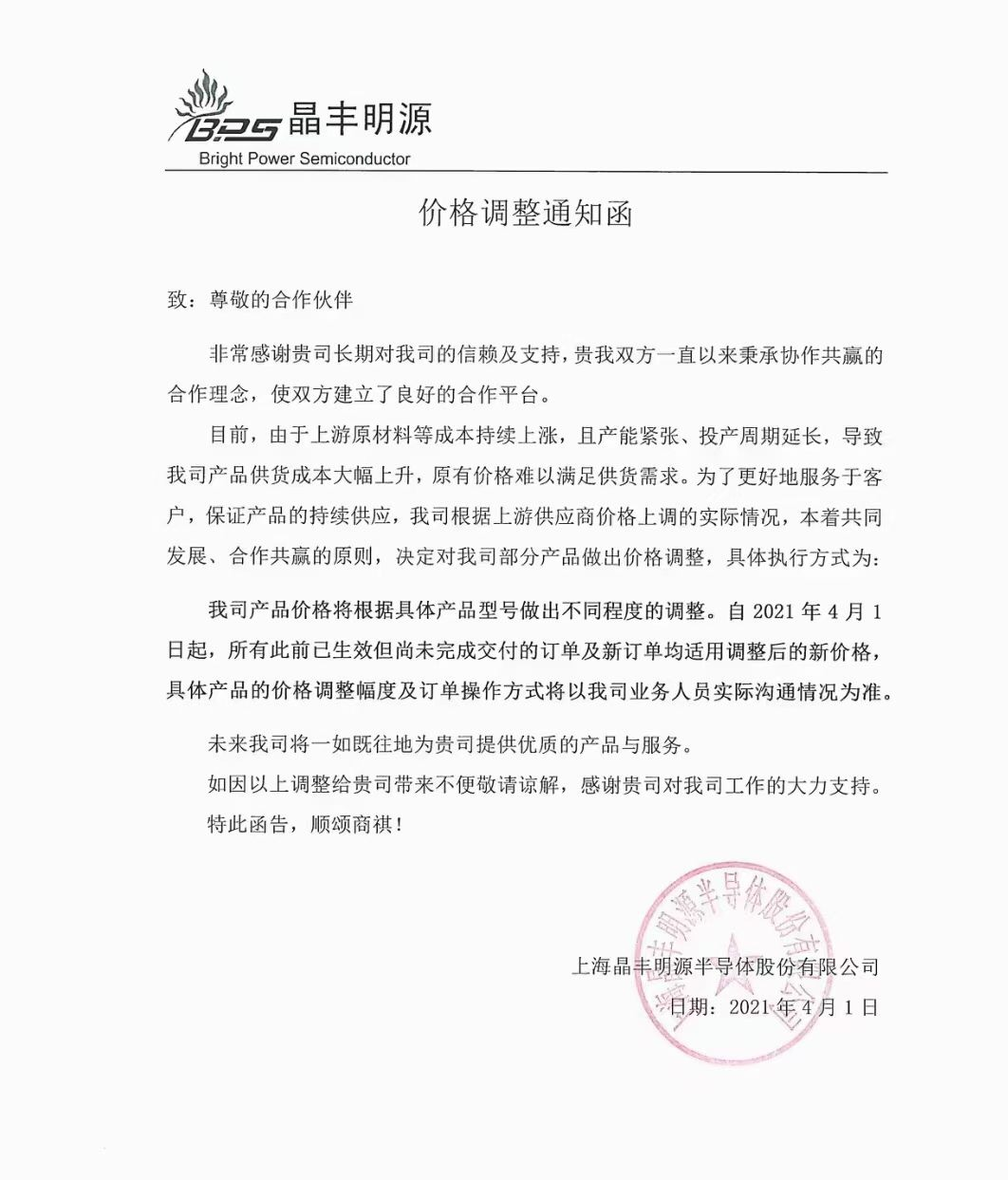
According to BPSemi, the shortage of upstream production capacity in the industry continues, with no signs of relief in the short term. From the perspective of the overall competitive landscape, the shortage has led to the exit of some smaller-scale enterprises from the market, resulting in increased industry concentration.
The global chip shortage is intensifying, with semiconductor-related stocks surging on April 1 and 2.
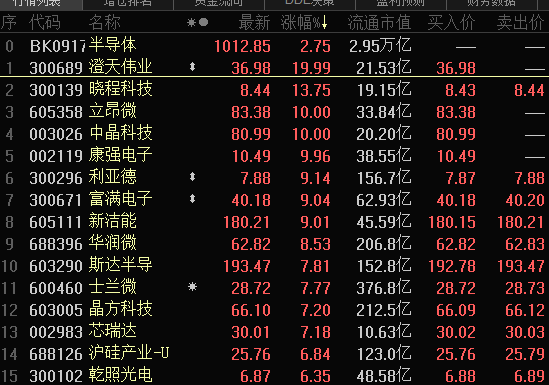
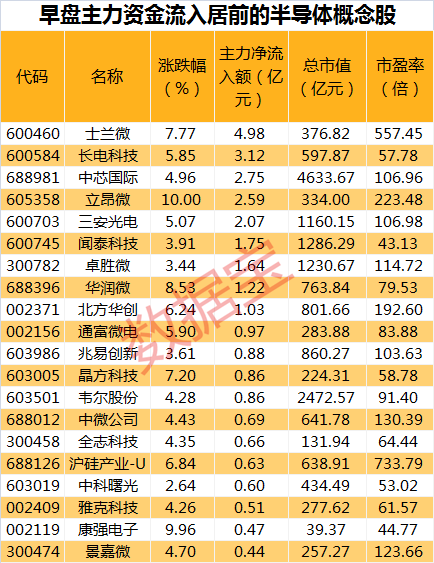
(Image source: Data Bao)
The price of general lighting white-light chips has risen due to higher costs driven by rising raw material prices and a widening supply-demand gap in the industry caused by a strong recovery in downstream demand. "There was overcapacity in white-light chips in previous years, with ongoing price wars and continuously falling prices. The current rebound can help reduce losses, and some companies are estimated to break even." According to relevant researchers at Tianfeng Securities, the price increase for white-light chips is partly due to increased overseas demand influenced by the COVID-19 pandemic, and partly due to reduced supply as some domestic companies exited the market.
The display market is also experiencing shortages. It is understood that as costs rapidly decrease, downstream packaging factories are expanding production to meet rising demand, leading to short-term tightness in the supply of some small-size chips. In addition, driven by the stay-at-home economy, demand from the backlight market remains strong, and the supply situation for related chips is also tight.
However, in the Mini backlight segment, demand has not yet seen explosive growth due to IC shortages, and the market is still awaiting the launch of Apple's iPad and Huawei's Mini TV.
Some leading enterprises have already reported the industry's high prosperity through various channels. For example, in response to investor questions on SSE e-Interaction, Sanan Optoelectronics stated that the company currently has high order visibility. According to industry insiders, high visibility means that orders can be seen further ahead, typically for more than a quarter. Industry news indicates that orders for some of Sanan's products have already been scheduled into the second half of the year.
For example, MTC announced during a recent institutional survey that the sales of LED chips by MTC Semiconductor are progressing well, with shipment volumes ranking among the top in the industry. The company is currently operating at full production and sales capacity. Some existing orders need to be delayed due to production capacity constraints, and product prices have recently been adjusted upward.
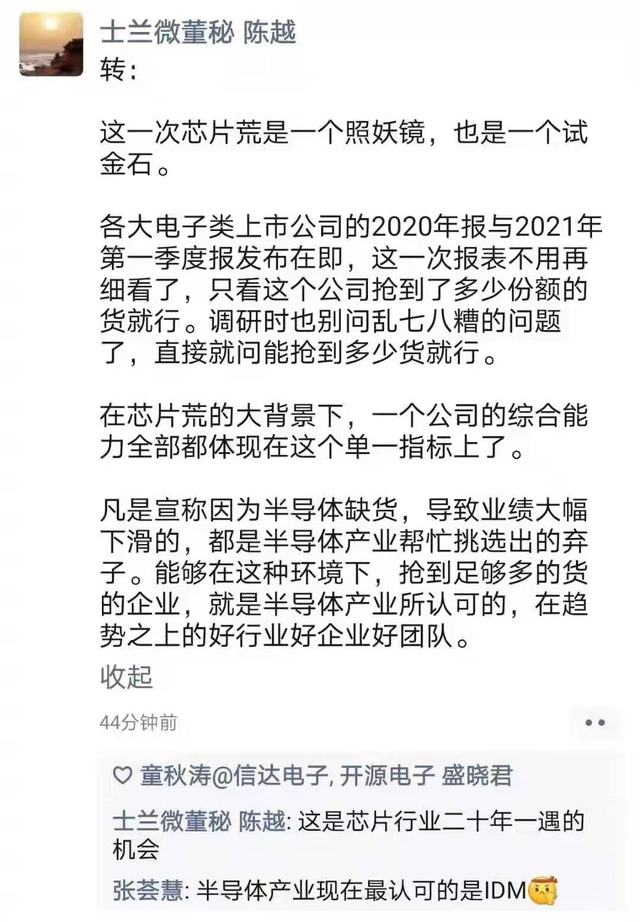
The ongoing "chip price surge" is a major indicator that the chip industry has entered an upcycle. On the evening of March 31, a text forwarded by Silan Micro's Board Secretary on WeChat Moments was screenshot and uploaded online by netizens, quickly drawing attention. The text stated: "This is a once-in-twenty-years opportunity for the chip industry." "This chip shortage is both a revealing mirror and a touchstone." "Just look at how much allocation a company has secured. Against the backdrop of the chip shortage, a company's comprehensive capabilities are fully reflected in this single metric."
Appendix: Current lead time table for various types of chips
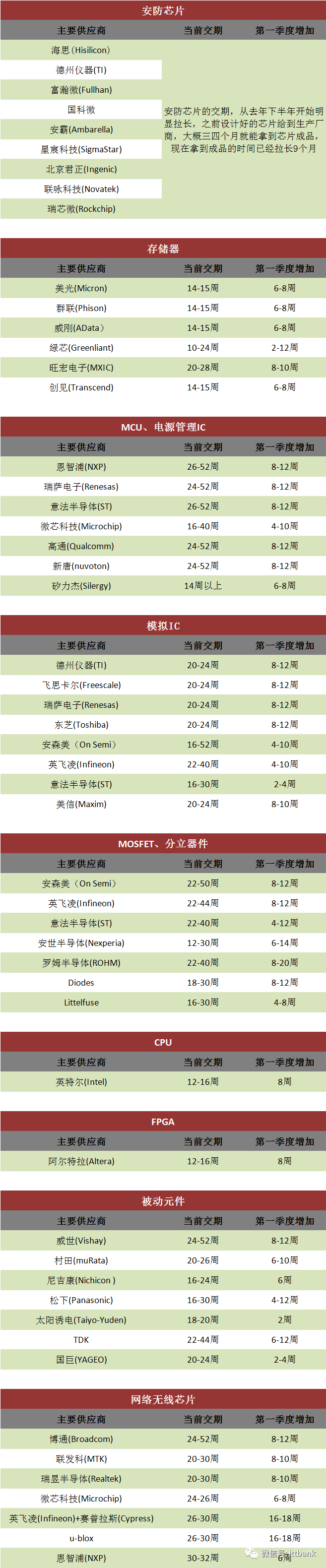
Sources: Shanghai Securities News, Jiemian News, ittbank, etc. Compiled by China Light Network.