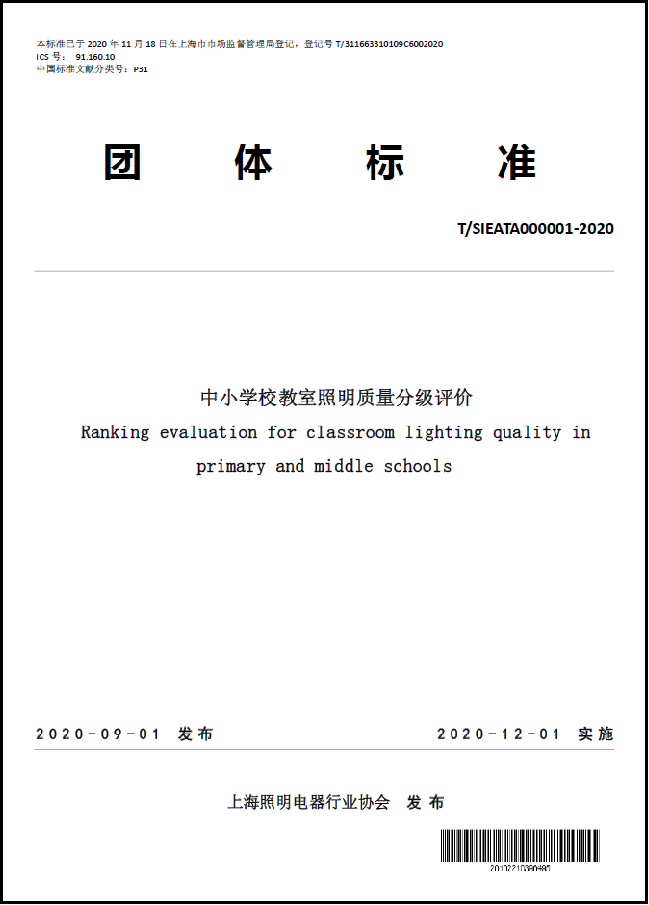
Interpretation of the Group Standard "Grading and Evaluation of Lighting Quality in Primary and Secondary School Classrooms"
Source: 中国之光网|| Views: 3088
Dai Qi Researcher and Doctoral Supervisor at Fudan University
Introduction to Group Standards
Shanghai Lighting Electrical Industry Association Releases
Main drafting organization:
Fudan University Institute of Engineering and Applied TechnologyShanghai Institute of TechnologyShanghai Shidai Zhiguang Lighting Electrical Appliance Testing Co., Ltd.National Electric Light Source Quality Supervision and Inspection Center (Shanghai)Hangzhou Yuzhong Gaohong Lighting Electric Co., Ltd.Fudan University Electric Light Source Research InstituteNational Quality Supervision and Inspection Center for LuminairesShanghai Yaming Lighting Co., Ltd.Signify (China) Investment Co., Ltd.OPPLE Lighting Co., Ltd.Shanghai Sansi Electronic Engineering Co., Ltd.Shanghai Ziguang Information Technology Co., Ltd.Shanghai Shengli Optoelectronics Technology Co., Ltd.Huarong Lighting Co., Ltd.Foshan Electrical and Lighting Co., Ltd.
Background and Purpose of Group Standards
Currently, various regulations and standards in China have established corresponding requirements for basic lighting indicators in primary and secondary school classrooms (such as GB 7793-2010 "Hygienic standard for daylighting and lighting of primary and secondary schools", GB 50034-2013 "Standard for architectural lighting design", GB/T 36876-2018 "Hygienic requirements for lighting design and installation in ordinary classrooms of primary and secondary schools", etc.). The Shanghai Municipal Administration for Market Regulation also released the revised local standard DB31/T 539-2020 "Design code for lighting in classrooms of primary and secondary schools and kindergartens" this May. However, the above standards do not yet cover lighting indicators related to circadian rhythms and spatial luminance (i.e., the brightness level of the classroom space). These two important indicators are related to the circadian health and visual health of primary and secondary school students.
This year, in accordance with the series of documents on launching standardization pilot work jointly issued by the Standardization Administration of China, the National Development and Reform Commission and other ministries, the Shanghai Lighting Electrical Industry Association initiated and organized member enterprises to participate. After consulting relevant enterprises and testing institutions, it applied for the first batch of municipal-level standardization pilot projects in Shanghai in 2020, which was approved. In September 2020, the Working Group on "Grading and Evaluation of Lighting Quality in Primary and Secondary School Classrooms" under the Standards Committee of the Shanghai Lighting Electrical Industry Association completed the compilation of this standard and submitted it on the Shanghai Group Standard Platform. It has passed the corresponding review and approval process and is now publicly released.
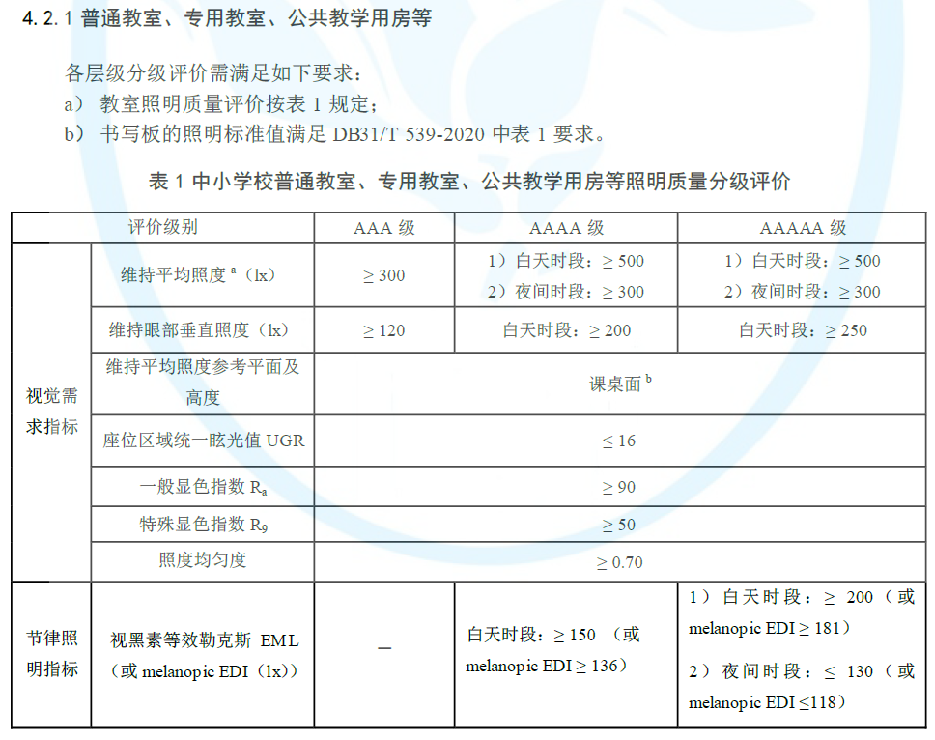
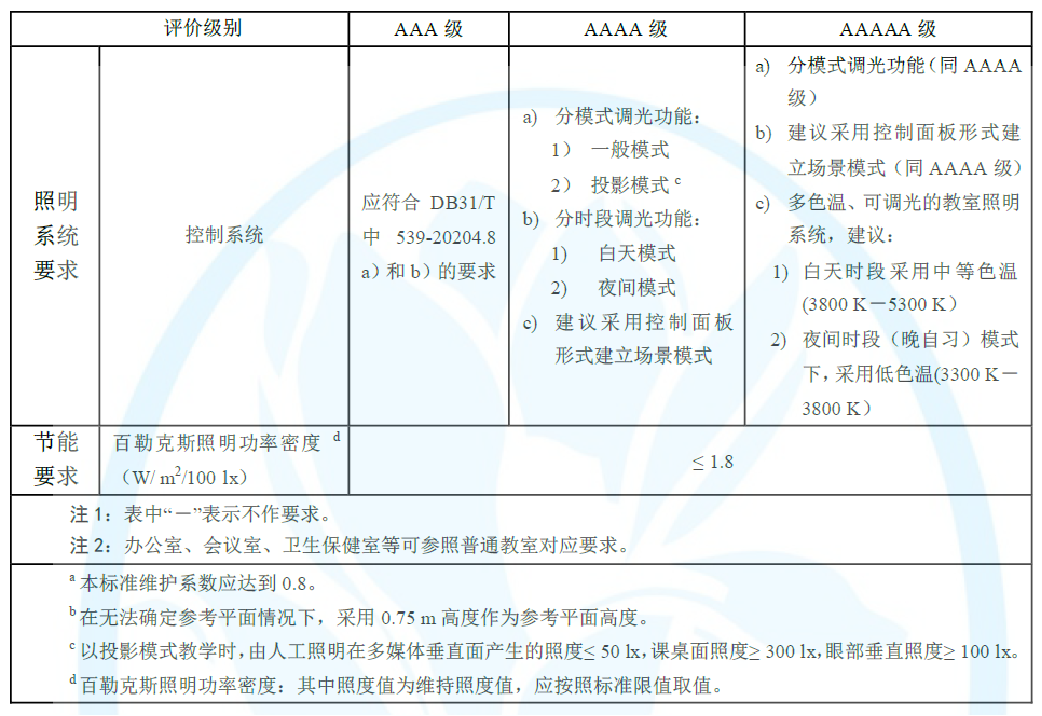
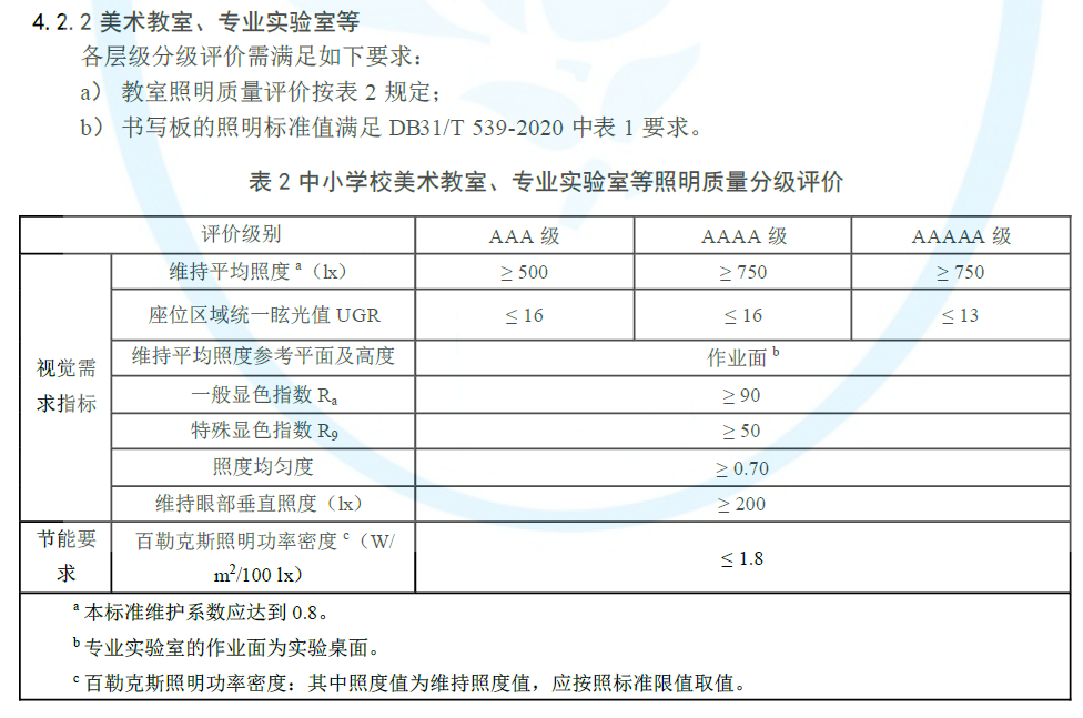
Integrating requirements for visual health and circadian health, and building upon national and local standards while referencing internationally published standards, this proposal further introduces a graded evaluation system for lighting quality in primary and secondary school classrooms.
The lighting quality of primary and secondary school classrooms that meets the relevant acceptance standards is evaluated according to this document at three levels: AAA, AAAA, and AAAAA, with AAAAA being the highest.
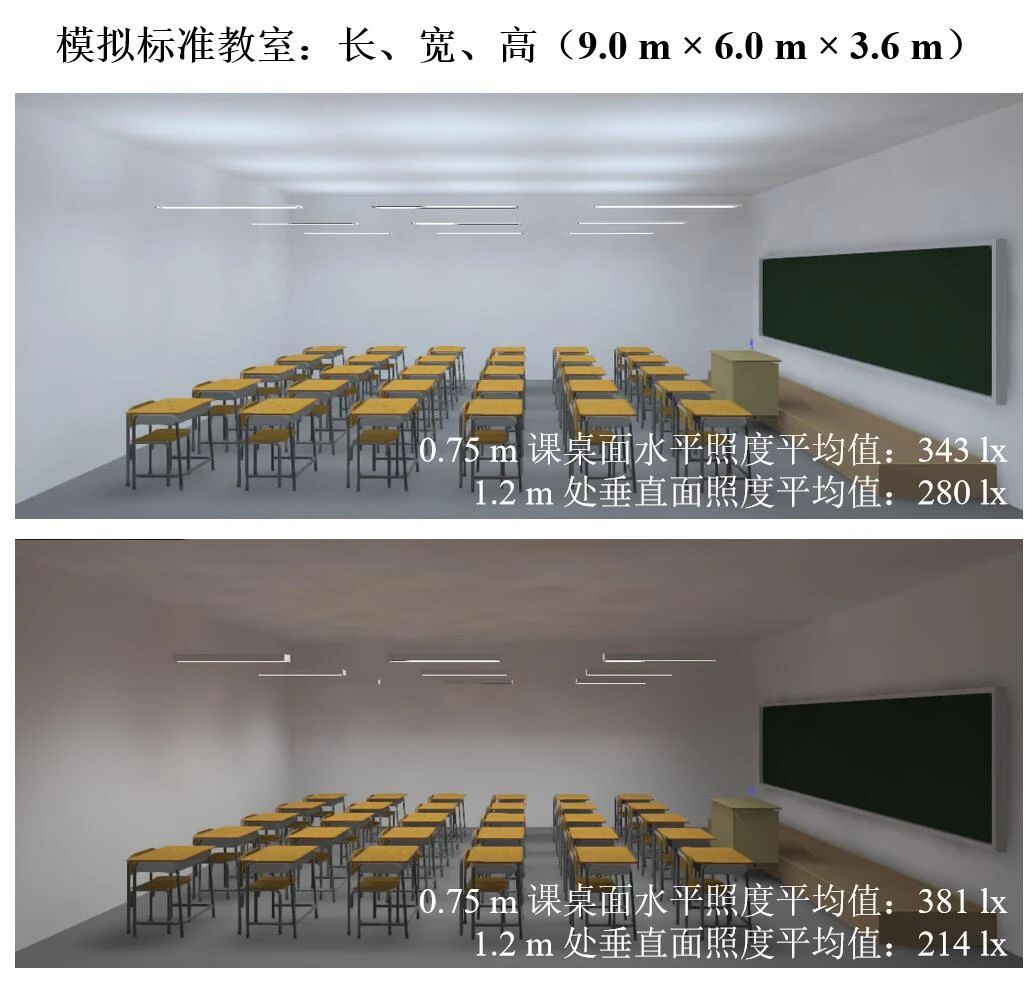
The brightness level of a space may be closely related to the incidence of myopia; lighting environmental factors affecting vision: illuminance, glare, flicker, blue light, blue light hazard, ... spatial luminance.
As classrooms are the environment where primary and secondary school students in China spend most of their daytime, good classroom lighting helps improve adolescents' circadian health, thereby enhancing learning efficiency and sleep quality.
Classroom Lighting and Vision Health of Primary and Secondary School Students
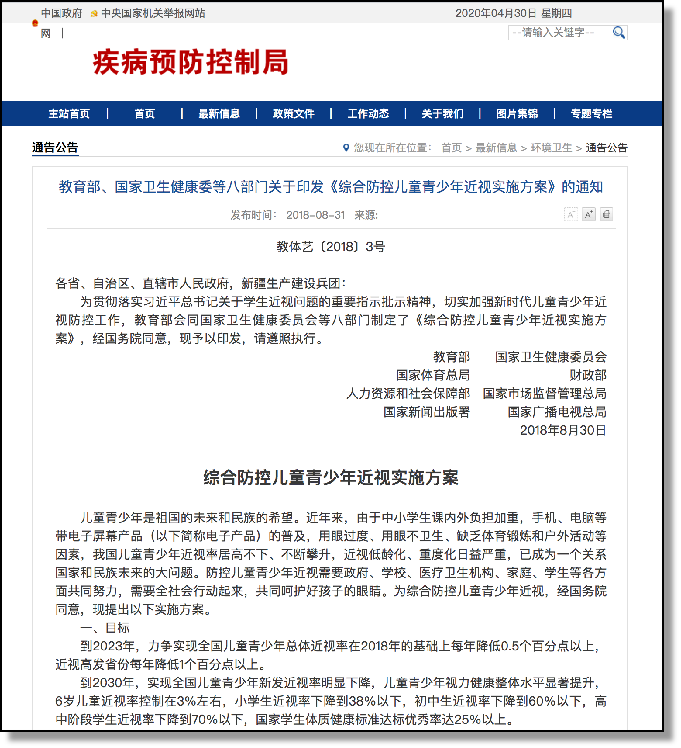
Good classroom lighting is an important measure for maintaining the visual health of primary and secondary school students. On August 31, 2018, the Ministry of Education, the National Health Commission, and six other departments issued the "Implementation Plan for Comprehensive Prevention and Control of Myopia in Children and Adolescents," which set clear requirements for preventing myopia in children and adolescents and ensuring visual health through classroom lighting.
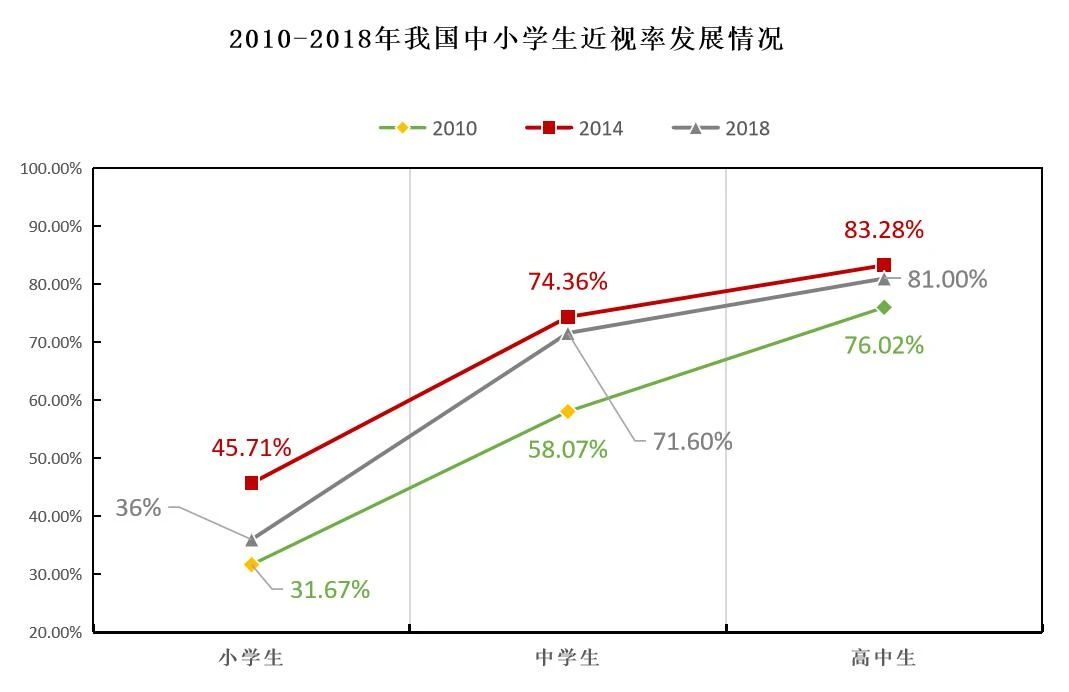
In 2018, the overall myopia rate among children and adolescents nationwide was 53.6%, meaning more than half of children and adolescents were myopic; In 2018, the proportion of high school seniors with high myopia (myopia greater than 600 degrees) reached 21.9% of the total number of myopic students.
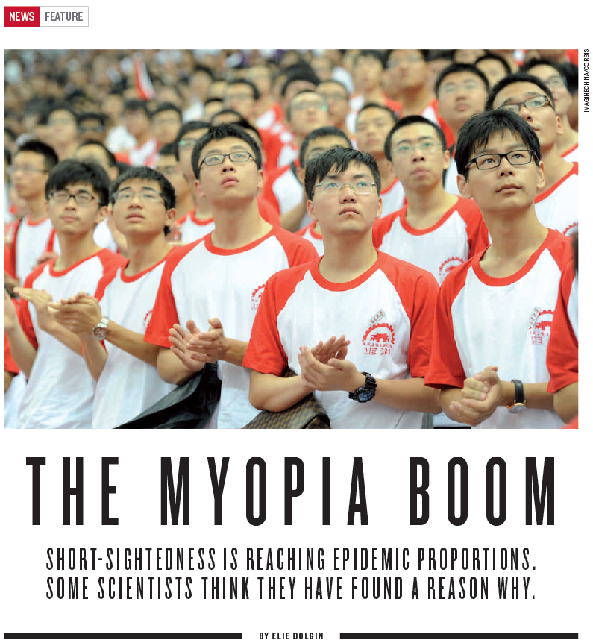
Myopia Research
Two hours of outdoor activity every day helps slow the progression of myopia.
Growing evidence suggests that exposure to bright light during the day helps slow the progression of myopia.
Current classroom lighting standards provide clear definitions for illuminance, glare, flicker, blue light, and blue light hazard, but have not yet addressed the perceived brightness of the space.
Brightness level of classroom spaces
The overall brightness perception of a space is not solely related to horizontal illuminance; The luminaire mounting height and the luminous flux of the luminaire are the same.
Circadian rhythm
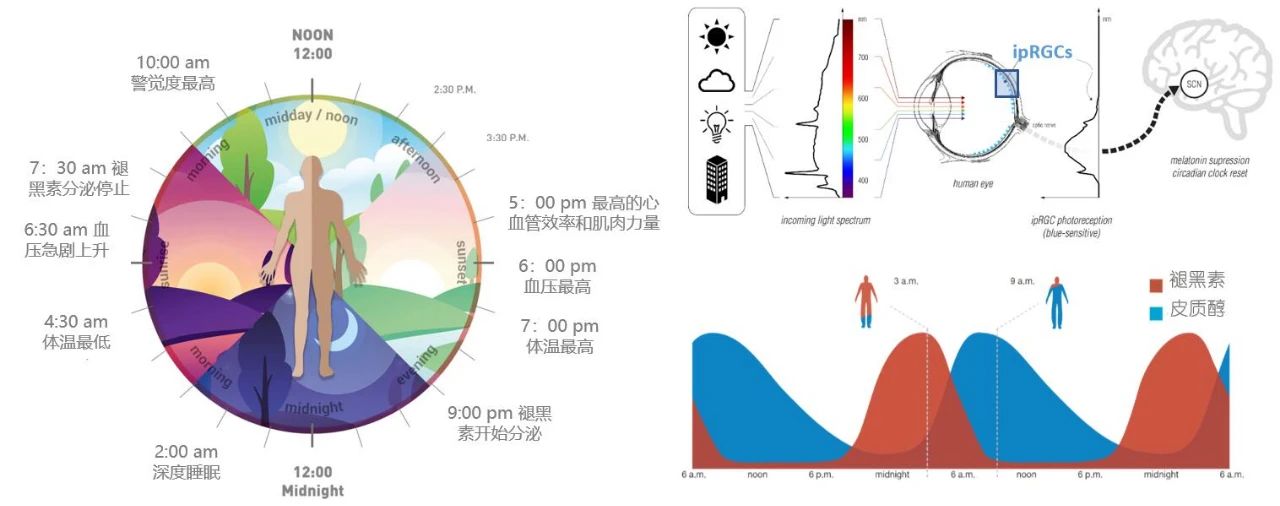
The human body has a physiological mechanism called the "biological clock," which is a cyclical rhythm of approximately 24 hours from day to night, regulating important physiological functions including metabolism, sleep-wake cycles, heart rate, and blood pressure, also known as the Circadian rhythm.
Light is the most important zeitgeber; periodic natural daylight synchronizes human circadian rhythms to the Earth's 24-hour rotation cycle.
Receive ample natural daylight during the day and avoid unreasonable light stimulation at night.
Circadian health is very important for primary and secondary school students
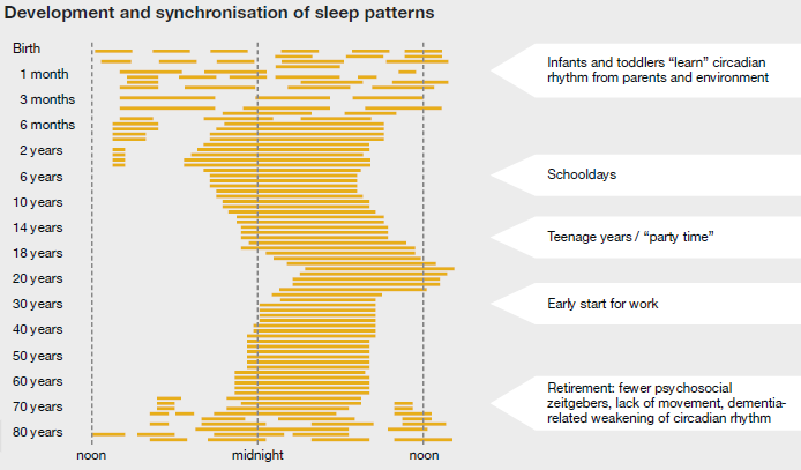
Primary and secondary school students in our country spend long hours indoors during the day, with insufficient exposure to natural daylight outdoors.Unreasonable lighting at night (including classroom lighting for self-study, use of mobile phones and tablets, etc.) can also disrupt sleep and circadian rhythms.
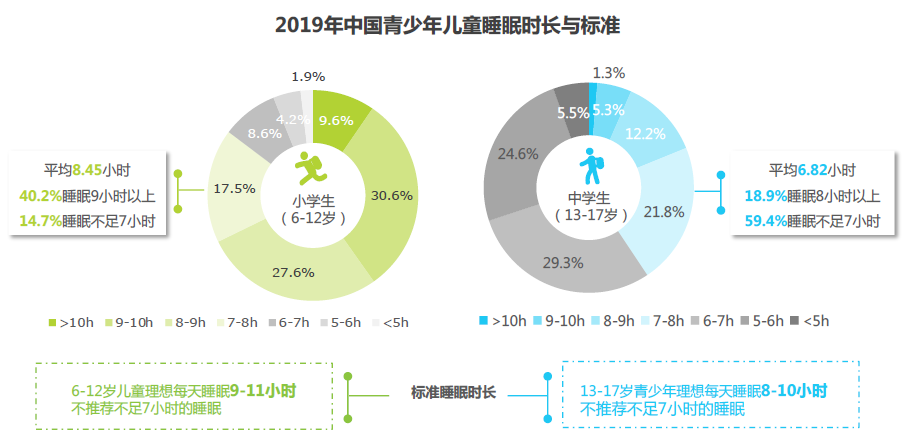
The circadian rhythms of primary and secondary school students are mismatched with school schedules. Currently, "sleep deprivation" among these students is severe: according to the White Paper on Sleep Health of Chinese Children and Adolescents, up to 59.4% of middle school students average less than 7 hours of sleep per night, accompanied by sub-health sleep issues such as difficulty falling asleep.
As classrooms are the primary light environment where adolescents spend their days, good classroom lighting helps improve their circadian health and sleep quality, as well as enhance learning efficiency.
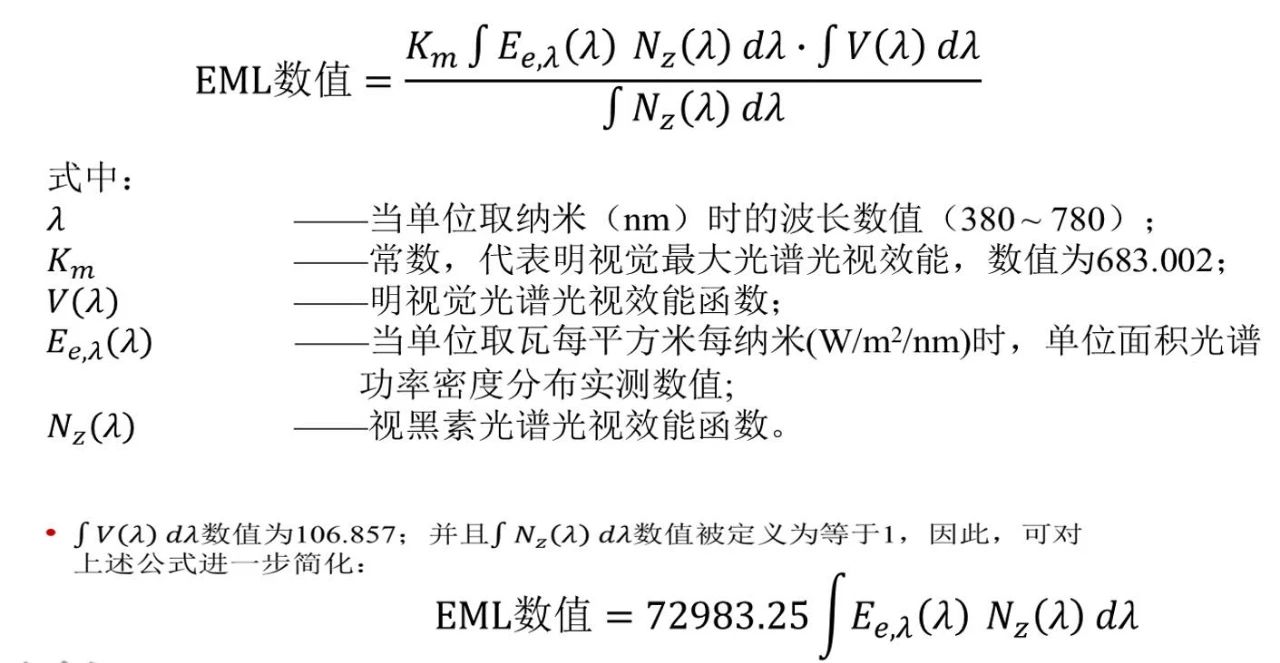
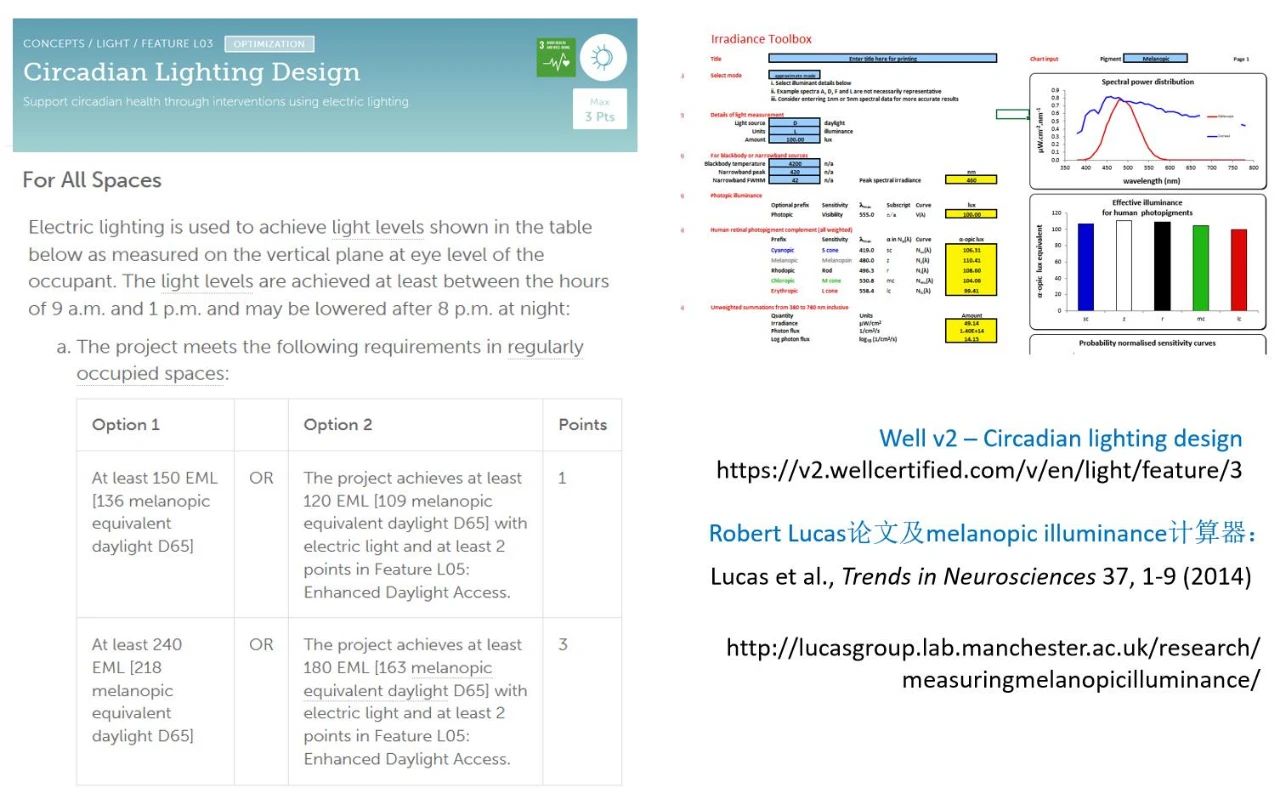
Circadian Effect Spectral Response Function: EML
Equivalent Melanopic Lux (EML) is a metric used to quantify the circadian effects of light, considering only the contribution of ipRGC photoreception in non-visual effects as an approximation of circadian lighting effects. Select the scaling factors for each equivalent illuminance based on the principle that the equivalent illuminance values corresponding to the five types of photoreceptor cells under equal-energy spectrum (CIE standard illuminant E) conditions are equal to the photopic illuminance values.
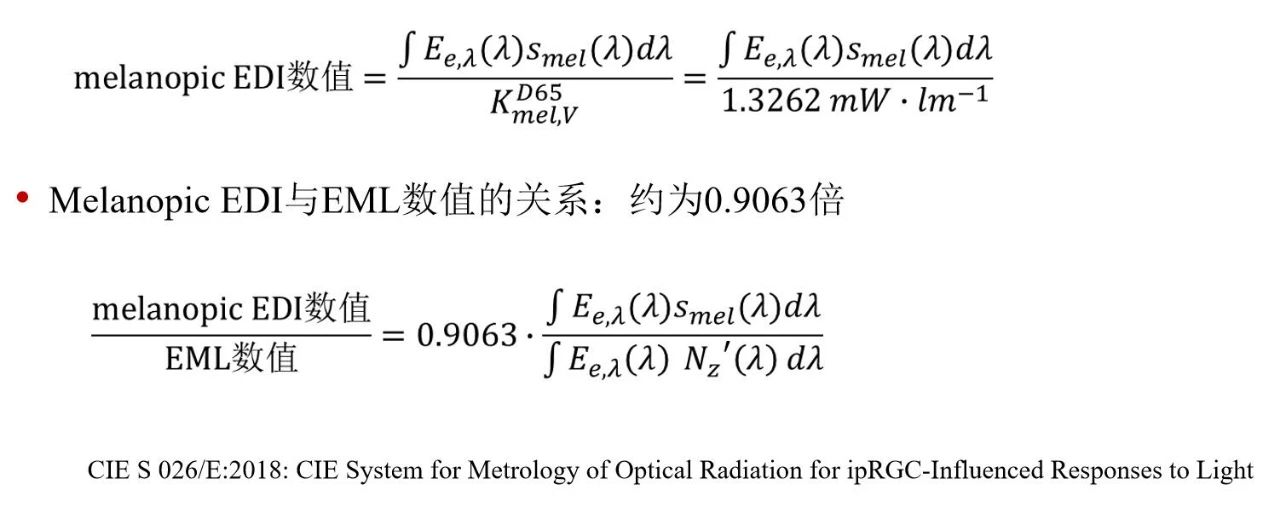
Circadian Effect Spectral Response Function: melanopic EDI
Melanopic equivalent daylight illuminance (melanopic EDI) is a metric proposed by the International Commission on Illumination to quantify the circadian effects of light. It considers only the contribution of ipRGC photoreception in non-visual effects as an approximation of circadian lighting effects. The illuminance value of the CIE standard illuminant D65 when it produces the same melanopic equivalent illuminance.
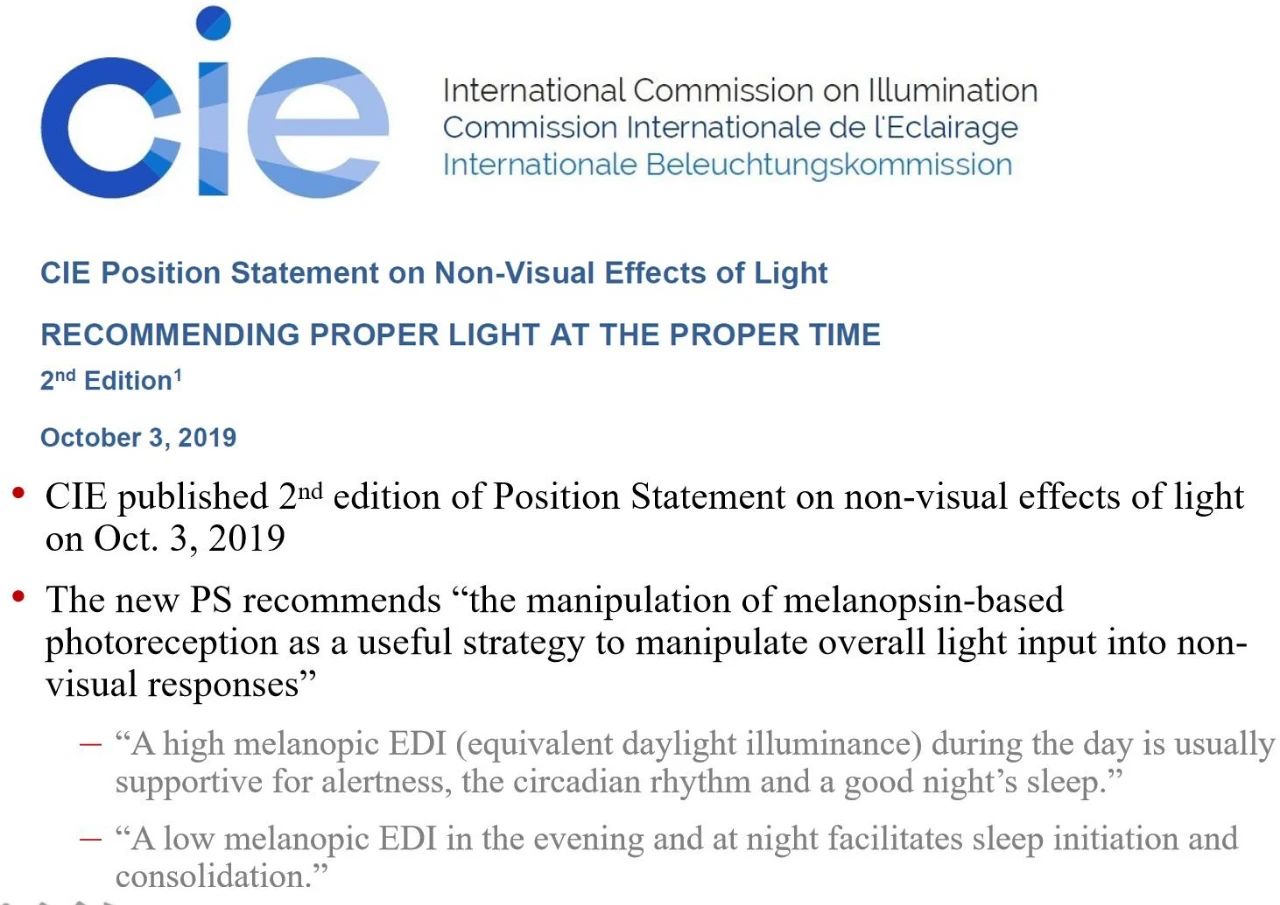
Spectral sensitivity functions for circadian effects: CIE Position Statement (2019)
Introduction to Group Standards
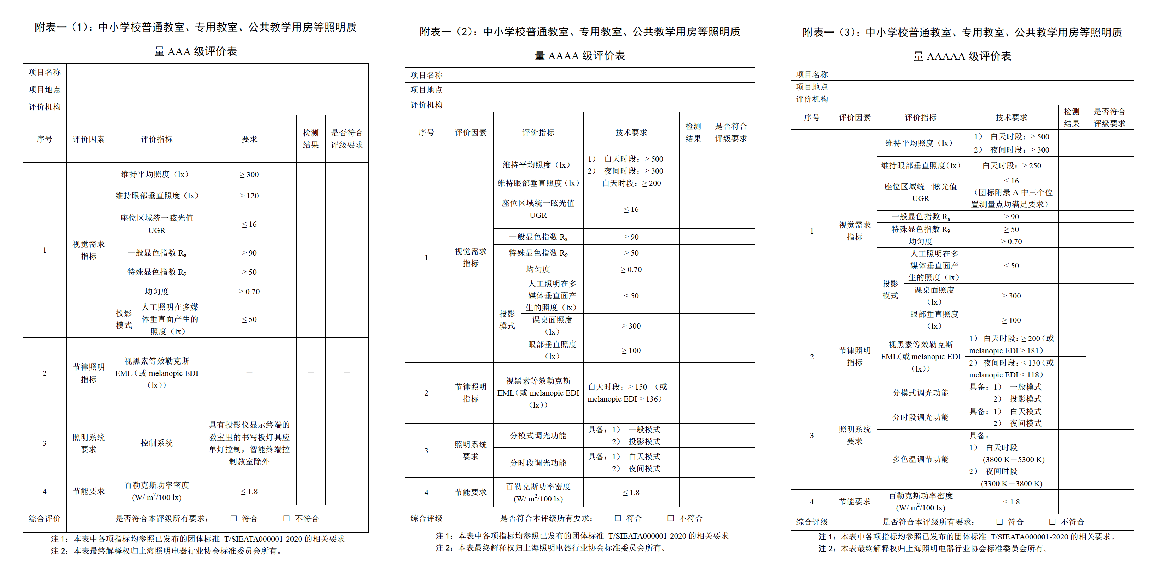
Evaluation Criteria
Passed the expert review of evaluation criteria on 2020.11.20
Launch of Demonstration Site Application
Project Application for Completed Projects
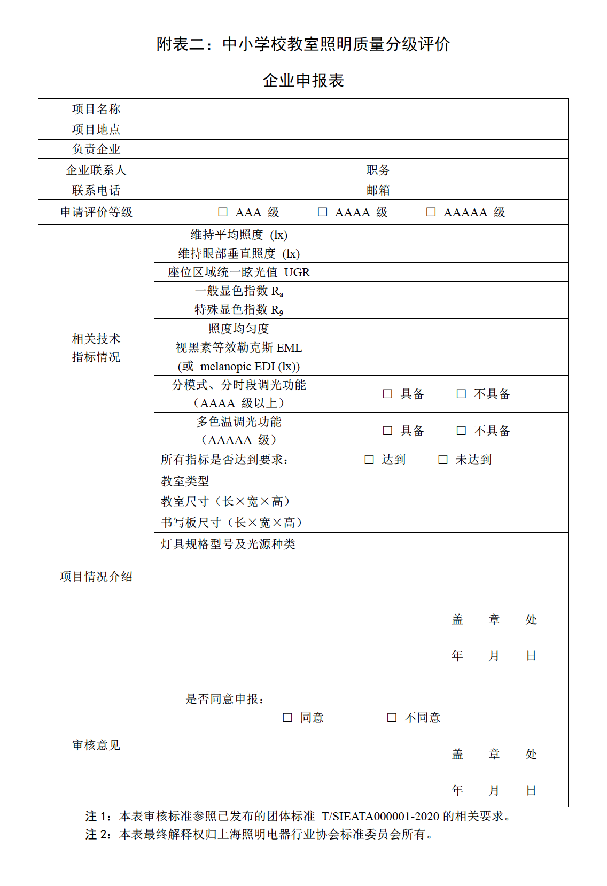
For projects already implemented by the enterprise, complete and submit the self-declaration in accordance with Appendix II "Enterprise Declaration Form for Grading and Evaluation of Lighting Quality in Primary and Secondary School Classrooms".
Enterprise Self-Built Demonstration Site
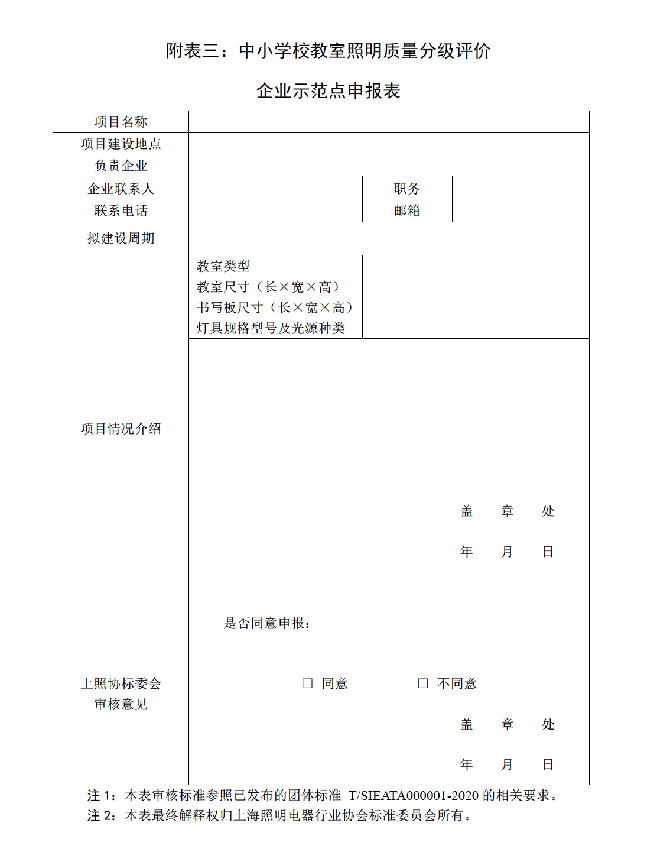
Enterprises independently constructing demonstration sites that meet group standard requirements shall complete and submit the application using Appendix Table 3 "Application Form for Enterprise Demonstration Sites for Graded Evaluation of Classroom Lighting Quality in Primary and Secondary Schools".
University-Enterprise Joint Demonstration Site
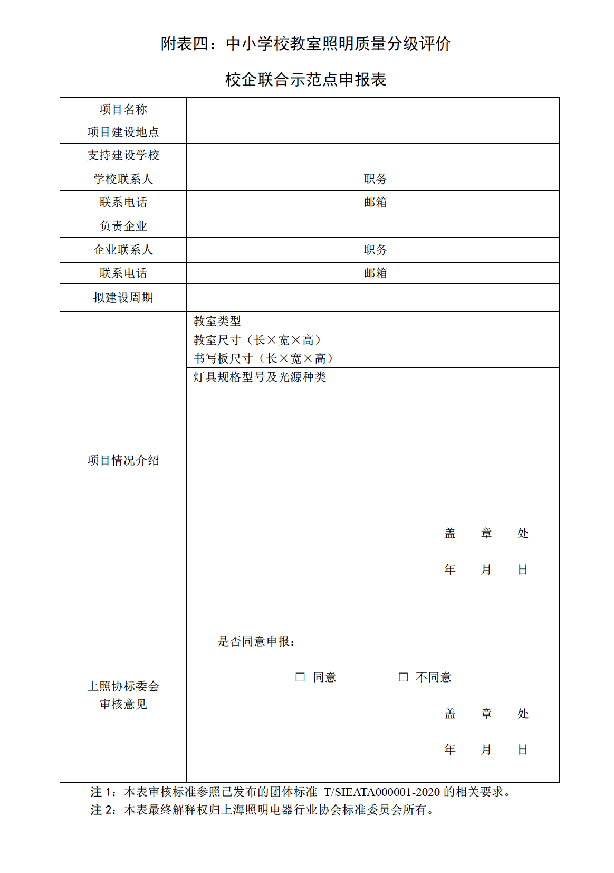
For the joint construction of demonstration sites by schools and enterprises that meet group standard requirements, fill out and submit the application according to Appendix Table 4 "Application Form for School-Enterprise Joint Demonstration Sites for Classification and Evaluation of Lighting Quality in Primary and Secondary School Classrooms".