
Wen Qidong | Unexpected performance in the first three quarters, full-year export growth is promising—Report on China's lighting industry export situation in the first three quarters of 2020
1. Export Overview:
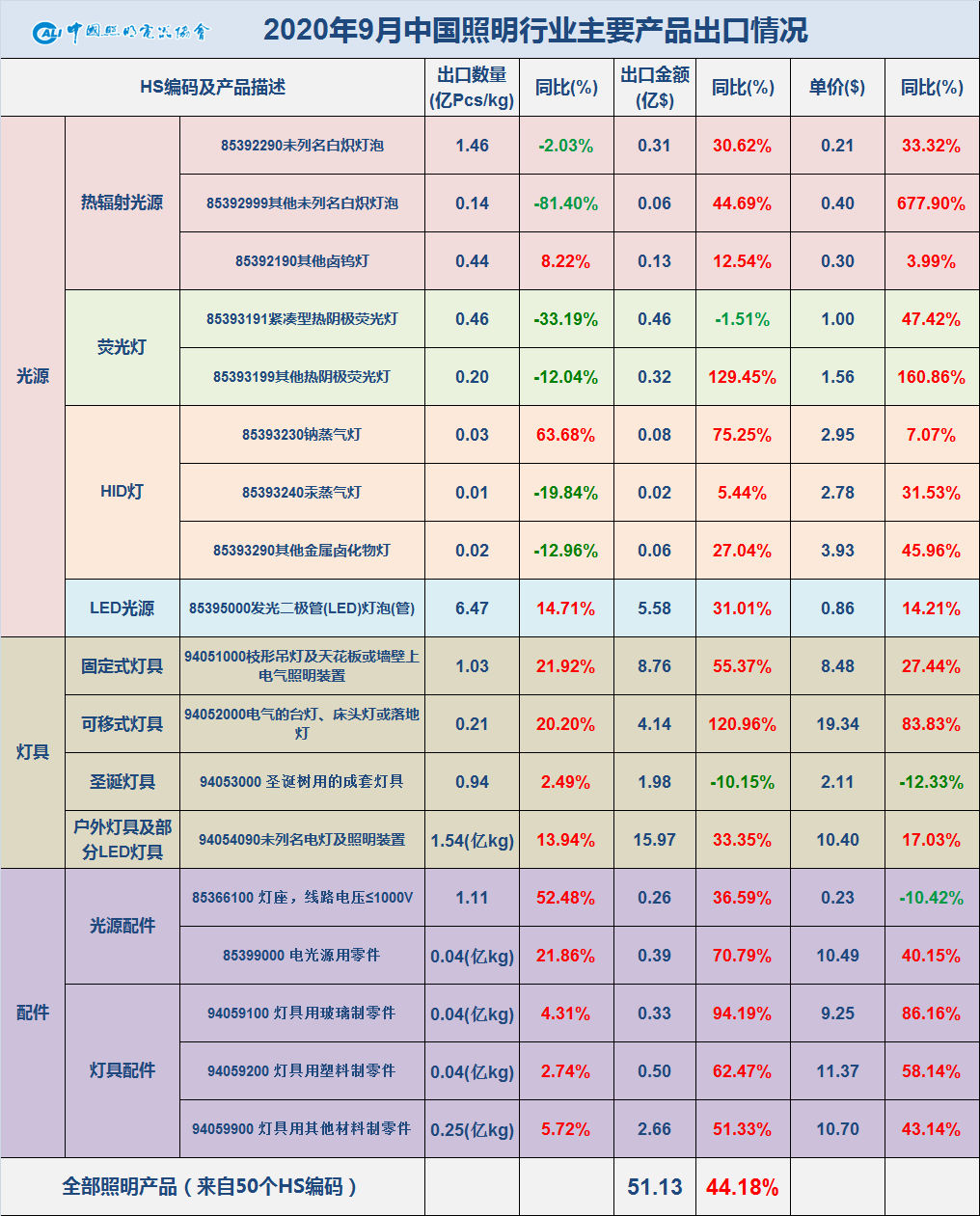
In September 2020, China's lighting industry exports totaled USD 5.113 billion, a Year-on-year (YoY) increase of 44.18%, marking the largest single-month YoY growth this year, with double-digit growth achieved for four consecutive months since June. Among them, LED lighting product exports amounted to USD 3.4 billion, up 40.5% Year-on-year (YoY), with five consecutive months of growth since May, including four consecutive months of double-digit growth since June.
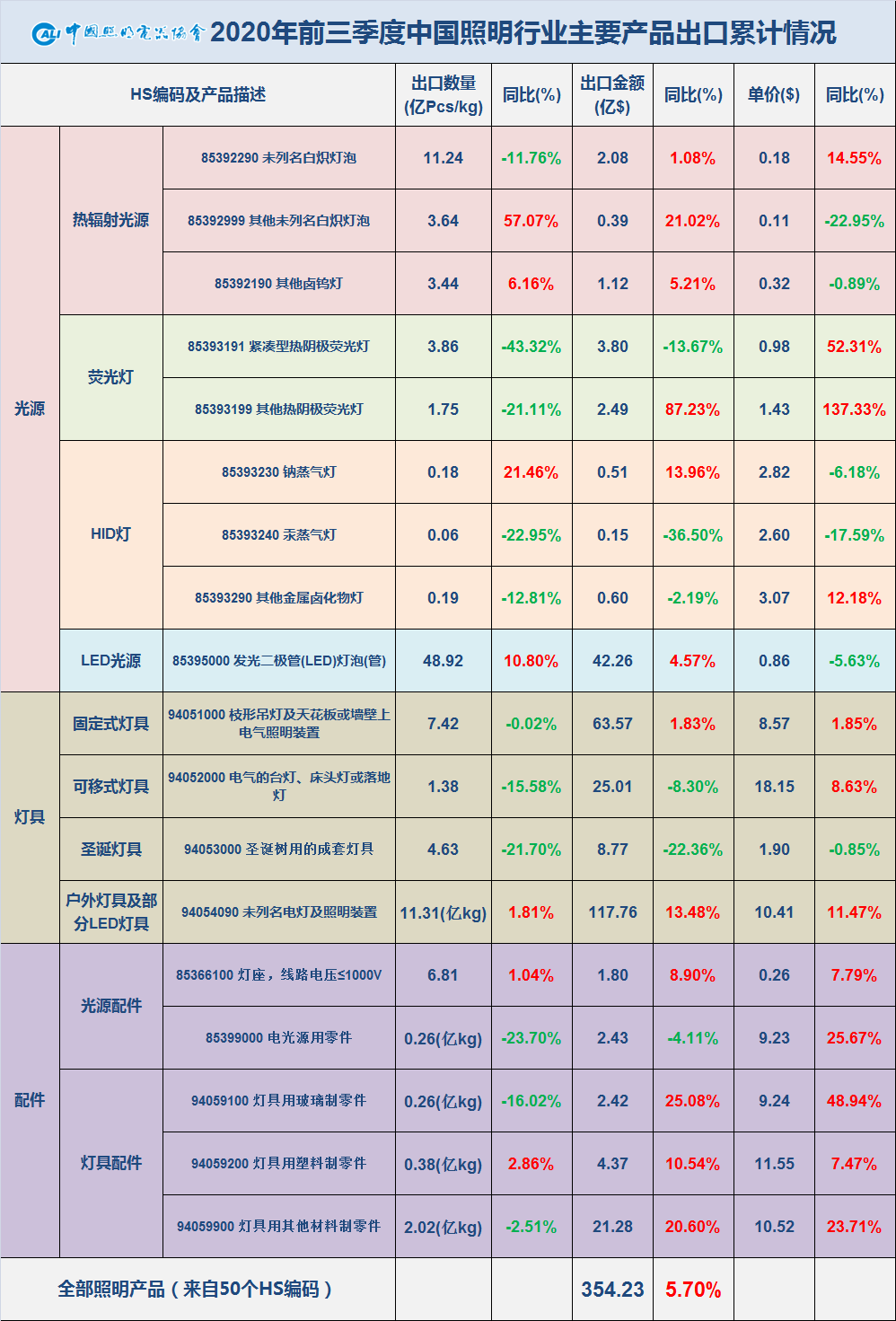
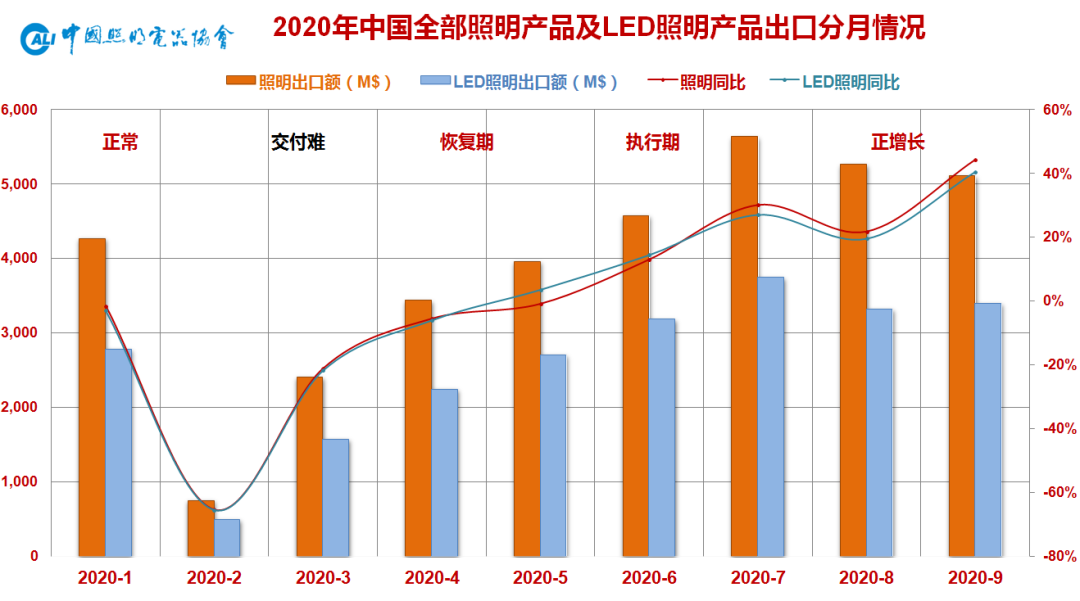
Looking at the monthly data, January 2020 was still normal, but after hitting rock bottom in February due to the domestic epidemic, the overall lighting export recovery momentum became evident from March onwards. The decline continued to narrow from March to May, followed by four consecutive months of double-digit positive growth from June to September. The overall situation basically matches the shipping industry's scenario: "Resumption of work in March, no cargo in April, vessel reductions in May and June, price increases in July, container shortages in August, and fully booked capacity in September."
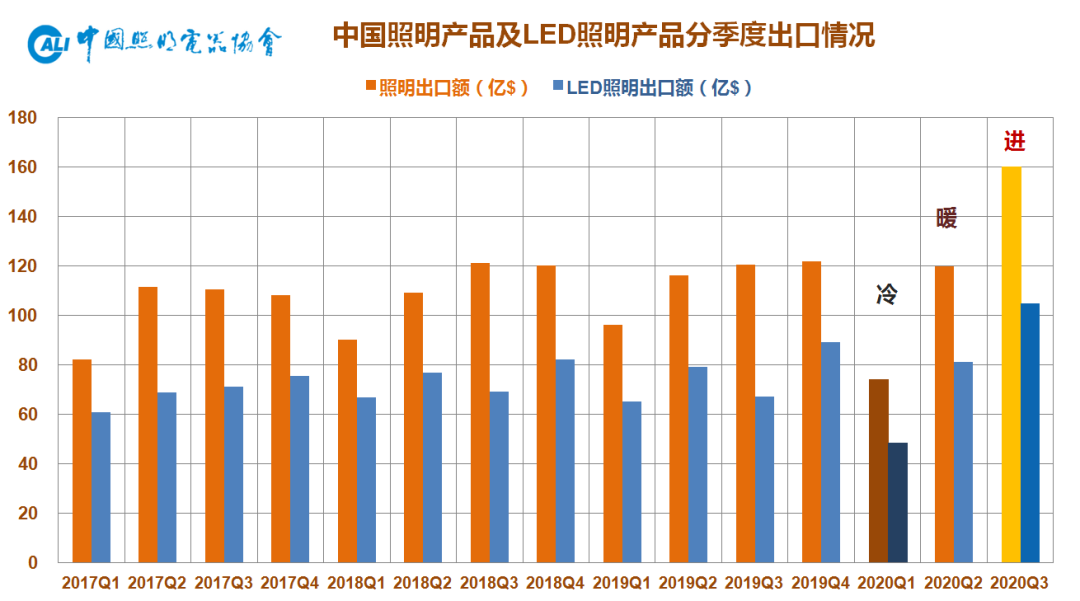
Looking at it by quarter, lighting exports overall showed a trend of "a dismal first quarter, recovery in the second quarter, and progress in the third quarter". It is judged that the momentum in the fourth quarter will slightly decline compared to the third quarter, but with the good foundation laid in the second and third quarters, it is highly likely that annual exports will achieve positive growth and total export volume will reach a new historical high.
The slight slowdown in growth is due to several factors: first, the appreciation of the RMB against the US dollar; second, the growth rate of pandemic-related goods, which had been a boost to exports, has leveled off, reducing their pull on overall exports; and third, as overseas countries resume work and production, while external demand continues to improve marginally, the significantly elevated share of Chinese manufacturing in global export trade—previously driven by halted overseas production—is gradually returning to normal.
II. Discussion on the Reasons for Growth:
Overall, although lighting export data in September declined slightly compared to the previous two months, it still maintained a considerable growth rate thanks to the persistent efforts of lighting export enterprises. This has resulted in export performance for the first three quarters significantly exceeding general market expectations.
The reasons for the growth are analyzed as follows:
1. The negative drag from general lighting products was lower than expected, demonstrating the essential resilience of lighting products in national socio-economic life, as well as China's unshakable position as the global manufacturing center and supply chain hub for lighting;
2. Overseas epidemics continue to surge, and exports of products related to epidemic prevention and the stay-at-home economy maintain a growth trend, providing a certain boost to overall exports. In particular, lighting products for epidemic prevention such as scientific research and medical lamps, ultraviolet lamps, as well as horticultural lighting products have seen significant growth.
3. The backlog of orders from the early stage has entered the final phase of execution. However, as major economies in Europe and America restart their economies under pressure, external demand has significantly improved marginally, and new orders are gradually recovering;
4. The "substitution and transfer effect" is significant. China is one of the few major economies that have comprehensively contained the epidemic, leading the world in resuming work and production. The rapid recovery of Made in China has further highlighted its advantages in production and supply chains, effectively filling the global supply gap caused by the epidemic, and temporarily replacing other countries' export shares in the short term, prompting a phased shift of considerable overseas demand to China.
According to research data from relevant institutions, China's share of the global export market reached a record high of 17.2% by the second quarter of this year. In contrast, according to World Trade Organization data, China's share of the global export market was 13.3% in 2019.
3. Regarding export products:
01
LED light source prices continue to decline:
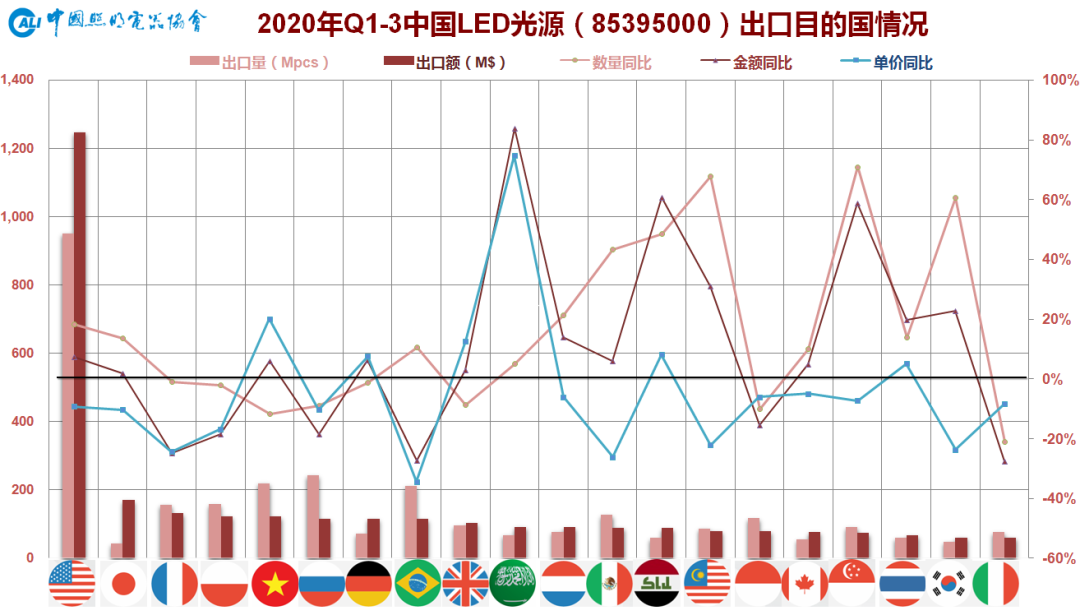
值得注意的是,LED光源出口均价延续了近两年的下行趋势,而随着今年荧光灯光源产品的价格上升,此消彼长的两者间甚至已出现了出口均价倒挂的情况。应该可以看到部分企业面对疫情挑战和行业竞争时,采取了牺牲利润代价来抢占市场份额或是保留生存希望。
02
LED filament lamp shipments surge:
Current monthly shipments have reached up to 50 million units, representing a 40-50% increase compared to the same period last year, and there are already companies with monthly shipments exceeding 10 million units.
03
Surge in exports of epidemic prevention products:
In the first three quarters, lighting products related to epidemic prevention, such as lamps for scientific research and medical use and ultraviolet lamps, experienced explosive growth against the backdrop of surging global demand triggered by the pandemic. Exports of these products reached US$386 million in the first three quarters, a sharp Year-on-year (YoY) increase of 520%.
04
Horticultural lighting is developing rapidly:
Driven by multiple factors, including the legalization of commercial cannabis in North America and the global pandemic-induced shortages of food and medical supplies along with increased home confinement, horticultural lighting exports surged more than fivefold year-on-year (YoY) in the first three quarters. The North American market remains the largest segment, accounting for over 70% of the share.
05
The overall performance of consumer-end products is better than that of project-end products:
Consumer-facing products have stronger essential demand attributes; the pandemic-induced stagnation or delays in overseas projects directly impacted project-side products.
4. Regarding export destination markets:
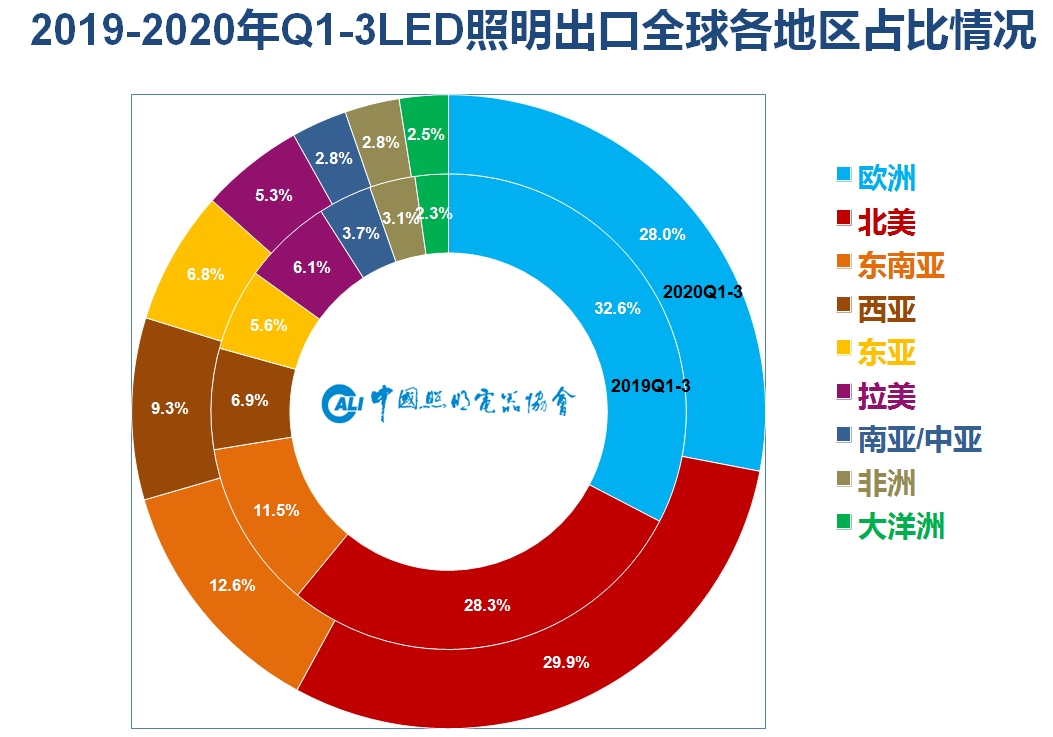
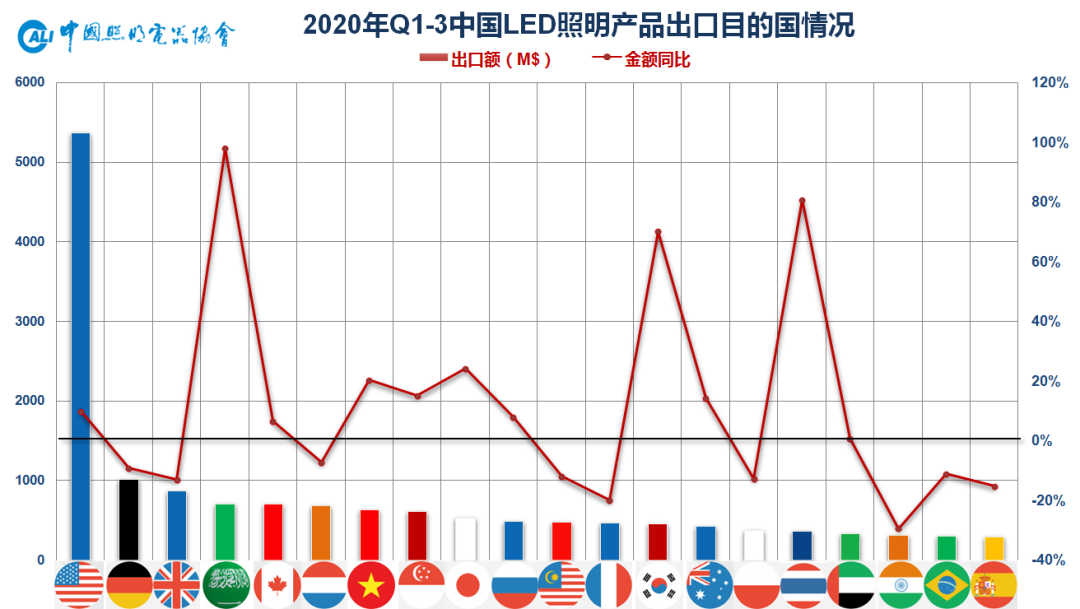
Looking at global LED lighting exports by region in the first three quarters, the Asia-Pacific market, dominated by emerging economies, performed significantly better than the European and American markets, which are led by developed economies. Within the Asia-Pacific market, East Asia, West Asia, Southeast Asia, and Oceania all showed strong performance. However, the South Asian market became a drag on the overall Asia-Pacific performance due to a decline in the Indian market, which accounts for over 60% of the share. Among the European and American markets, the North American market recovered better than the European and South American markets. The European market saw the largest decline, with total export value dropping by more than 10% Year-on-year (YoY), causing its share to fall by as much as 4.6 percentage points compared to the same period last year.
五、未来面临的挑战:
While the current state of exports is encouraging, we should not be blindly optimistic about the overall situation, as uncertainties regarding its prospects remain. The global pandemic threat has not been eliminated and continues to flare up intermittently. Restoring global mobility for both people and goods remains a long and arduous task. The major challenges facing future exports include:
01
Increased uncertainty in the outlook:
The uncertainty brought by the pandemic and weak demand have led to a decline in corporate investment willingness and a deterioration in asset-liability ratios, which will, to some extent, constrain the recovery process of external demand; uncertain factors such as the global economic situation, China-US trade friction, and RMB exchange rate still exist, adversely affecting the planning and decision-making of related export enterprises.
02
The high growth in exports of epidemic prevention materials is difficult to sustain in the long term:
At present, external demand orders remain under pressure, excluding pandemic prevention and stay-at-home economy-related products with high growth rates. In particular, exports of labor-intensive products remain sluggish. Exports of pandemic prevention and stay-at-home economy-related supplies are expected to decline in the future. Moreover, over the past two months, exports of pandemic-related products have slowed, with growth rates stabilizing, resulting in a diminished contribution to boosting total export volume.
03
The sustainability of the "substitution effect" in exports remains to be observed:
As other manufacturing countries pass the peak of the pandemic and gradually resume production and operations, supply capacity will recover. The substitution effect of China's exports to other countries will inevitably weaken, and the export market share will return to normal levels, thereby weakening support for overall export growth.
04
The risk of supply chain spillover still exists:
Against the backdrop of a confirmed global economic downturn, escalating US-China trade friction, and undercurrents of de-sinification in the global supply chain, the lighting industry faces risks of spillover. In the previous operating system, supply chains prioritized efficiency and cost-effectiveness; however, overseas clients are likely to prioritize supply chain security in the future, making it inevitable that some orders will be diverted to manufacturing countries such as Mexico, Vietnam, and India.
05
Continued decline in profits increases pressure on corporate survival:
As the rigid costs of manufacturing essentials such as labor, land, and raw materials continue to rise, export product prices keep declining amid increasingly fierce competition, further squeezing already thin profit margins. This has placed significant pressure on the survival space of related export enterprises, especially small and micro enterprises.
Summary
Not long ago, the Politburo meeting set the tone that the dual circulation strategy, with domestic circulation as the mainstay, will become the underlying logic of China's economic landscape during the 14th Five-Year Plan period. The correct understanding of this should be to ultimately facilitate dual circulation and enhance the international competitiveness of Chinese manufacturing, rather than simple involution.
In our lighting industry, the dual circulation model has long been implemented. Over half of the production value is exported to more than 200 countries and regions worldwide, while nearly the other half supplies the domestic market. As the domestic lighting market is already quite saturated, export-oriented enterprises—especially those solely focused on exports—that blindly shift from "Export" to domestic sales will face barriers in the domestic market, including branding, (Sales) channel, product, service, team, and even cultural aspects. This will also intensify existing contradictions such as structural overcapacity, low-price competition, and product homogenization. The likely outcome is that "they fail to succeed themselves and drag others down with them." Implementing dual circulation must consider industry-specific characteristics. The path from Export to domestic sales in the lighting industry is fraught with challenges and is not suitable for all enterprises. Companies need clear positioning, adapt to local conditions, and proceed with caution.
Countless facts and data from the past have fully demonstrated the essential resilience of lighting products and China's irreplaceable position as the global center for lighting manufacturing and supply chains. Therefore, at this stage, the vast majority of Chinese lighting export enterprises should primarily strengthen their confidence and focus on their core business.
As one of the few major economies worldwide to have comprehensively contained the pandemic, China has turned its economic data from negative to positive in the first three quarters, and society has largely returned to normal. We should therefore be optimistic about our country's prospects; however, since the world shares a common fate, we cannot remain unaffected at this time and must remain sufficiently vigilant about the profound global changes driven by the pandemic impact. The pandemic is not merely a crisis; how to eliminate risks and seize opportunities is a question that our enterprise, the entire industry, and even society as a whole must consider.