
Sanan Optoelectronics reported H1 revenue of RMB 3.568 billion; plans to acquire Beidian New Materials for RMB 382 million
On the evening of August 18, Sanan Optoelectronics announced that in the first half of the year, the company achieved revenue of RMB 3.568 billion, a Year-on-year (YoY) increase of 5.31%; net profit attributable to shareholders of the listed company was RMB 635 million, a Year-on-year (YoY) decrease of 28.11%.
Sanan Optoelectronics is mainly engaged in the R&D and application of compound semiconductor materials, with epitaxial wafers and chips based on new semiconductor materials such as gallium arsenide, GaN, SiC, indium phosphide, aluminum nitride, and sapphire as its core business. Its products are mainly applied in lighting, displays, backlighting, agriculture, medical care, microwave RF, laser communications, power devices, optical communications, and sensing. In recent years, Sanan Optoelectronics has shown a continuous downward trend in performance.
Sanan Optoelectronics stated that its product portfolio covers applications such as Automotive lighting, Mini LED, Micro LED, high luminous efficacy, UV, IR, and Horticultural lighting. Its marketing network spans the globe, and it has established partnerships with major downstream manufacturers domestically and internationally, including Samsung, Cree, Gree Electric Appliances, Midea Group, and TCL.
In the high-end LED product segment, the Company has achieved mass supply of Mini LED and Micro LED chips to Samsung, becoming its primary supplier and signing a supply agreement; it established a joint laboratory with TCL CSOT to advance the commercialization of Micro LED. During the reporting period, affected by the pandemic, consumer awareness of disinfection and sterilization increased significantly, leading to explosive growth in demand for UV LED, while production capacity was clearly insufficient. To meet market demand for high-end products, the Company accelerated the progress of its wholly-owned subsidiary Quanzhou Sanan Semiconductor, gradually releasing production capacity; infrastructure construction for the Hubei Sanan Mini/Micro display industrialization project is proceeding smoothly.
During the reporting period, intense international trade disputes and the global spread of the epidemic somewhat suppressed consumer spending. Despite an overall decline in performance, Sanan Integrated, a subsidiary of Sanan Optoelectronics, achieved remarkable operational results in the first half of this year. During the reporting period, sales shipments from the company's wholly-owned subsidiary, Sanan Integrated, increased significantly, with sales revenue reaching RMB 375 million in the first half, a Year-on-year (YoY) increase of 680.48%. The cumulative number of GaAs RF shipment customers approached nearly 100, and production capacity for key GaN RF product customers is gradually ramping up; the cumulative number of power electronics customers exceeded 60, with 27 products entering mass production stages; in addition to expanding the market-leading share of existing medium- and low-speed PD/MPD products in the optical communication business, high-end products such as 10G APD/25G PD, VCSEL, and DFB transmitter products have passed verification at key industry customers and entered the batch trial production stage; filter product development demonstrates superior performance, with production lines continuously expanding and stockpiling underway.
Sanan Optoelectronics stated that the industry recognition and production capacity of Sanan Integrated products have significantly improved. In response to the vast market space and the demand for domestic substitution, the company established a subsidiary, Hunan Sanan, in Changsha to engage in the R&D and industrialization projects of third-generation compound semiconductors such as SiC. The project is currently under construction.
Sanan Optoelectronics subsidiary plans to acquire Beidian New Materials for 382 million yuan to layout the supply chain
Sanan Optoelectronics announced on the same day that its wholly-owned subsidiary, Hunan Sanan Semiconductor Co., Ltd. (hereinafter referred to as "Hunan Sanan"), intends to acquire 100% equity of Fujian Beidian New Material Technology Co., Ltd. (hereinafter referred to as "Beidian New Material") held jointly by Fujian Anxin Industry Investment Fund Partnership (Limited Partnership) (hereinafter referred to as "Anxin Fund") (holding 99.50%) and Quanzhou Anrui Technology Co., Ltd. (hereinafter referred to as "Anrui Technology") (holding 0.5%) for a cash consideration of RMB 382 million. Hunan Sanan has separately signed the "Equity Transfer Agreement" with Anxin Fund and Anrui Technology.
Sanan Optoelectronics stated that its parent company, Fujian Sanan Group Co., Ltd., and National Integrated Circuit Industry Investment Fund Co., Ltd., a shareholder holding more than 5% of the company's shares, each hold a 33.29% equity stake in Anxin Fund. Anrui Technology is a subsidiary controlled by Anxin Fund. According to relevant regulations, this transaction constitutes a related-party transaction.
The announcement shows that Beidian New Materials' business scope includes engineering and technology research and experimental development; production of compound semiconductor materials; manufacturing of compound semiconductor integrated circuits; manufacturing of electronic components; development, sales, technical consulting, technology transfer, and technical services for functional materials and their components; production of substrates for functional devices; manufacturing and sales of synthetic gemstones; integrated circuit design; import and export of goods or technologies (excluding goods or technologies prohibited or restricted by the state). (Business activities shall be carried out in accordance with the law after approval by relevant authorities.)
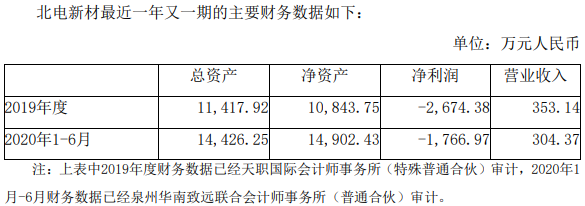
Sanan Optoelectronics stated that this acquisition of Beidian New Materials is primarily aimed at strengthening the company's layout of integrated circuit raw materials, meeting operational needs, and aligning with the company's strategic development direction. It will help the company break through development bottlenecks, expand business scale, and have a positive impact on future business operations.