
UK Announces New Tariff System: LED Lights to Be Duty-Free
On May 19 local time, the United Kingdom announced a new tariff mechanism to replace the EU's external tariff system after the end of the Brexit transition period. The new tariff system will take effect on January 1, 2021. Under the new system, 60% of UK trade will enjoy duty-free treatment under World Trade Organization (WTO) terms or through existing preferences, and tariffs will be reduced on multiple categories of imported goods with a total value of tens of billions of dollars.
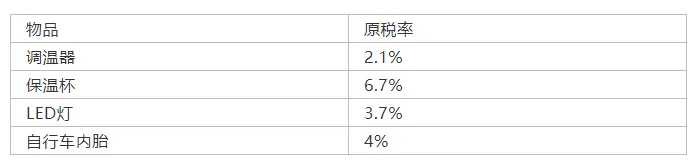
Among them, import products that help improve energy efficiency, such as LED lamps, will be exempt from tariffs. This is good news for the export of Chinese LED products.
According to the UK government's statement, the newly introduced "UK Global Tariff" (UKGT) will be "simpler and cheaper" than the EU Common External Tariff previously in force. For businesses exporting to the UK, this will eliminate cumbersome procedures and other unnecessary trade barriers, reduce cost pressures, and provide consumers with more choices.
The UK has simplified and consolidated nearly 6,000 tariff line items.
Key Points of the UK's New Tariff System
1. Currently, goods with tariffs below 2% will have their tariff rates reduced to 0%. This zero-tariff policy applies to many household items, including dishwashers, refrigerators, cooking products, Christmas trees, and more.
2. Under the new tax system, in accordance with World Trade Organization rules and other existing most-favored-nation policies, 60% of the UK's imported goods enjoy duty-free treatment.
3. The UKGT also abolished the EU's complex "Meursing table", allowing the UK to eliminate thousands of unnecessary tariff changes on products—including over 13,000 tariff changes on items such as biscuits, waffles, pizza, confectionery, and jam.
The Ministry of Commerce has provided a list of goods that have seen price reductions due to zero tariffs:
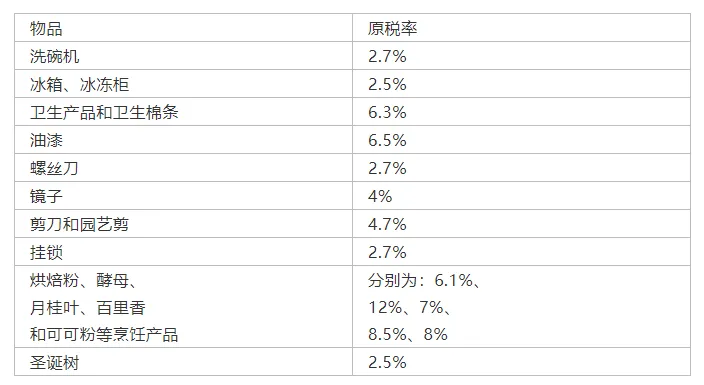
3. The UK will also promote a sustainable economy by reducing tariffs on more than 100 products to support renewable energy, energy efficiency, carbon capture, and the circular economy.
The following categories of goods are subject to zero tariffs:
4. Almost all medicines and most medical devices (including ventilators) in the UKGT are duty-free.
To ensure frontline workers have access to essential equipment, the UK has implemented "temporary zero tariffs" on these products. This exempts personal protective equipment (PPE), medical devices, disinfectants, and medical supplies from non-EU countries from customs duties and VAT.
The expert panel stated that if the medical situation requires, temporary zero tariffs will continue to be applied after January 1 next year to products needed to combat COVID-19, such as ventilators and personal protective equipment (PPE).
5. UKGT will support the UK industry in the following ways:
(1) Maintain tariffs on agricultural products such as lamb, beef, and poultry;
(2) Maintain a 10% tariff on automobiles;
(3) Maintain tariffs on the vast majority of ceramic products;
(4) Eliminate tariffs on £30 billion worth of imported products entering the UK supply chain, including copper alloy tubes (original tariff rate: 5.2%) and screws and bolts (original tariff rate: 3.7%).
Since formally "Brexit" on January 31 this year, the UK has sought to negotiate new free trade agreements with the EU and other countries, aiming to reach agreements covering 80% of its trade volume within the next three years.
The new tariff regime will calculate taxes in pounds sterling. It is scheduled to pass through the parliamentary legislative process later this year, and will officially take effect on January 1 next year, following the end of the Brexit transition period at the end of this year.
Source materials: UK Department for International Trade, Companies House (UK), Zhuhai Special Zone Daily, etc. Compiled by China Light Network.