
Recent Trade Trends in China’s Lighting Industry as Seen at the Three Major Autumn Exhibitions
Every October, the China Import and Export Fair (hereinafter referred to as “Canton Fair”), the China (Guzhen) International Lighting Expo (hereinafter referred to as “Guzhen Light Expo”), and the Hong Kong International Autumn Lighting Fair (hereinafter referred to as “Hong Kong Autumn Lighting Fair”) are held back-to-back in the Guangdong-Hong Kong-Macao Greater Bay Area. As important exhibition and trade events and barometers of China’s lighting industry in the second half of the year, these three exhibitions have always attracted significant industry attention. This October, as China’s largest comprehensive international trade fair, the 140th Canton Fair provides a centralized showcase for products across the entire industry chain through its comprehensive platform. The 35th Guzhen Light Expo, hosted by the China Lighting Appliance Association, is rapidly evolving from a regional ordering event into a global exhibition and trade platform; in 2026, it was included in the Ministry of Industry and Information Technology and the Ministry of Culture and Tourism’s “Key Activity List for National Tours of Prominent Consumer Products in 2026.” Empowered by emerging initiatives such as “Cross-border E-commerce from the Lamp Capital,” its foreign trade momentum remains robust, with an upward trajectory. Meanwhile, the 28th Hong Kong Autumn Lighting Fair, acting as a professional platform for foreign trade, shares trend insights and endorses global brands, driving accelerated development and upgrades. Although these three exhibitions differ in history, positioning, and stage of development, their complementary roles and sequential connections form an important window for observing recent trends in China’s lighting industry trade.
Overall, current industry trade shows three clear shifts: technological innovation is moving from isolated breakthroughs to system integration; the market is transitioning from traditional reliance to diversified deep cultivation; and compliance requirements are shifting from pre-emptive measures at the trade level to endpoints in R&D and the supply chain. (This article provides a brief overview of these developments; more detailed analysis will appear in the China Lighting Appliance Association’s journal, “China Lighting,” 2026.)
I. Technological Innovation: From Isolated Breakthroughs to System Integration
The technological trajectories of the three exhibitions are highly convergent. Intelligence, health, and green technologies have moved beyond conceptual demonstrations into stages of parametric and solution-based implementation and product deployment. The focus of competition is no longer on stacking individual functions but on establishing standardized, deliverable system capabilities.
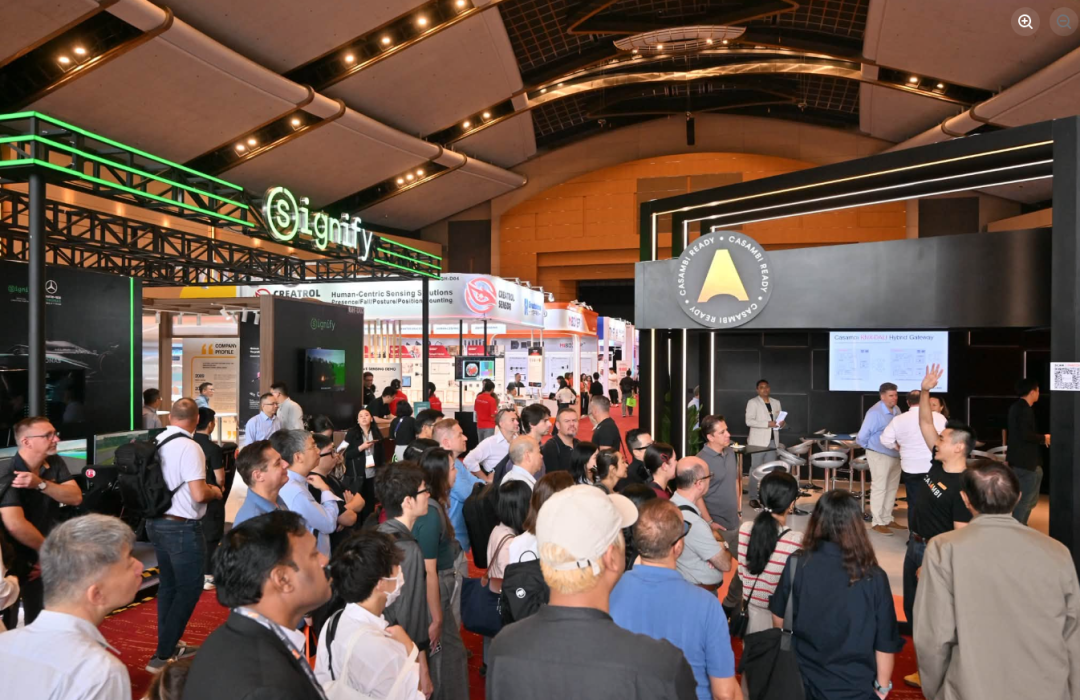
Smart lighting has evolved from single-device functionality to full-system capabilities. At the Canton Fair, 64% of exhibiting companies have adopted new technologies such as the Industrial Internet and artificial intelligence. According to a survey by the Hong Kong Trade Development Council, 54% of respondents cited AI as the primary driver of industry growth, while 86% believe the smart lighting market holds “ideal or very ideal” potential over the next two years. Home automation and intelligent lighting control systems, along with energy-saving lighting control solutions, are receiving the most attention. Product iterations have surpassed the “connectivity” stage: at the Canton Fair, Foshan Lighting’s “Guang Xiaoming AI” features a built-in complete AI agent, enabling smart control across all home scenarios with a single lamp; Wode Optoelectronics’ O1 robot story machine, equipped with a large model, has been exported to Turkey in bulk. At the Hong Kong Autumn Lighting Fair, Signify extended generative AI agents into landscape lighting, reducing content planning costs by approximately 80%. Competition in smart lighting is shifting from stacking terminal functions to “turnkey delivery” at the protocol and system layers.
Full spectrum and age-friendly design constitute key indicators for healthy lighting. Healthy lighting is expanding from child-eye protection to scenario-based solutions covering all age groups. At the Canton Fair, Sunlight Lighting increased the luminous efficacy of its eye-care ceiling lights from the industry standard 70 lm/W to 110 lm/W, raised the Color Rendering Index from 80 to 97, and kept the Glare Rating (GR) below 19. Foshan Lighting’s smart sensor panel light, specially designed for the elderly, won the Gold Award for Design Innovation at the 2026 Canton Fair; equipped with dual radar and light sensors, it enables proactive adjustment of the lighting environment. At the Guzhen Light Expo, classroom lighting compliant with new national standards, human-centric lighting, and age-friendly lighting products made their debut, accelerating the formation of a closed-loop service system encompassing “product–lighting environment–overall solution.” Health and energy efficiency are becoming dual thresholds, with companies possessing spectrum design and certification capabilities commanding significant price premiums.
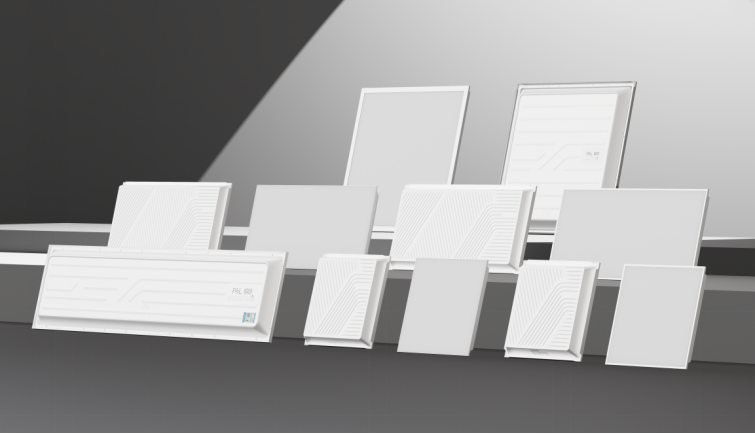
Foshan Lighting’s Smart Sensor Panel Light
Photovoltaic-storage integration has emerged as a new trend toward green and low-carbon solutions. Green products accounted for 26% of exhibitors at the Canton Fair, and 43.1% of participating companies adopted green production methods—both reaching record highs. At the Canton Fair, Tonsda extended its presence into the “PV-storage-charging” sector; Yuzhong Gaohong solar street lights primarily target markets in Africa and Central Asia. The Hong Kong Autumn Lighting Fair added photovoltaic and energy storage solution offerings. The low-carbon new energy track has entered a new phase of integrated “light + electricity + storage,” with order patterns shifting from selling lamps to selling systems, and from one-off transactions to long-term collaborations including operation and maintenance.
II. Market Expansion: From Reliance on Traditional Markets to Diversified Deep Cultivation
New markets have become the new engine for export growth. Customs data shows that in the first three quarters of 2026, China’s lighting exports to Africa reached US$2.8 billion, up 11%, accounting for approximately 8%; the ASEAN market continues to expand, benefiting from RCEP dividends and urbanization infrastructure demand. Among overseas buyers at the Guzhen Light Expo, Pakistan and Sri Lanka in South Asia saw particularly strong increases, while attendance from U.S. and Brazilian buyers surged significantly, making Belt and Road partner countries an important growth pole.
Traditional markets have shown some recovery. In the first three quarters, China’s exports to Europe totaled US$10.1 billion, a slight increase of 1%; exports to the U.S. reached US$7.2 billion, with the year-on-year decline narrowing compared to the first eight months. Buyer origins at the Canton Fair improved concurrently, with EU and U.S. buyers increasing by 38.2% and 22.2%, respectively. European and American markets remain the foundation for high-end demand.
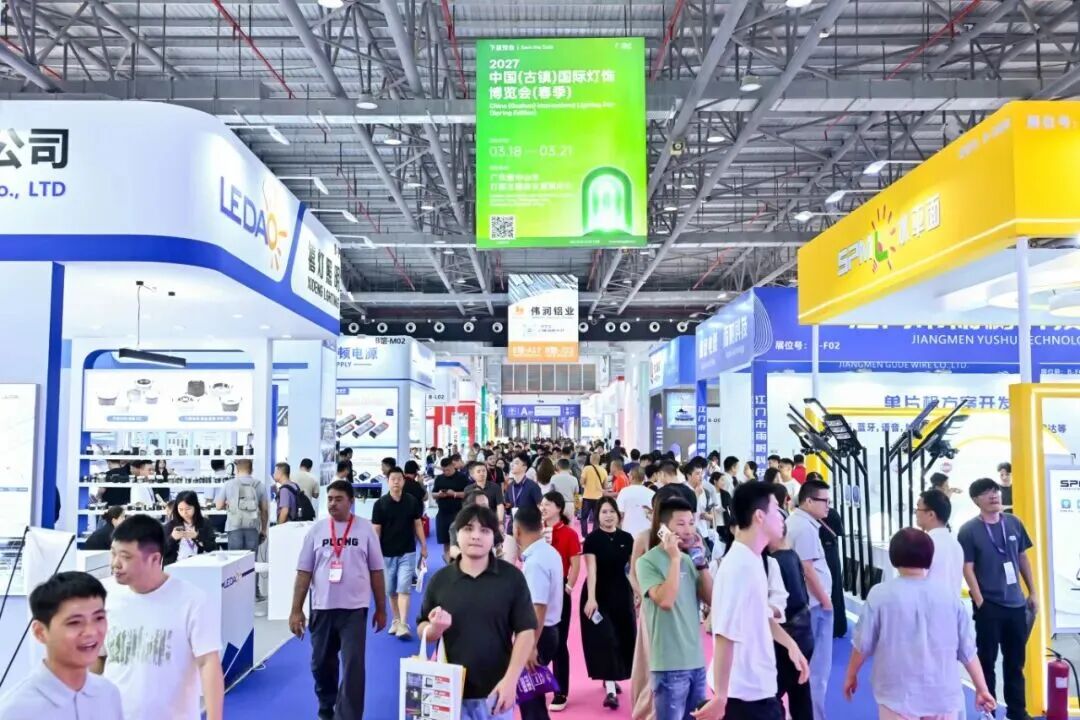
Outbound strategies have shifted from exporting products to exporting solutions and brands. Purchasing logic is changing from “buying lamps” to “buying systems and supply chains.” At the Guzhen Light Expo, visitors trace exhibits upstream to source manufacturers of light sources, drivers, components, and designers. Core outbound assets are shifting from production capacity scale to a composite structure of “design and R&D capabilities + certification and compliance capabilities + localized service capabilities.” Companies able to package smart control, healthy spectra, and PV-storage solutions into standardized deliverables are gaining bargaining power.
III. Compliance Requirements: From Pre-emptive Measures at the Trade Level to Endpoints in R&D and the Supply Chain
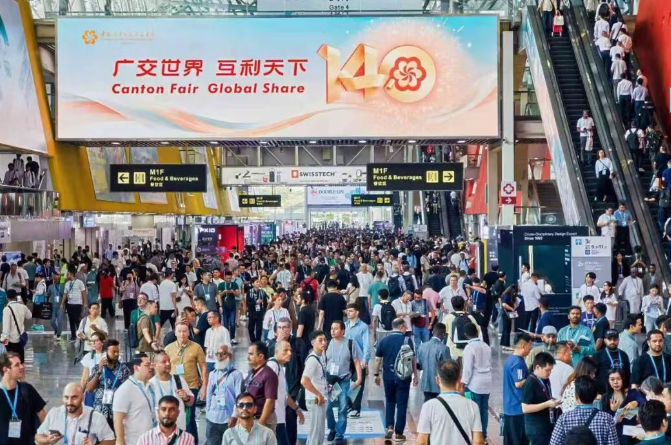
The overall scale of the three exhibitions remains stable. During Phase I of the 140th Canton Fair (covering lighting and electrical products), 189,000 overseas buyers attended, a 13.3% increase compared to the same period last session; the Guzhen Light Expo welcomed 5,020 overseas visitors, up 3.44% from the Fall 2025 show, setting a new autumn high; the Hong Kong Autumn Lighting Fair gathered approximately 3,000 exhibitors and attracted about 62,000 buyers from 152 countries and regions. Behind this stability lies a profound shift in purchasing decision-making—from “comparing prices” to “comparing certainty.” Buyers place greater emphasis on original design recognition, product compliance certifications, sampling efficiency, and flexible supply chain capabilities. At the Canton Fair, 36.5% of exhibiting companies offered “product + service” solutions; deals now hinge not only on price quotes but on a company’s ability to provide certainty in compliance, delivery, and scenario-specific solutions. Proactive compliance requirements are becoming a critical competitive edge for the future.
Collectively, these three exhibitions demonstrate that China’s lighting industry’s trade advantages are shifting from “scale and cost” to “integrated competition across technology, market, and compliance requirements.” In response to this new landscape, technological innovation must address the issue of “deliverability,” turning intelligence, health, and green initiatives into systematic solutions; market expansion must tackle the challenge of “depth,” cultivating new growth drivers atop established bases in Europe and America; and trade competition must resolve the issue of “early engagement,” bringing compliance, certification, and localization services forward to the starting points of R&D and the supply chain.
To help enterprises expand foreign trade markets and unlock domestic market potential, the China Lighting Appliance Association will continue providing comprehensive services to the industry. Through organizing corporate participation in domestic and international events such as the China (Guzhen) International Lighting Expo, the Shanghai International Architectural and Engineering Lighting Exhibition, and the Uzbekistan Smart Building Exhibition, the association supports companies going global. It also builds platforms for industry exchange and cooperation—including the China Lighting Industry Conference, the China Road Lighting Forum, and the China Lighting Appliance Industry Standards and Quality Conference—to actively promote the development of a dual-circulation pattern, both domestically and internationally. Enterprises interested in related activities may contact the China Lighting Appliance Association.
Source: China Lighting Appliance Association
China Light
The official website of the China Association of Lighting Industry and a full-media platform for the lighting sector. We provide authoritative and timely lighting information while striving to be a growth partner for businesses. From brand promotion and channel expansion to consulting, talent training and participation in standards development, we provide comprehensive professional services to help businesses improve quality and efficiency and jointly advance the high-quality development of the lighting industry.
Business Contacts
仇纯 (Ms.): 158 6155 3579
顾君 (Mr.): 137 7157 5253