
Li Zhijun’s in-depth analysis: AI + lighting is not a matter of choice, but a question of survival for those in the lighting industry.
“If the lighting industry fails to keep pace with AI, in the future we may only be able to serve as ‘luminaire suppliers,’ and the core value of smart lighting will no longer concern us!!!”

Li Zhijun
At a recent industry salon focused on “AI + Lighting,” Li Zhijun, Co-President of the Fudan University Alumni Lighting Association and Honorary President of the Shanghai Pudong Smart Lighting Federation, made a resounding statement.
With over 40 years in the lighting business, having witnessed the industry’s transformation from traditional light sources to LEDs, he took “Promoting the Integration of Lighting into the New Era of AI+” as his theme, deeply analyzing how AI is reshaping the future of the lighting industry and the three core tracks that lighting professionals must seize.
1. AI Acceleration Under Policy “Pressure”: From 10% to 70%, Time Is Running Out for the Lighting Industry
“By 2027, the penetration rate of intelligent agent applications in six key areas must reach 70%; by 2030, this figure will surge to 90%.” Li Zhijun bluntly cited the hard targets set forth in the State Council’s “Opinions on Deeply Implementing the ‘AI Plus’ Action.”
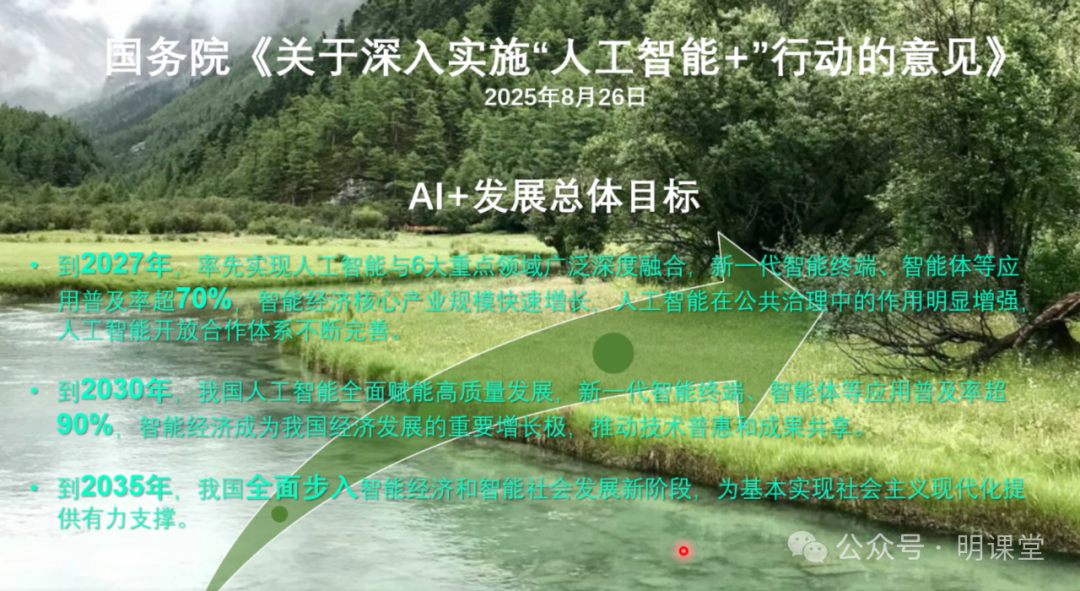
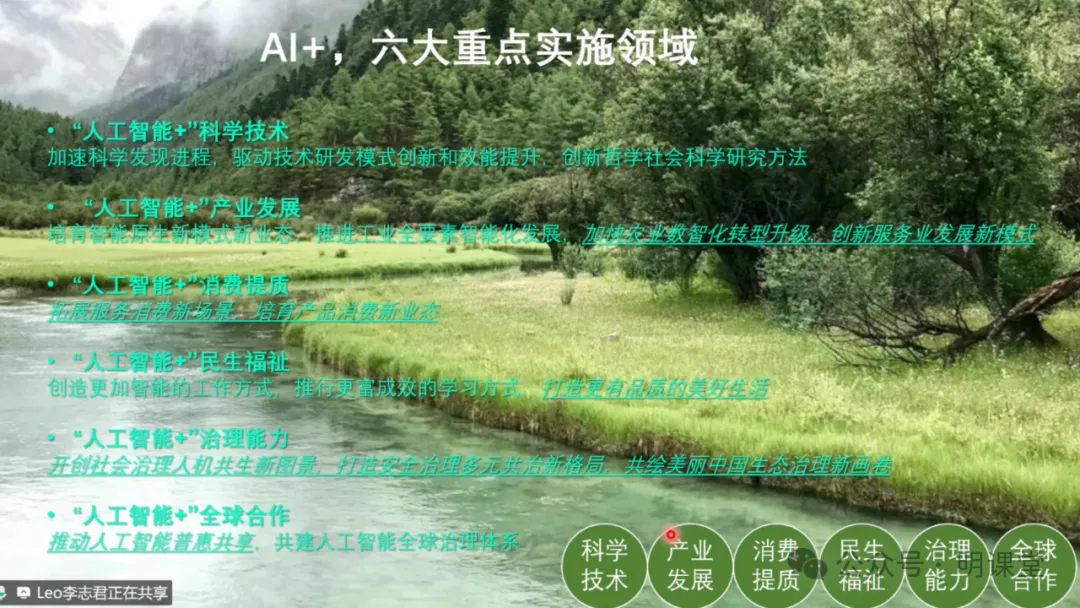
He admitted that currently, the smart adoption rate in the lighting industry is only 10%-15%, mostly remaining at an “early experimental stage”—many companies invest heavily yet struggle to realize market value, even falling into the trap of “higher investment, lower returns.” “National policy is moving far faster than industry expectations; if we don’t accelerate now, the lighting industry could become a mere ‘hardware appendage,’ excluded from the core of the smart ecosystem.”
Why Has the AI Transformation of the Lighting Industry Been Relatively Slow?
Li Zhijun believes the core issue lies in “insufficient system closed-loop capabilities”: from sensor data collection and algorithmic decision-making to scene feedback, the intelligent chain of lighting systems remains unconnected. “However, lighting itself has inherent advantages—scenes are relatively simple and can form independent closed loops; as long as we choose the right direction, there is every chance to become a ‘vanguard field’ for AI implementation.”
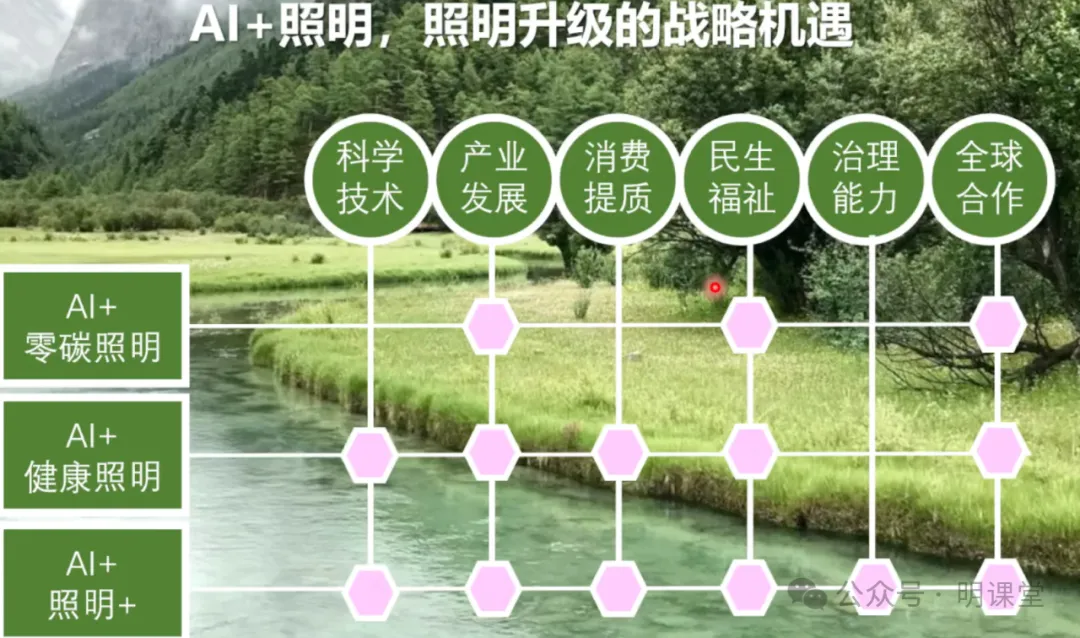
2. Zero Carbon × Health × Cross-Border: How Is AI Reshaping Lighting’s Three Core Tracks?
“The future of lighting cannot be separated from the three key words of ‘zero carbon,’ ‘health,’ and ‘cross-border,’” said Li Zhijun, combining 40 years of industry experience to deconstruct the logic behind AI’s restructuring of the lighting sector.
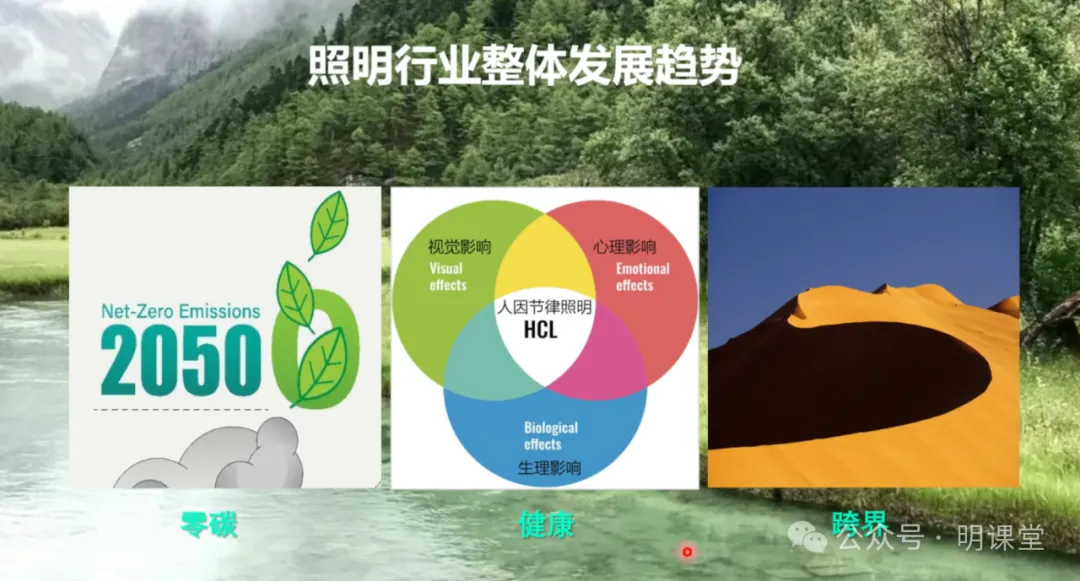
▍Zero Carbon: From ‘Energy Saving’ to ‘Smart Emission Reduction’—Can AI Help Achieve the 2050 Carbon Neutrality Goal Ahead of Schedule?
“Lighting accounts for 13% of the nation’s total electricity consumption, a figure that continues to rise due to urbanization, cultural tourism, and other demands. If the lighting industry hopes to achieve carbon neutrality by 2050, AI is an indispensable ‘accelerator.’”
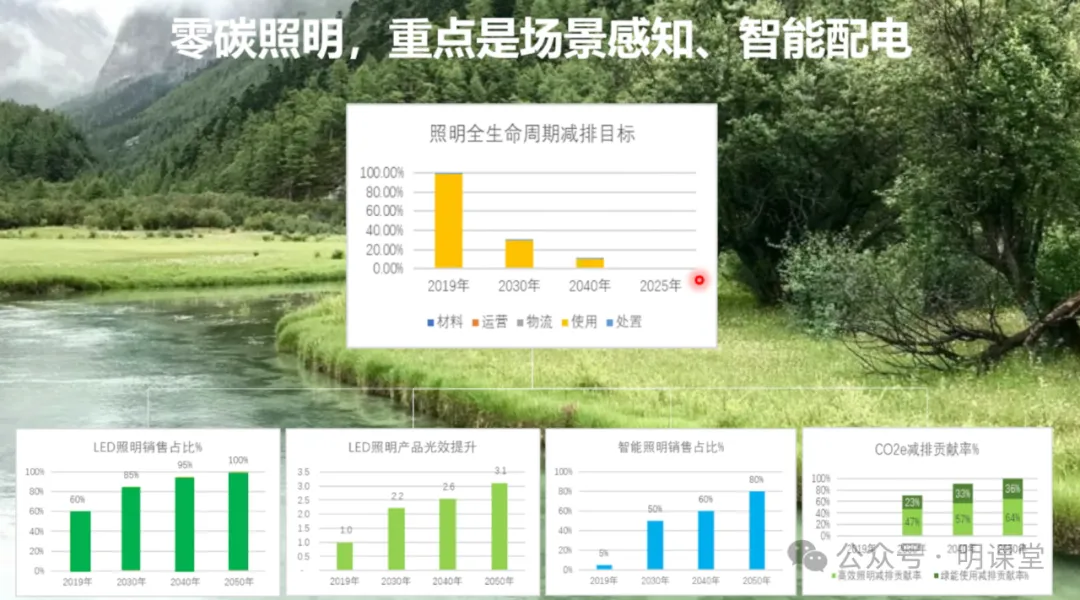
Li Zhijun used smart garage lighting as an example: a traditional 40-watt fluorescent lamp, through AI sensing (dynamic human and vehicle recognition) plus smart control, can reduce average power consumption to below 2 watts, achieving energy savings of over 95%. “This isn’t just simple ‘on/off control’; it’s ‘lighting on demand’ enabled by scene awareness—lights turn on when people arrive, turn off when they leave, and can even dynamically adjust brightness based on traffic density.”
He further pointed out that AI can also drive “green energy integration”: “Future lighting systems will be deeply integrated with green power sources like solar and wind, using smart distribution algorithms to achieve ‘self-generation and self-consumption, with surplus stored as energy,’ reducing reliance on the grid. If luminous efficacy improves (current LED street light efficacy has exceeded 200lm/W), smart adoption increases, and green energy usage rises—all combined—the lighting industry could achieve carbon neutrality as early as 2040.”
▍Health: From ‘Illuminating’ to ‘Lighting Well’—How Is AI Solving the Problem of ‘Data Silos’?
“A faint glow from a bedside lamp can disrupt a person’s sleep rhythm—lighting’s impact on health is far more direct than we imagine.”
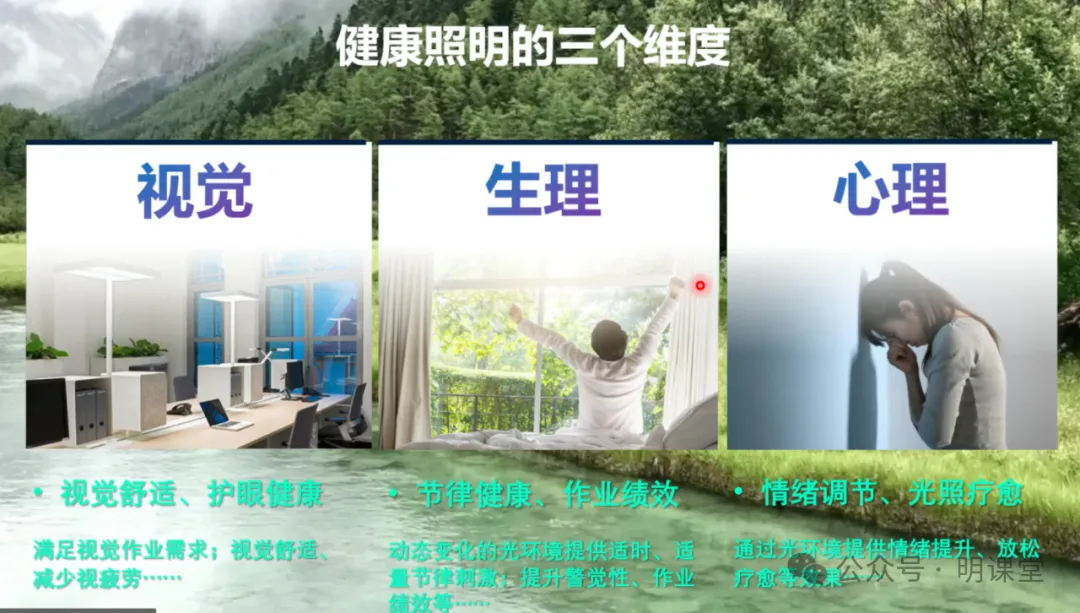
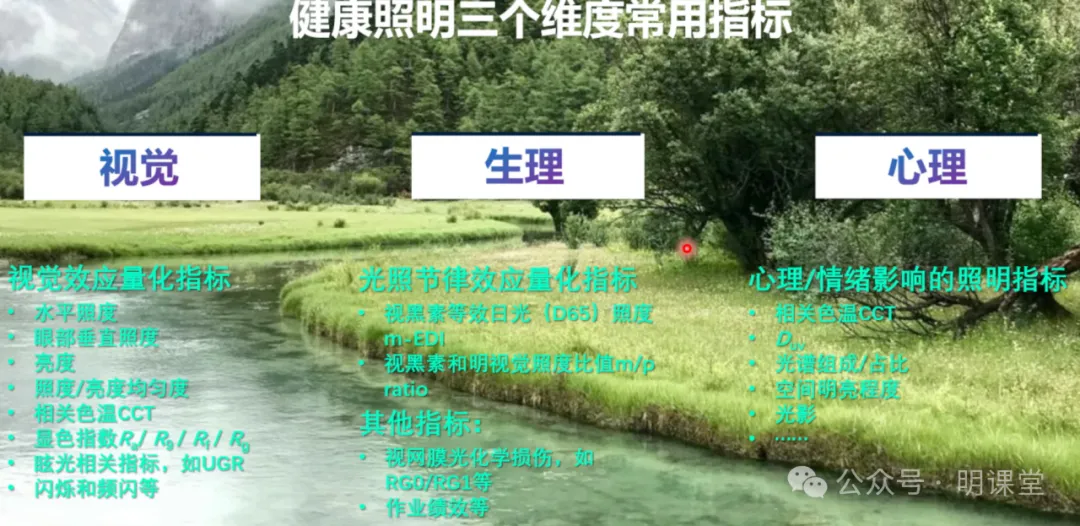
Li Zhijun emphasized that healthy lighting must cover three major dimensions: visual, physiological, and psychological:
◇Visually, basic issues like illuminance, color temperature, and flicker must be addressed;
◇Physiologically, human circadian rhythms (such as melatonin secretion) need to be regulated;
◇Psychologically, the lighting environment should alleviate anxiety and boost mood.
But the biggest current pain point is “data scarcity”:
“In the lab, we can use complex methods like EEG, eye-tracking, and saliva tests to verify the relationship between light and health, but in real-world scenarios, lighting systems lack ‘perceptual capability’—relying solely on single sensors like infrared or radar makes it impossible to capture human physiological states or emotional changes.”
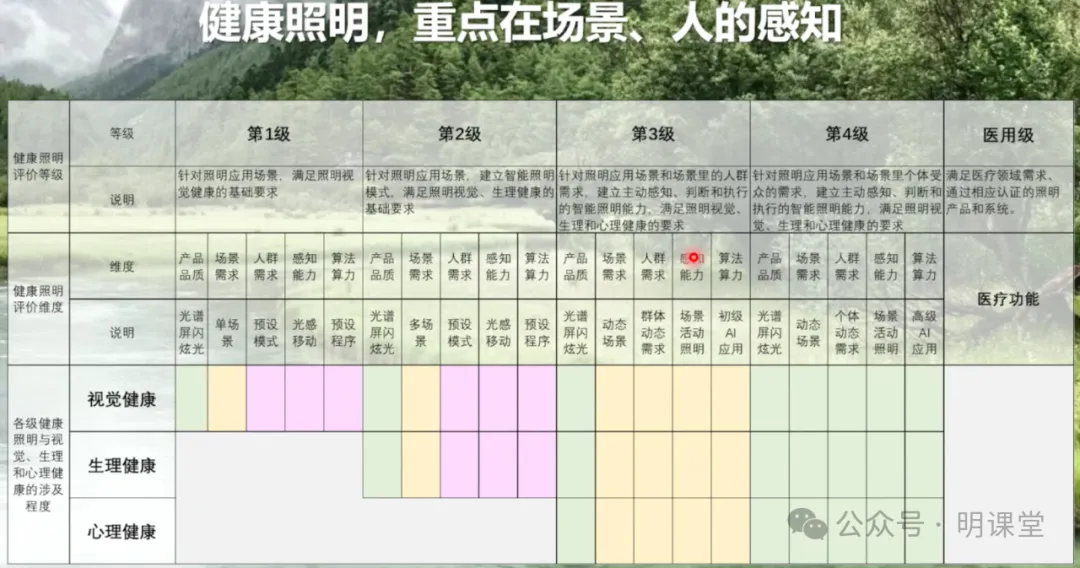
He believes AI’s value lies precisely here: through multi-sensor fusion (such as cameras plus physiological monitoring devices, while respecting privacy), establishing a data model of “light environment–human state”, ultimately realizing “seamless healthy lighting.”
“For example, office lighting can automatically adjust color temperature based on employees’ brainwave data to enhance concentration; nursing home lighting can monitor sleep patterns to adjust nighttime lights, improving elderly sleep quality.”
▍Cross-Border: From ‘Lamp Post’ to ‘Intelligent Agent’—How Can Lighting Networks Become the ‘Nerve Ends’ of Smart Cities?
“Today’s smart lamp posts only provide the ‘post’ but lack the ‘intelligence’—5G base stations and cameras belong to others, leaving lighting professionals reduced to mere ‘hardware carriers.’”
Li Zhijun stated plainly that the core of cross-border integration is “the intelligentization of lighting networks”: lamp posts should not merely be “poles for mounting equipment,” but become “intelligent agents with governance capabilities.”
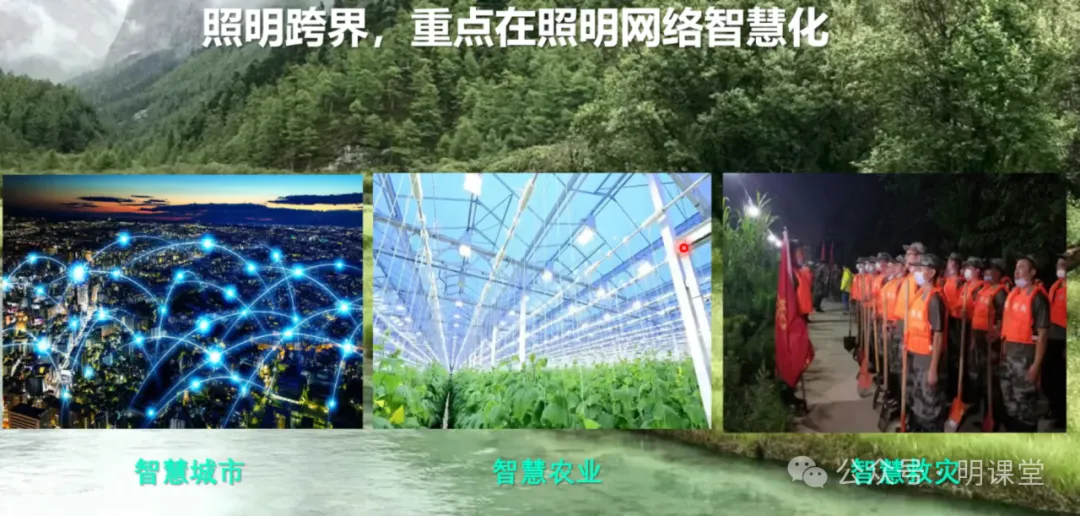
For example, by integrating traffic data and environmental monitoring data through AI algorithms, lamp posts can provide real-time congestion warnings and air quality monitoring; agricultural lighting should not just supply “plant growth light,” but combine temperature, humidity, CO₂ levels, and other data to optimize light formulas via AI, boosting crop yields.
“In the future, competition among lighting companies will no longer be about ‘selling lamps,’ but about ‘selling system services.’ Whoever can turn lighting networks into ‘data entry points’ will gain a leading edge in smart city, smart agriculture, and other fields.”
3. Lighting Cross-Border: System Breakthroughs Centered on ‘Intelligent Lighting Networks’
“AI is not a ‘nice-to-have’ add-on, but a ‘survival necessity’ for the lighting industry.”
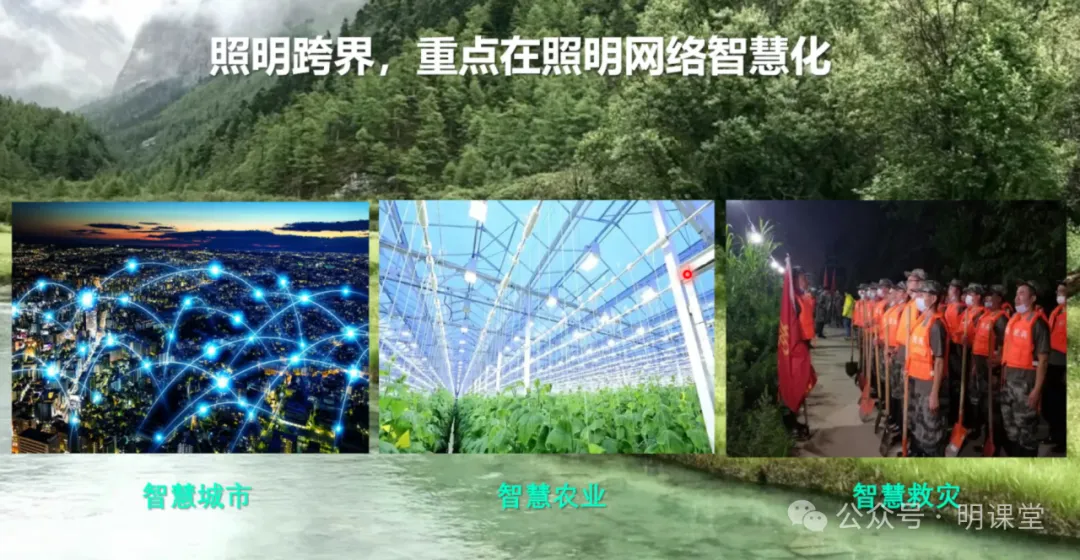
Li Zhijun summarized that breakthroughs in AI + lighting must focus on three key directions:
◆Sensor Upgrades: Move away from single sensors toward “multimodal fusion” (such as visual sensors plus environmental sensors), enabling lighting systems to “understand scenes and read people”;
◆In-House Algorithm Development: Develop specialized models tailored to lighting scenarios instead of applying general-purpose AI algorithms—for example, a “human-vehicle recognition algorithm” for garage lighting, a “circadian rhythm regulation algorithm” for healthy lighting, and a spectral luminance imaging meter (which visualizes lighting parameters on a smartphone);
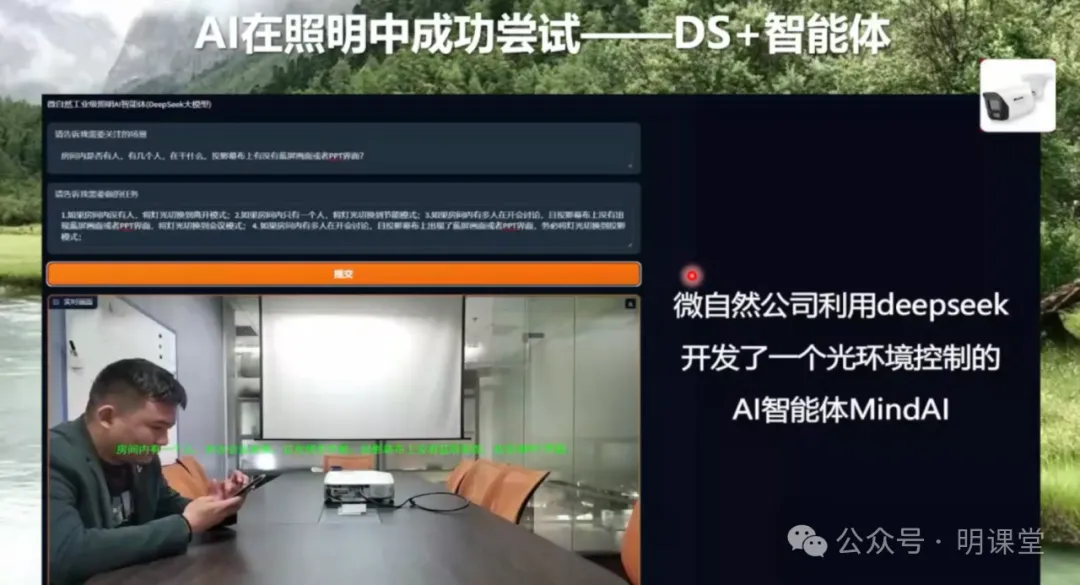
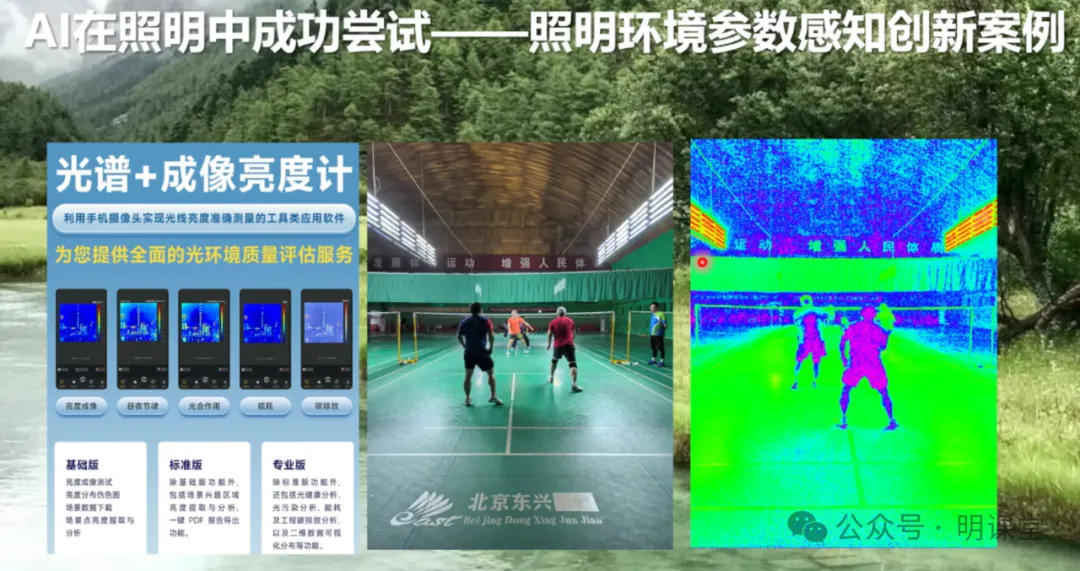
◆Scenario Focus: Start with simple scenarios (like garages and corridors), then gradually expand to complex ones (like offices and homes), validating value through “small closed loops” before replicating and scaling up.
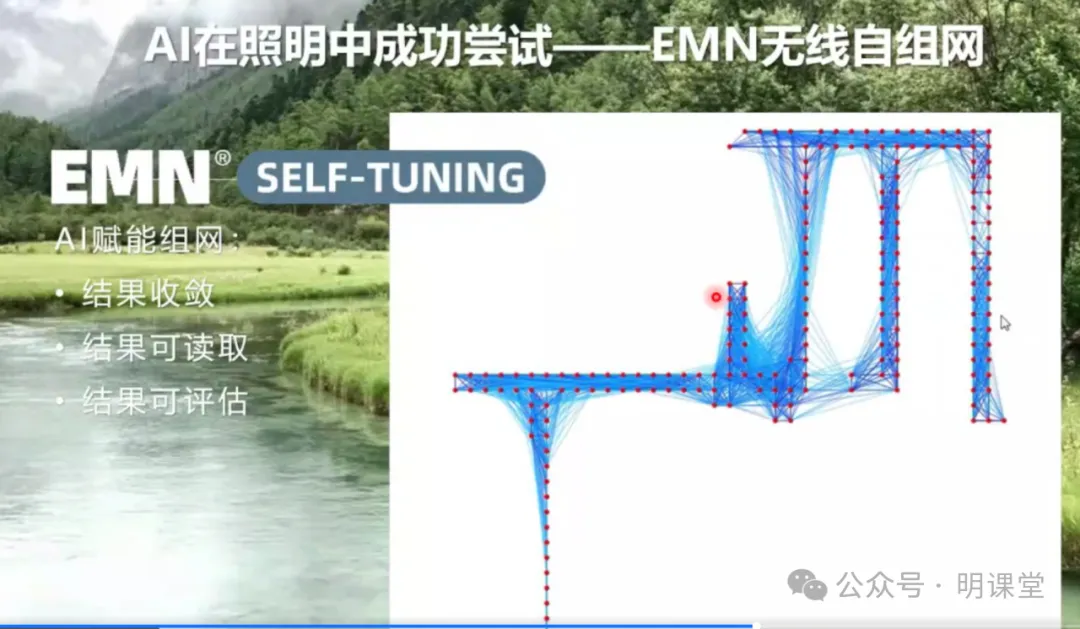
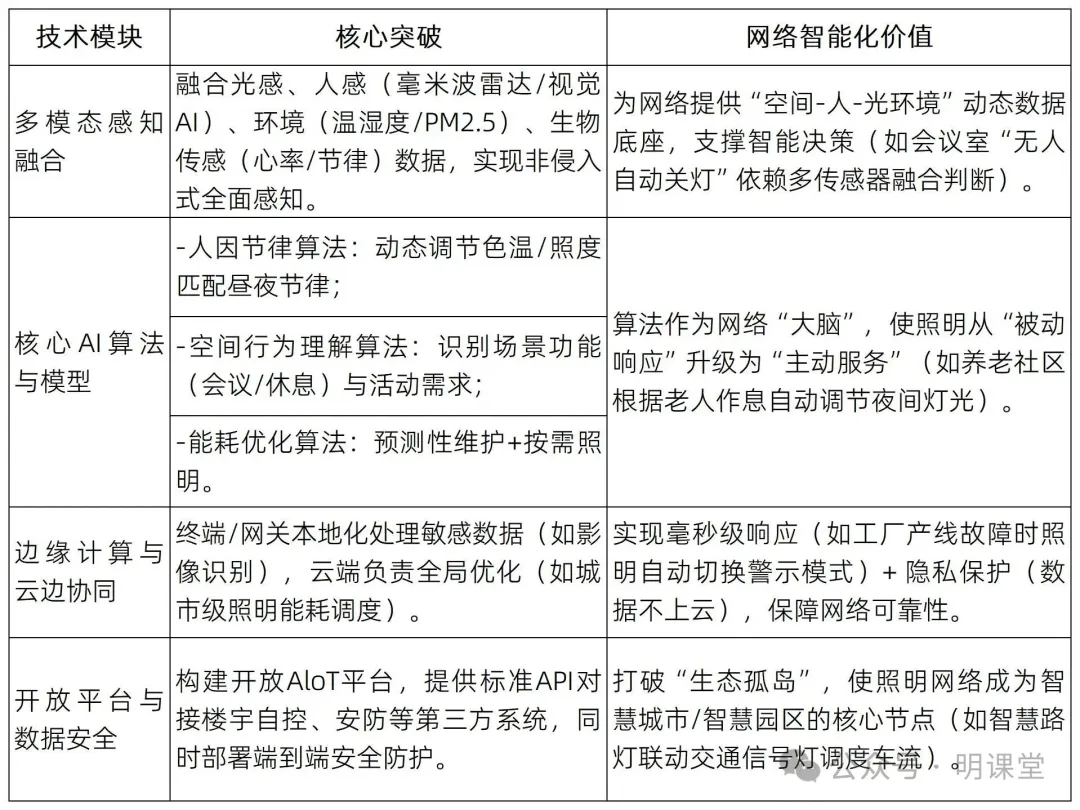
▍Core Foundation: Key Technological Breakthroughs Build the Basis for Network Intelligentization
Goal: Achieve a technological closed loop to enable lighting networks to leap from “hardware connectivity” to “intelligent collaboration.”
▍Implementation Carrier: Product Breakthroughs Enable Plug-and-Play Network Intelligentization
Goal: Make lighting products the “nerve ends” of network intelligentization, rather than isolated hardware.
1. From ‘Single-Product Intelligence’ to ‘System Intelligence’
◇Example: A smart office system includes not only intelligent luminaires but also integrates sensors, controllers, and cloud platforms, achieving unified management of “workstation lighting–space utilization analysis–energy consumption management” (one company case: per-station energy use dropped by 80%, space utilization increased by 30%).
2. ‘Seamless Experience’ and ‘Proactive Intelligence’
◇Products automatically learn user habits (such as home lighting remembering “movie mode” settings), requiring no manual intervention; they proactively serve by predicting needs (such as hospital corridor lights sensing medical staff movement 10 seconds in advance and turning on accordingly).
3. Hardware Innovation and Functional Fusion
◇Smart streetlights integrate 5G micro-base stations, environmental monitoring sensors, and emergency alarm modules, becoming “urban IoT nodes” that transcend single lighting functions (one pilot city: a single lamp post achieved traffic monitoring + PM2.5 detection + emergency broadcasting, increasing overall benefits by 300%).
4. Software-Defined Lighting
◇Continuous functional iteration via OTA upgrades: ordinary home lamps can be upgraded to “circadian lighting mode,” commercial spotlights can add “foot traffic heat map analysis” functionality, extending product lifecycles (one brand’s luminaires achieved secondary sales through software upgrades, increasing user retention by 45%).
▍Value Validation: Key Scenarios Become the ‘Touchstone’ for Network Intelligentization
Goal: Validate the commercial and social value of lighting network intelligentization in high-value scenarios.
●Smart Offices and Commercial Spaces
◇Technical Applications: Workstation lighting linked to OA systems (e.g., automatic power-off if lights aren’t turned off after work), space utilization analysis (using lighting usage data to infer workstation occupancy rates);
◇Value: A leading enterprise headquarters case showed employee concentration improved by 25%, space utilization increased by 30%.
●Healthy Aging
◇Technical Applications:
→Circadian lighting improves sleep for Alzheimer’s patients (low-glare 2000K lighting at night reduces awakenings);
→Seamless fall detection (millimeter-wave radar plus AI gait analysis, with response time under 10 seconds);
◇Value: In nursing home pilots, nighttime accident risk decreased by 60%, family satisfaction rose by 90%.
●Smart Cities
◇Technical Applications: Smart streetlights serve as “core nodes of the urban IoT,” enabling smart urban management (road occupation detection), smart traffic (traffic flow monitoring), public safety (emergency alarms), and environmental monitoring (PM2.5 detection);
◇Value: They become a critical component of the digital foundation for “New Infrastructure,” with one pilot city seeing road throughput efficiency increase by 25%.
●High-End Homes and Cultural Tourism/Performing Arts
◇Technical Applications: AI enables precise, scenario-based, dramatic lighting—homes can switch between guest reception, cinema, and party modes with one touch; cultural tourism projects achieve real-time synchronization of light shows with music and visitor interactions;
◇Value: Creates stunning immersive experiences, extending tourist stay times by 40% and increasing repeat purchase rates by 20%.
▍Commercial Closed Loop: Market Channels Drive Large-Scale Implementation of Network Intelligentization
Goal: Accelerate the widespread adoption of lighting network intelligentization, transitioning from “technically feasible” to “commercially sustainable.”
1. Business Model Innovation: From ‘Selling Products’ to ‘Selling Services’ (LaaS)
◇Customers pay in installments based on “lighting service outcomes” (e.g., sharing profits from energy savings), lowering initial installation barriers. One commercial complex case: zero down payment, cost recovery in 2 years, customer acceptance up by 70%.
2. Ecosystem Collaboration: Integrate with mainstream platforms to avoid going it alone
◇Partner with Huawei HarmonyOS, Xiaomi IoT, Tuya Smart, etc., leveraging their channels and ecosystem resources to quickly reach customers (e.g., pre-install smart home lighting systems with real estate developers, increasing penetration by 50%).
3. Benchmark Leadership: Create “replicable” demonstration cases
◇Focus on flagship clients (such as headquarters of leading enterprises or landmark smart parks), delivering standardized solutions. Example: A certain internet company’s smart office project, backed by empirical data showing “80% reduction in energy use + 25% boost in employee productivity,” drove a 120% increase in industry orders.
4. Market Education and Value Communication
◇Marketing messaging evolves from “more energy-efficient” to “healthier, more efficient, higher value,” showcasing to decision-makers the comprehensive value of AI lighting—not just lower electricity bills, but also improved employee health, productivity gains, enhanced brand image, and reduced management costs.
Summary: From ‘Illuminating Space’ to ‘Serving People,’ AI Gives Light a ‘Warmth’
“Sensors are the ‘eyes,’ algorithms are the ‘brain,’ scenarios are the ‘stage,’ and the market is the ‘closed loop.’ Only through their synergy can lighting transcend its physical attributes to become a customizable, interactive, and caring digital service. With the 2027 target of 70% intelligent agent application already within reach, lighting professionals can no longer afford to wait.”
Li Zhijun concluded with an appeal: “AI + lighting is not a matter of choice, but a ‘survival question’ for lighting professionals. Rather than standing by and watching, we should roll up our sleeves and get involved—use AI to redefine lighting, allowing light to transcend its physical properties and become a perceptible, interactive, warm digital service.”
4 Interactive Q&A:
Realistic Challenges and Implementation Paths for AI + Lighting
Q:Multimodal perception requires collecting vast amounts of data—how do we balance “data needs” with “privacy protection”?
Li Zhijun: The core lies in “local data processing + non-invasive sensing.” For example, millimeter-wave radar can replace cameras for monitoring human behavior, with data analyzed directly on the luminaire side (e.g., “has someone fallen?”), eliminating the need to upload raw footage; light, temperature, humidity, and other environmental data are anonymized before being uploaded to the cloud, ensuring “usable but invisible.” Currently, some companies have deployed “edge intelligence gateways,” achieving over 90% local data processing and reducing privacy risks by more than 80%.
Q:The circadian rhythm algorithm sounds ideal, but how do we validate its effectiveness in real-world scenarios? Are there concrete cases?
Li Zhijun: Validation requires a dual-drive approach of “lab data + real-scenario feedback.” For example, Fudan University partnered with a company to conduct a pilot in a nursing home: using circadian lighting to regulate residents’ sleep schedules, 3-month monitoring data showed—melatonin secretion peaks advanced by 1.5 hours, bedtime shortened by 20 minutes, nighttime awakenings reduced by 40%. Even more crucial is “user feedback”: 85% of residents reported “significantly improved sleep quality,” and caregiver records indicated “more energetic spirits during the day.” This is the closed loop from “algorithm model” to “real value.”
Q:In smart cities, smart streetlights are gaining more and more functions—how can we avoid “piling up hardware while neglecting practical applications”?
Li Zhijun: The key is “function determined by need, not need determined by function.” For example, one county once blindly added over ten types of equipment to streetlights, including 5G base stations and LED screens, but actual usage rates remained below 30%. Later, they focused on a single pain point—“traffic management”: using radar to monitor traffic flow and automatically adjusting streetlight brightness (high brightness during heavy traffic, reduced power during empty runs), while coordinating with traffic signals to optimize timing, ultimately reducing energy consumption by 35% and increasing traffic efficiency by 25%. “Less is more”—solve real problems first, then gradually expand functions.
Q:From “selling products” to “selling services” (LaaS model), how can companies overcome the barrier of high upfront costs and long return cycles?
Li Zhijun: It requires “ecosystem collaboration + benchmark leadership.” For example, one company teamed up with an energy service provider to launch a “lighting service package”: customers pay no installation fee, instead paying in installments based on “lighting services” or “energy-saving profits” (e.g., monthly payments covering 60% of saved electricity bills), while sharing government energy-saving subsidies. Through this model, one commercial complex project achieved “zero-down-payment implementation,” recovered costs in 2 years, and reached 92% customer satisfaction. Additionally, creating benchmark cases (such as landmark buildings or leading enterprise headquarters), using “actual energy-saving data + user experience” to prove value, then spreading word-of-mouth throughout the industry to reduce market education costs.
Conclusion
As AI reshapes countless industries, the transformation of the lighting sector is no longer a question of “whether to act,” but “how to act.” Li Zhijun’s insights reflect both a clear-eyed assessment of the current landscape and a forward-looking strategic plan—on the track of AI + lighting, whoever can be the first to close the “perception-decision-service” loop will emerge as the leader of the next decade.
END
Disclaimer
The content of this article was compiled by Ming Classroom based on Teacher Li Zhijun’s presentation at Ming Classroom—the salon replay titled “Promoting the Integration of Lighting into the New Era of AI+.” Click “Read Original Article” to view the full salon replay.
This article aims to share information and maintain a neutral stance. If any infringement issues arise, please contact us promptly; we will address or remove them as soon as possible. Thank you for your understanding!
China Light
The official website of the China Association of Lighting Industry and a full-media platform for the lighting sector. We provide authoritative and timely lighting information while striving to be a growth partner for businesses. From brand promotion and channel expansion to consulting, talent training and participation in standards development, we provide comprehensive professional services to help businesses improve quality and efficiency and jointly advance the high-quality development of the lighting industry.
Business Contacts
仇纯 (Ms.): 158 6155 3579
顾君 (Mr.): 137 7157 5253