
The International Perspective on Healthy Lighting: From Scientific Discoveries to Public Action
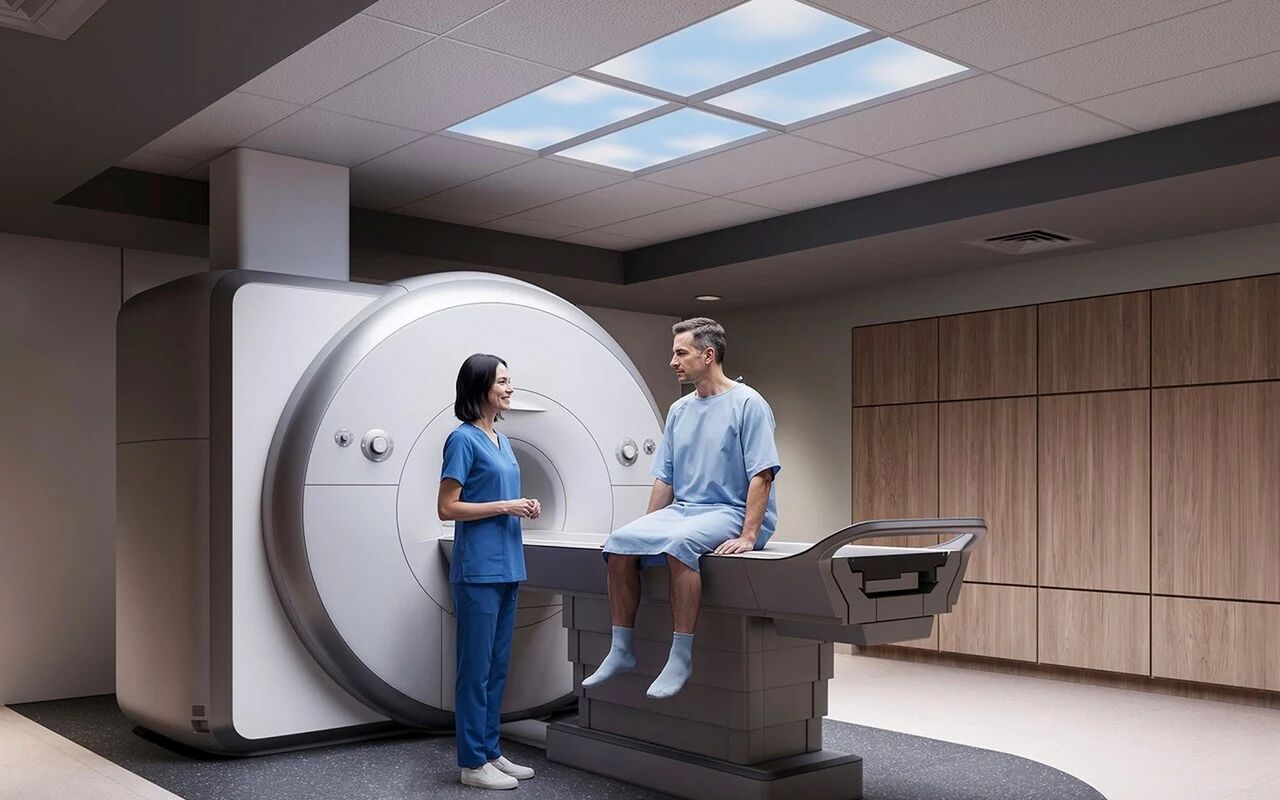
Recently, the U.S.-based medical lighting brand Nightingale officially launched a new product: a luminaire specifically designed for MRI examination rooms. This product has been successfully adapted to the MRI environment, opening up a more precise and in-depth niche within the market for lighting solutions tailored to healthcare settings.
In MRI suites, lighting equipment must not only withstand the physical interference of strong magnetic fields and minimize safety risks posed by magnetic attraction, but also incorporate built-in filters to suppress electromagnetic noise. Furthermore, thanks to an optimized optical design, this luminaire creates a serene “natural light” space for patients. With hues that shift like dawn and dusk, and skies that seem almost within reach, it helps counteract the psychological fear evoked by confined spaces during examinations, soothing patients’ anxiety and tension. The launch of this product represents yet another practical application of health‑focused principles in lighting design.
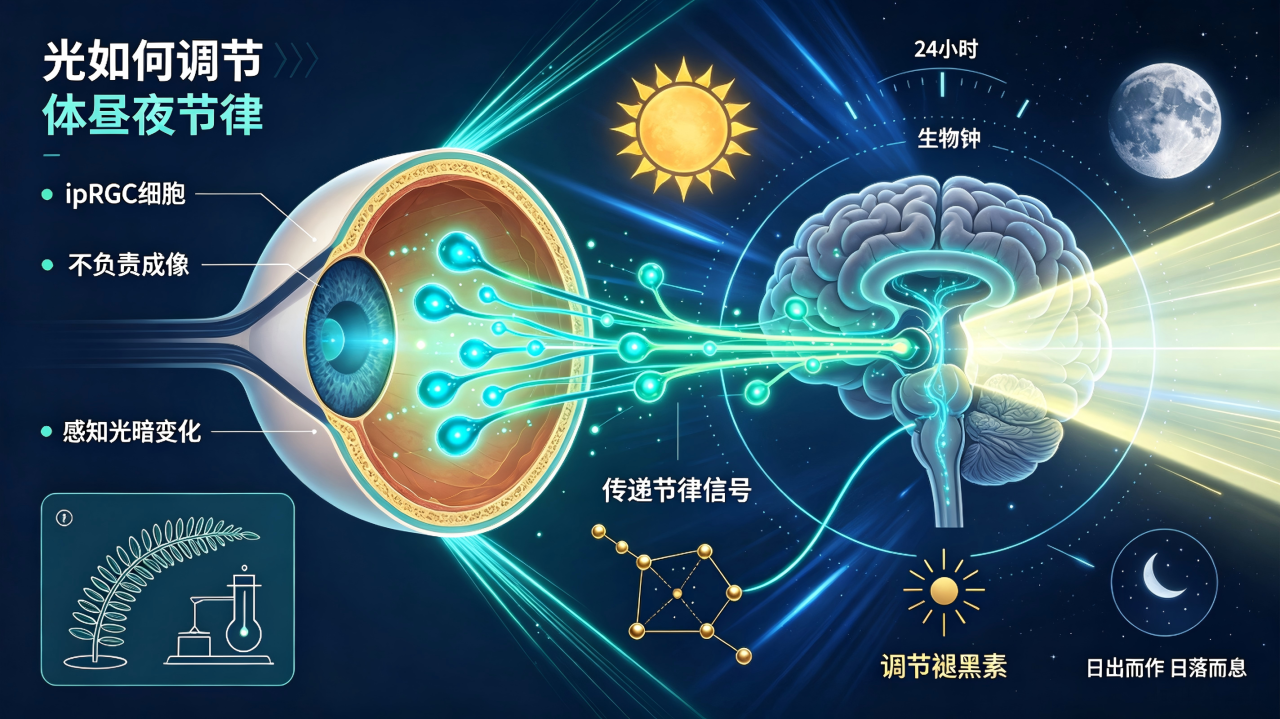
The mechanisms by which light influences human health have long been the subject of research. As early as 1729, scientists first documented an endogenous circadian rhythm in living organisms—specifically, the mimosa plant’s approximately 24-hour opening and closing cycle even under continuous darkness, suggesting the presence of an invisible internal clock. In 2017, American scientists Jeffrey Hall, Michael Rosbash, and Michael Young were awarded the Nobel Prize in Physiology or Medicine for their discovery of the molecular mechanisms that govern circadian rhythms, providing molecular‑level evidence of this “invisible clock” within living beings. Subsequent studies further revealed the “keyhole” through which this clock operates: ipRGC cells located in the human retina. These cells do not contribute to image formation; instead, they detect variations in light intensity and its cyclical changes, transmitting these visual signals to the brain’s circadian regulatory center. There, they modulate melatonin secretion, thereby influencing our states of wakefulness and sleepiness, enabling humans to align with the natural rhythm of “rising with the sun and resting at sunset.”
Building on these findings, the principle that light shapes health has evolved from a scientific hypothesis into a widely accepted consensus across academic circles worldwide: bright daylight should flow like a rushing spring, while nighttime should be as tranquil as still ink—no longer mere poetic imagery, but a hard‑wired constraint governing our biological rhythms.
Today, public health agencies and standardization bodies in several countries have taken the lead in accumulating evidence and advancing early-stage applications. France’s National Agency for the Safety of Health Products has conducted a systematic assessment of health risks associated with LED lighting and blue‑light exposure; the UK Health Security Agency has contributed to the development of the CIE S 026/E:2018 standard issued by the International Commission on Illumination, providing a unified framework for evaluating light‑induced responses mediated by ipRGCs; meanwhile, Germany’s Federal Institute for Occupational Safety and Health has focused on real‑world work environments, incorporating the impact of light exposure on employees into quantitative analyses.
Analyzing these initiatives reveals a clear trend: healthy lighting is transitioning from fragmented scientific discoveries to an industrialized technological race—spanning cutting‑edge research by academic institutions, coordinated efforts by standardization organizations, and the practical implementation of end‑user products. A complete industry‑academia‑research ecosystem is rapidly taking shape. Healthy lighting is no longer just a laboratory concept; it has become a strategic priority in the global lighting industry.
However, competition over standards equates to competition for influence. To seize this strategic opportunity, the China Lighting Fixture Association is spearheading the preparation of the country’s first industry white paper on healthy lighting, systematically mapping global technological pathways, scientific evidence, and industry dynamics, with the aim of providing directional guidance for Chinese companies seeking to compete internationally. We warmly invite more lighting enterprises to join the Association and collaborate on drafting this white paper, pooling industry resources to shape a Chinese approach to future healthy lighting standards. This effort goes beyond safeguarding China’s voice in the global market—it also determines whether we can secure a rightful place in the evolving landscape of the healthy lighting industry over the coming decades.
This article is sourced from the China Lighting Association, authored by the CLA.
China Light
The official website of the China Association of Lighting Industry and a full-media platform for the lighting sector. We provide authoritative and timely lighting information while striving to be a growth partner for businesses. From brand promotion and channel expansion to consulting, talent training and participation in standards development, we provide comprehensive professional services to help businesses improve quality and efficiency and jointly advance the high-quality development of the lighting industry.
Business Contacts
仇纯 (Ms.): 158 6155 3579
顾君 (Mr.): 137 7157 5253