
Energy Saving in Underground Parking Lot Lighting: A Comprehensive Breakdown from Technology to Real-World Cases
On the evening of April 28, the “Fudan Light” salon was successfully held, guided by the Lighting Alumni Association of Fudan University and organized by China Light Network·Ming Classroom, with support from Zhejiang Qicheng Electrical Co., Ltd. The “Fudan Light” salon series has already been successfully launched for several sessions. This particular event focused on the theme “Lighting Energy Saving at the Right Time—Underground Parking Lot Edition,” featuring Mr. Zhou Xiang, founder of Desui Lighting and a Fudan alumnus, who presented an in-depth technical analysis along with real-world case studies.
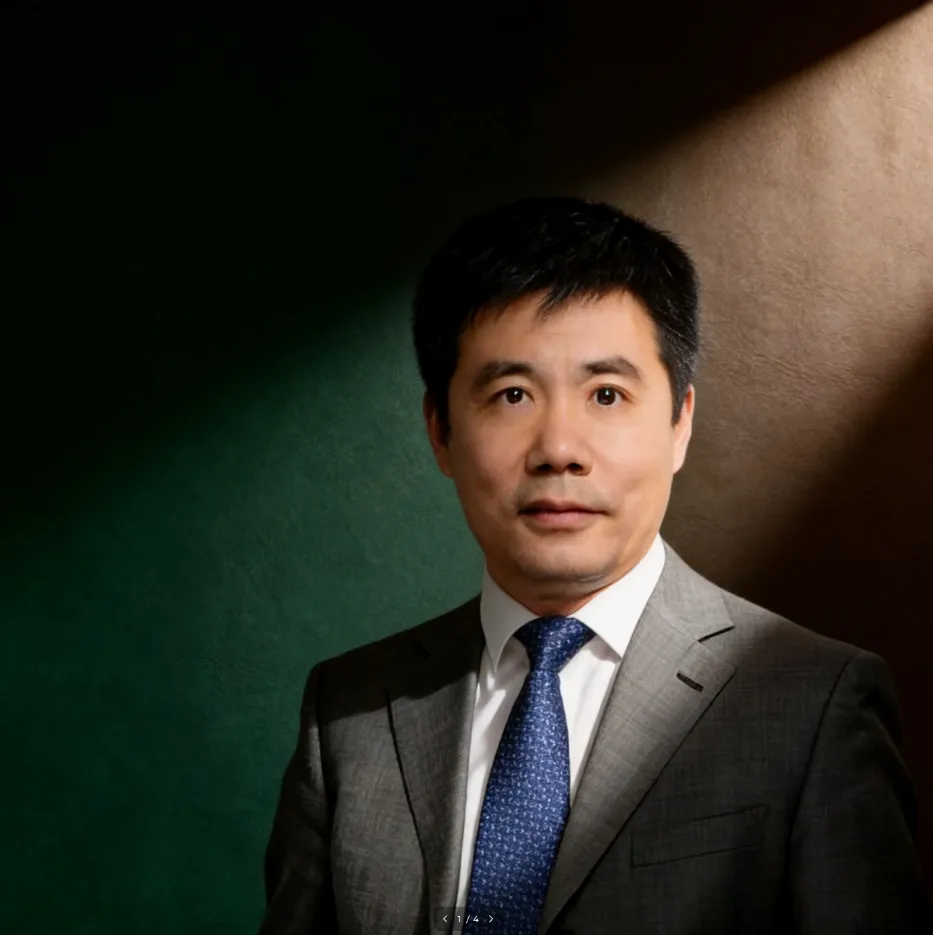
Guest Speaker: Zhou Xiang
He systematically explained core technologies for lighting energy saving, solution design, and practical implementation experiences, offering industry professionals content that combines professional depth with practical value.
Against the backdrop of the dual carbon goals, lighting energy saving represents a core opportunity in a trillion-yuan existing market.
Mr. Zhou first highlighted the significant value of lighting energy saving within the dual carbon strategy: lighting accounts for 13% of total electricity consumption across society in China, making it one of the quickest and most cost-effective pathways to emission reduction.
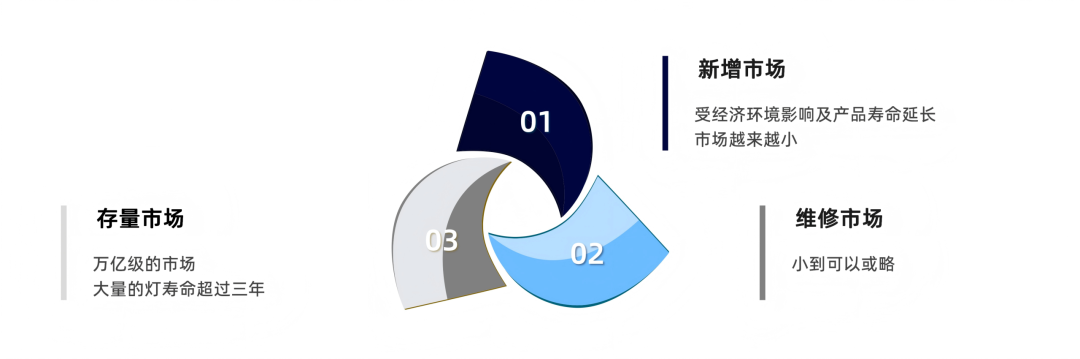
The current lighting market can be divided into three categories: new‑build market, maintenance market, and existing‑stock market. As the real estate sector matures, the first two segments are gradually shrinking, while the existing‑stock market—focused on upgrading energy‑efficient lighting systems still in operation—has emerged as a blue‑ocean opportunity worth trillions of yuan.
Mr. Zhou pointed out that the core logic of lighting energy saving can be summarized in two dimensions:
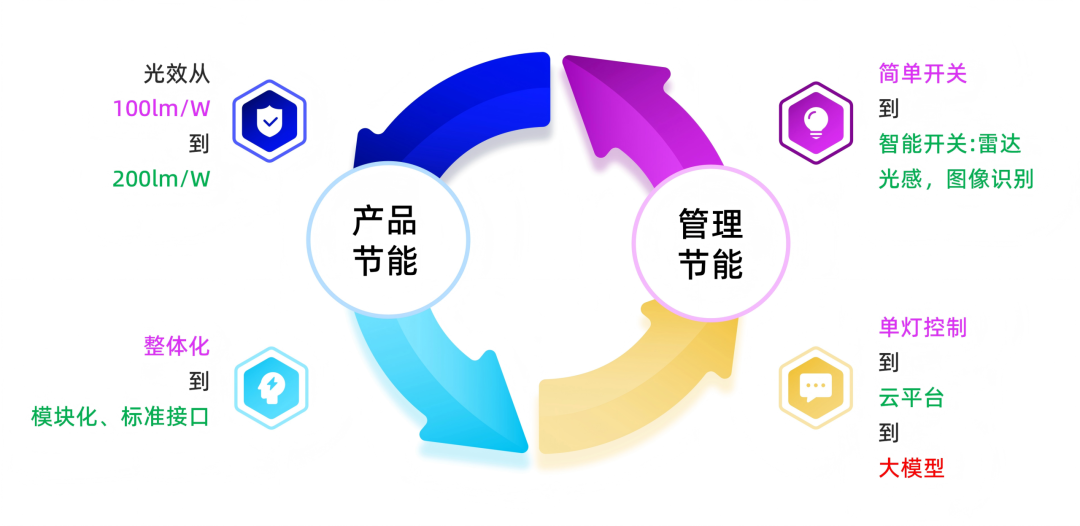
1 Product‑level energy saving
By improving luminous efficacy, energy consumption is reduced. Currently, typical LED products deliver around 80–100 lm/W, but after years of use, their efficacy often declines to 40–70 lm/W. In contrast, Desui’s technology can boost luminous efficacy to 180–200 lm/W, enabling over 50% energy savings simply through product replacement.
2 Management‑level energy saving
Through intelligent control, lighting is adjusted according to actual demand, further reducing energy consumption by 30%–50% without compromising user experience.
When combined, these approaches can achieve overall energy savings of 60%–90%, with a payback period of just 1–2 years. Products also come with a 5‑year quality guarantee, delivering both social and economic benefits.
Underground Parking Lot Lighting Solution: Seamless Energy Saving Through Technology Integration
Underground parking lots are a quintessential scenario for lighting energy saving: continuous 24‑hour illumination leads to short lamp lifespans and high energy consumption. A single 18W LED lamp can consume up to 157 kWh annually, costing over 150 yuan per year based on commercial electricity rates, making energy‑saving upgrades urgently needed.
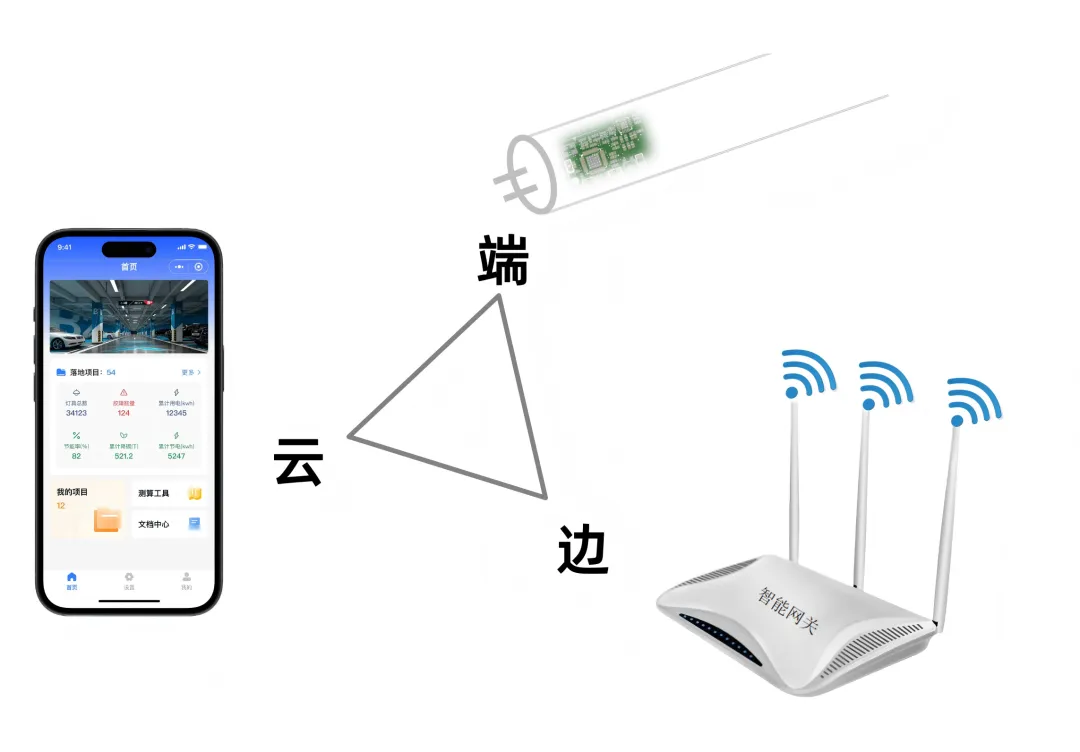
Desui’s underground parking lot lighting solution integrates radar sensing, Bluetooth communication, machine learning, and other technologies to achieve smart control that ensures lights turn on when vehicles arrive and dim when they depart, all while maintaining an unobtrusive user experience:
01 Full‑Scene Intelligent Interconnection
As vehicles approach, lights ahead illuminate in advance; at intersections, lights on all four sides light up simultaneously; even the path leading from the parking area to the elevator remains illuminated after the driver parks. Throughout this process, users hardly notice any changes in lighting, achieving “seamless illumination” and even enhancing the overall experience.
02 Bluetooth Mesh Self‑Organizing Network
Each light communicates via Bluetooth to form a network, eliminating the need for manual coding. When radar detects a vehicle’s movement, the system automatically records the spatial relationships between lights using machine learning, effectively completing installation upon setup and significantly reducing deployment costs. Moreover, machine learning continues to evolve over time, so even if the garage’s traffic flow later changes, the system will adapt automatically to new通行 patterns.
03 Flexible, Adjustable Smart Control
All parameters—including brightness levels for occupied vs. unoccupied states, delay times before lights turn on, illumination distances, and fade‑in/fade‑out durations—can be easily adjusted via a WeChat mini‑program. Operation is straightforward, requiring no complicated manuals. A single gateway can cover an entire underground parking lot (including multi‑level garages), allowing real-time monitoring of each light’s operating status and energy consumption data, as well as fault‑location capabilities.
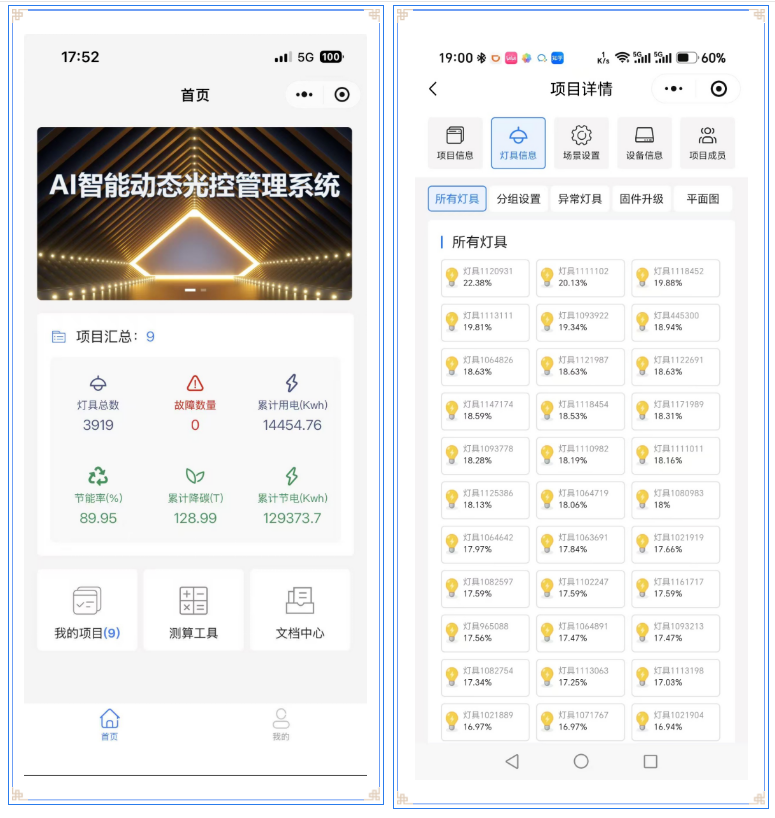
AI‑powered Dynamic Light Control Management System Mini‑Program Interface
According to actual project calculations, this solution achieves energy savings of over 89% in residential underground parking lots, approximately 83%–85% in commercial complexes, and around 82% in high‑traffic settings such as railway stations. Each lamp can save more than 100 yuan annually in electricity costs, yielding substantial economic benefits.
Multiple Core Technologies Build Differentiated Advantages
Mr. Zhou summarized the solution’s key strengths into five major technological systems:
1 Three‑Dimensional Luminous Efficacy Engine
Through coordinated optimization of power supplies, semiconductor materials, and optical designs, this system balances high luminous efficacy with cost efficiency, ensuring excellent performance without breaking the bank.
2 Full‑Area Autonomous Control Technology
Bluetooth communication ranges up to 80 meters, providing complete coverage with simple deployment and efficient management.
3 Light Flow Purification Technology
No manual configuration is required; machine learning makes the system increasingly intelligent and smooth with continued use.
4 Intelligent Guardian Technology
Algorithms detect and automatically correct anomalies such as false triggers or spontaneous lighting, eliminating the need for manual intervention.
5 Ever‑Advancing Light Control Technology
All project data is aggregated and iteratively refined in the cloud, with optimized algorithms then synchronized back to all deployed devices, enabling continuous functional upgrades. As a result, the equipment users purchase becomes better with every use.
This solution has already been implemented in projects such as Terminals 2 and 3 at Beijing Capital Airport, Tianjin Smart City, and the Wukesong Parking Lot in Beijing. At Beijing Airport alone, retrofitting over 4,000 lights resulted in annual energy savings exceeding 300,000 kWh, with an energy‑saving rate surpassing 80%, earning high praise from clients.
Interactive Q&A Session
During the Q&A segment, Mr. Zhou provided detailed answers to audience questions:
Q: How can I obtain an energy‑saving report? Does it support third‑party reports for subsidy applications?
A: There are two methods for calculating energy savings: one is to select 15–20 lights for a week‑long pilot comparison, covering both weekdays and weekends; the other is to verify results through long‑term electricity usage statistics over 1–3 months.
Third‑party subsidy application procedures are not currently covered; we recommend consulting a professional agency.
Q: What is the maximum number of lights that can be connected via Bluetooth Mesh networking?
A: Theoretically, there is no limit to the number of lights. However, considering communication timeliness, we suggest limiting each gateway to about 1,000 lights; if exceeding 1,000, additional gateways can be added to enhance communication efficiency.
Q: Does the system support troubleshooting faulty lights?
A: Yes, the system allows viewing operational data for each light, and a newly added map mode enables intuitive location of malfunctioning lamps.
Q: Compared with similar solutions domestically and internationally, what are your core advantages?
A: First, our product quality is exceptionally stable, with modules manufactured on Apple’s contract production lines, ensuring high reliability. Second, our software algorithms have a distinct advantage, having adopted machine learning early on, truly eliminating the need for manual settings. We also feature unique designs in intelligent control and user experience optimization—especially our software’s ability to automatically identify and resolve false triggers, coupled with a streamlined mini‑program interface that delivers seamless adjustments.
Q: Will the system evolve differently across various parking lots?
A: Each parking lot will develop its own personalized operating logic based on lane design and driving habits. Meanwhile, issues encountered across projects will be consolidated and optimized, with upgraded algorithms synchronized to all systems. The more projects and the larger the data volume, the smoother the overall system performance becomes.
Q: Have you faced any particularly challenging projects?
A: One notable example involved a residential community where, despite the property management company’s approval for renovation, some residents objected to dimming lights during off‑peak hours, filing complaints through the 12345 hotline demanding restoration of original lighting. Ultimately, leveraging our high‑efficacy technology, we reduced lamp wattage to 5W while maintaining brightness comparable to the original 18W lamps. Although we did not employ smart control features, we still achieved over 60% energy savings, balancing resident satisfaction with energy‑saving needs.
Next Episode Preview
This salon marks the first installment of the “Lighting Energy Saving at the Right Time” series. The second episode, focusing on building lighting, will take place on May 11 at 8 p.m., where Mr. Zhou will continue sharing energy‑saving solutions tailored to ground‑level building scenarios. Stay tuned!
END
Note: This article is compiled from recordings of Mr. Zhou Xiang’s presentation titled “Lighting Energy Saving at the Right Time—Underground Parking Lot Edition,” delivered on April 28, 2026, at Ming Classroom, and published by Ming Classroom.
China Light
The official website of the China Association of Lighting Industry and a full-media platform for the lighting sector. We provide authoritative and timely lighting information while striving to be a growth partner for businesses. From brand promotion and channel expansion to consulting, talent training and participation in standards development, we provide comprehensive professional services to help businesses improve quality and efficiency and jointly advance the high-quality development of the lighting industry.
Business Contacts
仇纯 (Ms.): 158 6155 3579
顾君 (Mr.): 137 7157 5253