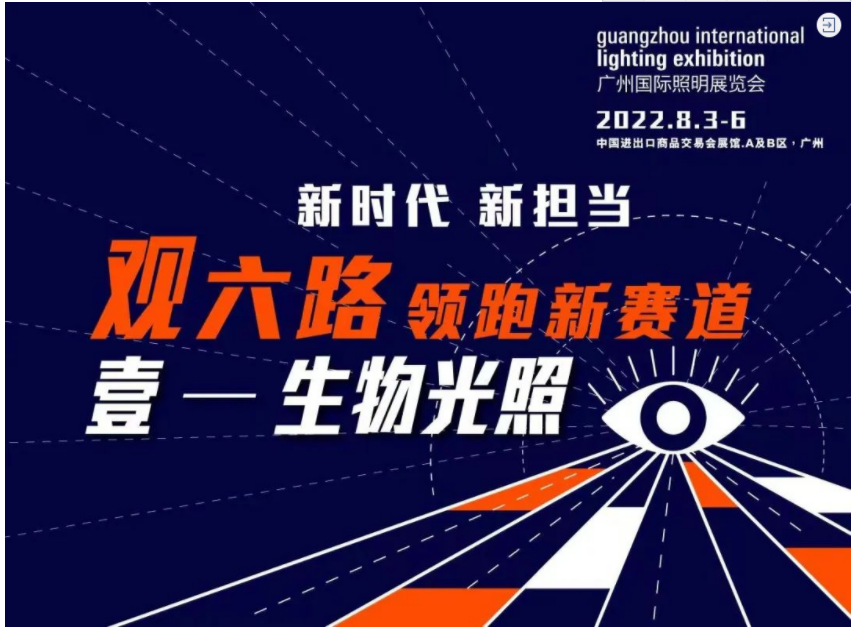
GILE 2022 | Green and Low-Carbon Technology Ecosystem Exchange Conference
Since the implementation of the "14th Five-Year Plan", the concept of "dual carbon" development has swept across almost all industries, becoming the development standard for all sectors. For the lighting industry, which is undergoing cross-border joint transformation, it is even more important to integrate the concept of "dual carbon" development into all stages of innovation and change, and actively seek new opportunities in the era of green and low-carbon development.
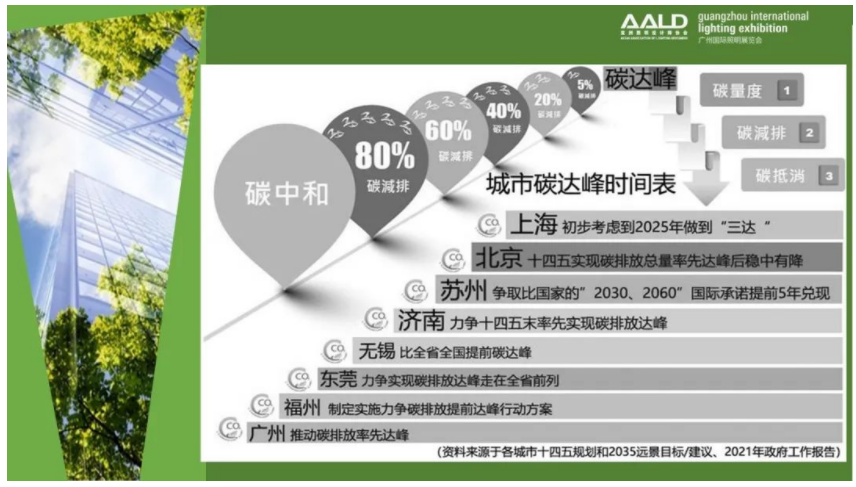
Guangzhou
Relevant departments of the Guangzhou Municipal Government introduced:
The Guangzhou Municipal Housing and Urban-Rural Development Bureau has issued the "Guangzhou Urban Lighting Special Plan (2021-2035) (Draft for Comments)" (hereinafter referred to as the "Plan"), which will continue to promote energy saving retrofits of lighting facilities to support the low-carbon development of urban lighting. The Plan points out that by 2025, Guangzhou will further enhance the level of urban lighting construction and development. Strengthen refined management to improve the lighting rate and integrity rate of lighting facilities; comprehensively promote energy saving retrofits of lighting facilities to achieve initial progress in low-carbon and carbon reduction in urban lighting; continuously improve the lighting rate and integrity rate of street lights, with expressways, main roads and key areas reaching 98.5%, secondary roads and branch roads reaching 96%, and other roads such as urban village roads, township roads, inner streets and alleys reaching 90%, while landscape lighting facilities reach 95%; the timely fault handling rate reaches 99%. In addition, in response to low-carbon environmental protection requirements, urban landscape lighting projects should not be turned on unnecessarily in daily operations. During holidays, operating time and scale should be reasonably reduced based on sunrise and sunset times, weather conditions, and public nighttime activity needs, and staggered from local peak electricity consumption periods; lights should be turned on during major events according to actual conditions. By 2030, Guangzhou will continue to deepen the low-carbon and carbon reduction goals for urban lighting and strengthen the overall design and planning of urban lighting.
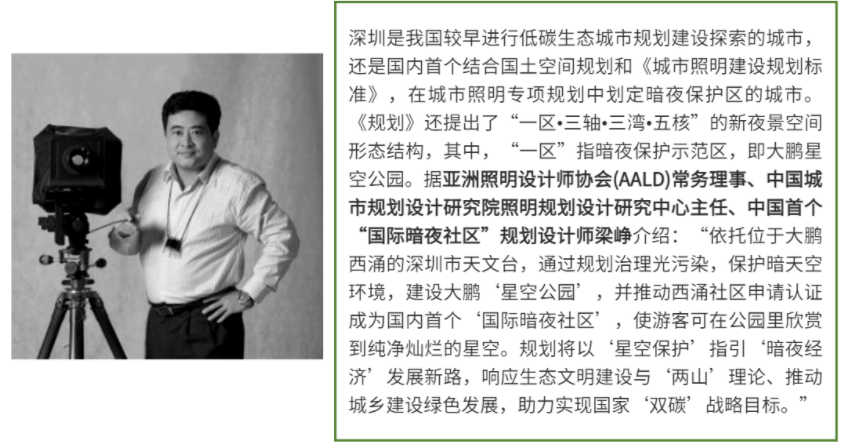
Shenzhen

From incandescent lamps to LED lamps, the lighting industry has always been striving for greater energy saving, but future challenges are not just about being more energy efficient, but also integrating low-carbon principles into the DNA of production and R&D, combining energy structure transformation with digital management to empower green application scenarios.

For lighting companies themselves, the "dual carbon" goals are also forcing an upgrade in production and management models. As part of the supply chain in various projects, the lighting industry is increasingly required to meet carbon emission indicators for products or adopt corporate carbon emission management methods. Benefiting from the overall acceleration of socio-economic green transformation in recent years, the entire financial sector has increased support for green transformation, establishing many funds themed around low-carbon finance. Lighting companies are expected to undergo green transformation and upgrading with the support of "dual carbon" related financial packages from financial institutions, making the companies stronger and larger.

Under the requirements of the "dual carbon goals", the "carbon neutrality" concept of the construction industry must undergo a revolution, shifting from traditional energy-saving buildings to positive energy buildings. Driven by the rapid development of modern technology and the "dual carbon goals", renewable energy application technologies will see continuous innovation.
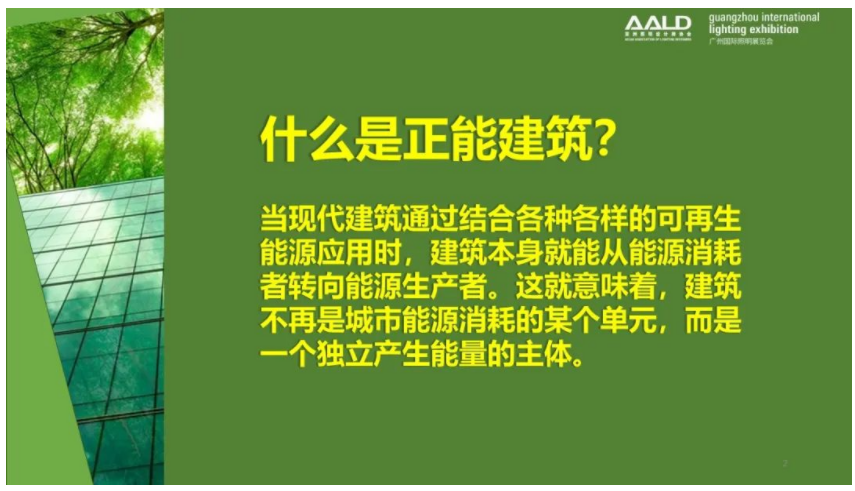
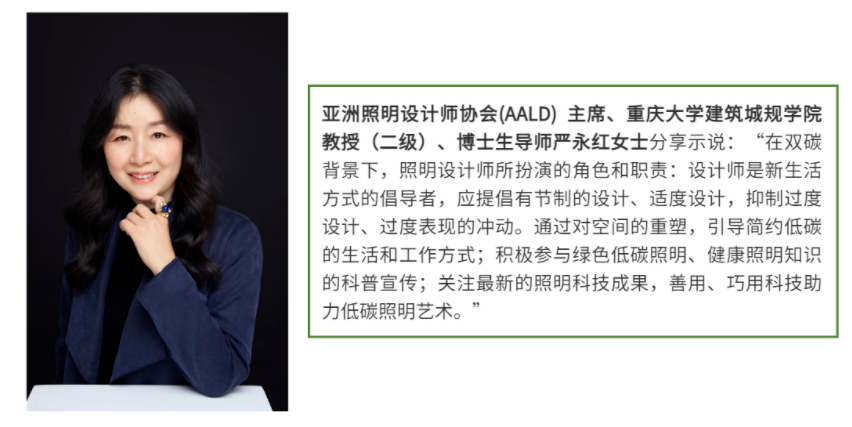
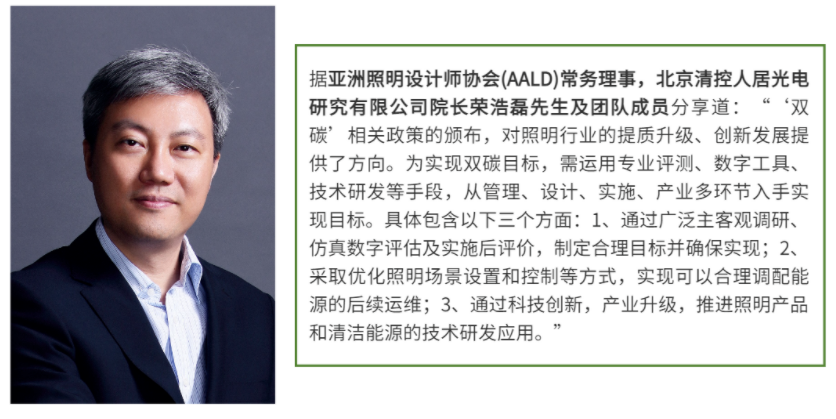
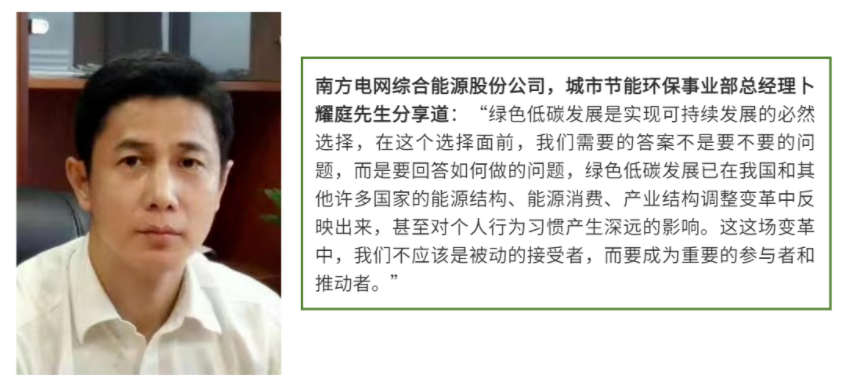
At the same time, energy efficiency is increasing while costs are decreasing. Compared with traditional energy saving technologies, renewable energy has higher marginal effects and faster cost reductions. The costs of renewable energy sources such as solar photovoltaics, rooftop wind power, and bioenergy are also dropping significantly. There is still considerable room for innovation and application in renewable energy. For architectural designers, mastering renewable energy technologies and considering carbon reduction and emission reduction across the building's full life cycle, combining building energy saving and production capacity technologies to achieve maximum benefits at the lowest cost, thereby enabling buildings to achieve carbon neutrality and realize the goal of positive energy buildings.
Green Low-Carbon Technology Ecosystem Exchange Conference
Break Through Circles, Link New Resources
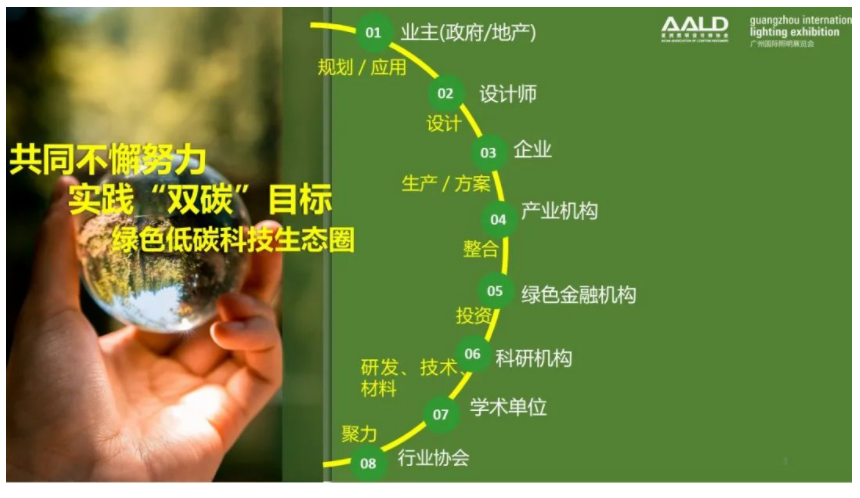
2022 Green Low-Carbon Technology Ecosystem Exchange Conference: Architecture, gathering cross-industry resources, including famous enterprises, industry, owners (government/real estate), associations, colleges, research institutions, and financial institutions, etc. Through diverse activity models, we jointly plan to accelerate the green low-carbon transformation and promote the realization of dual carbon goals. The conference will focus closely on cities and communities, explore carbon neutrality solutions in people's living scenarios, seek investment opportunities, achieve high-quality low-carbon development, build a beautiful China and a green China together, and move towards a new era of harmonious coexistence between humans and nature.
Event Agenda
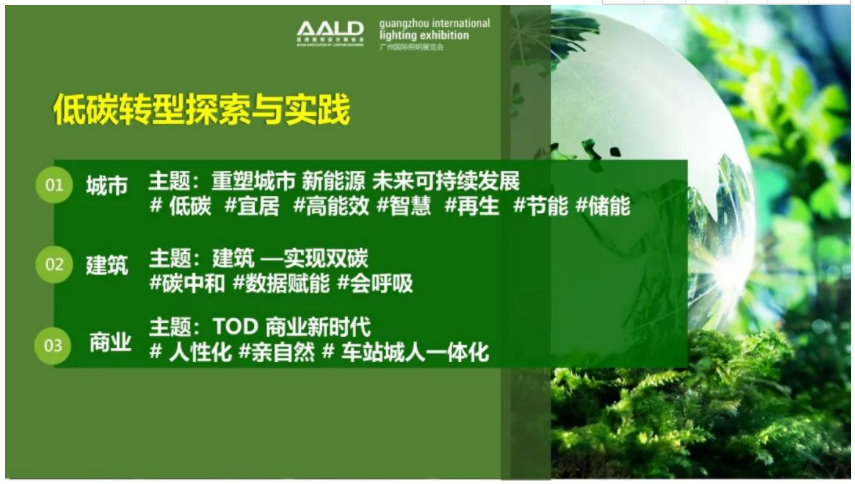
Urban "Dual Carbon" Promotion and Green Low-Carbon Development
Cities are the largest application scenarios for achieving the "Dual Carbon" goals. Each city has its unique natural ecology and economic development structure, and different cities have their own "Dual Carbon" paths. The Conference invites lighting managers, solution providers, and designers from different cities to participate, discussing hot topics such as Dual Carbon goals and energy saving and emission reduction planning, focusing on how to transition from top-level design to implementation:
❖ Can smart cities achieve "Dual Carbon"?
❖ How to deeply integrate urban digital transformation with "Dual Carbon"?
❖ How to coordinate the relationship between traditional industrial development and "Dual Carbon" construction?
Carbon-neutral buildings
In the face of the "dual carbon" goals, the construction industry is also ushering in new thinking and new trends. The construction industry needs to shift from focusing on saving building energy consumption to widely utilizing buildings to generate energy. The conference invites architects, owners, lighting designers, and enterprises to discuss together:
Theme direction: From traditional energy-saving buildings to positive-energy buildings
❖ How can buildings evolve from low-energy buildings to zero-carbon buildings, negative-carbon buildings, and positive-energy buildings?
❖ Under the opportunities of "dual carbon", what new thinking and new opportunities will arise in building design, materials, and technology?
Theme: Green and Low-Carbon Lighting
❖ What is an ideal light environment? Future lighting design reviews the development from ergonomics, environmental cognition, visual performance, user behavior, and non-visual effects, looking back at natural light environments and biophilic directions.
❖ What is lighting design that adapts to the present while facing a green and low-carbon future?
Theme: Digital Architecture
❖ How can innovative digital technologies integrate with the traditional construction industry to form a new ecosystem of digital architecture platforms?
"Commercial IP" City TOD Integration
In the era of existing stock and e-commerce, "TOD (Transit-oriented development) urban complexes" offer advantages in sustainable development capabilities. The conference invites property owners, lighting designers, and enterprises to discuss together:
Theme Direction: TOD and the Low-Carbon Era
❖ TOD will integrate with future lifestyles while entering the low-carbon era. Future TOD design will increase green nodes and public open spaces, placing greater emphasis on biophilic design to establish contact between people and nature?
What exactly will the "Dual Carbon" development bring to the lighting industry?
How will lighting companies respond to change and upgrade innovation?
How will the future path of "dual carbon" development unfold?
GILE (Guangzhou International Lighting Exhibition) and the Asian Association of Lighting Designers (AALD) jointly created the 2022 Green Low-Carbon Technology Ecosystem Exchange Conference to discuss the future of low-carbon development with people from all walks of life. Please stay tuned for more information about the conference!