
2021 North China Smart Energy Expo
Exhibition Theme:
North China Photovoltaic Industry Expo
North China Energy Storage Industry Expo
North China Wind Energy Industry Expo
Exhibition Dates: 2021.07.30-08.01
Venue: Shijiazhuang International Convention and Exhibition Center (Zhengding Free Trade Zone), China
Guiding Units:
National Development and Reform Commission, National Energy Administration, Hebei Federation of Industry and Commerce Committee
Hebei Provincial Committee of the China Council for the Promotion of International Trade
Supporting Organizations:
Carbon Neutrality Professional Committee of Hebei Public Resource Trading Industry Association
State Grid Hebei Integrated Energy Services Co., Ltd.
Organizers:
Hebei International Exhibition Center
Hebei Yingshang Lihua Exhibition Service Co., Ltd.
I. Exhibition Background
On September 22, 2020, at the general debate of the 75th United Nations General Assembly, President Xi Jinping announced that China will strive to achieve “carbon neutrality” before 2060. Subsequently, President Xi put forward specific goals at the Climate Ambition Summit, and the Fifth Plenary Session of the 19th Central Committee of the Communist Party of China as well as the Central Economic Work Conference made relevant work deployments. As one of the energy-consuming regions, North China has actively responded to the national call, conducted in-depth policy research, and contributed to achieving “carbon peak and carbon neutrality”.
II. Exhibition Overview
The 2021 North China Smart Energy Exhibition is scheduled to be held from July 30 to August 1, 2021. The expected area will reach 20,000-26,000 square meters, with 450 exhibitors and 26,000 professional visitors. During the Exhibition, forums and conferences will be held, gathering industry association experts, leaders from relevant departments, and industry pioneers to discuss frontier technologies, cooperative development strategies, and policy orientations of various provinces. We are committed to building the North China Smart Energy Exhibition into a branded energy event in North China, providing enterprises with opportunities and platforms to enter the North China market.
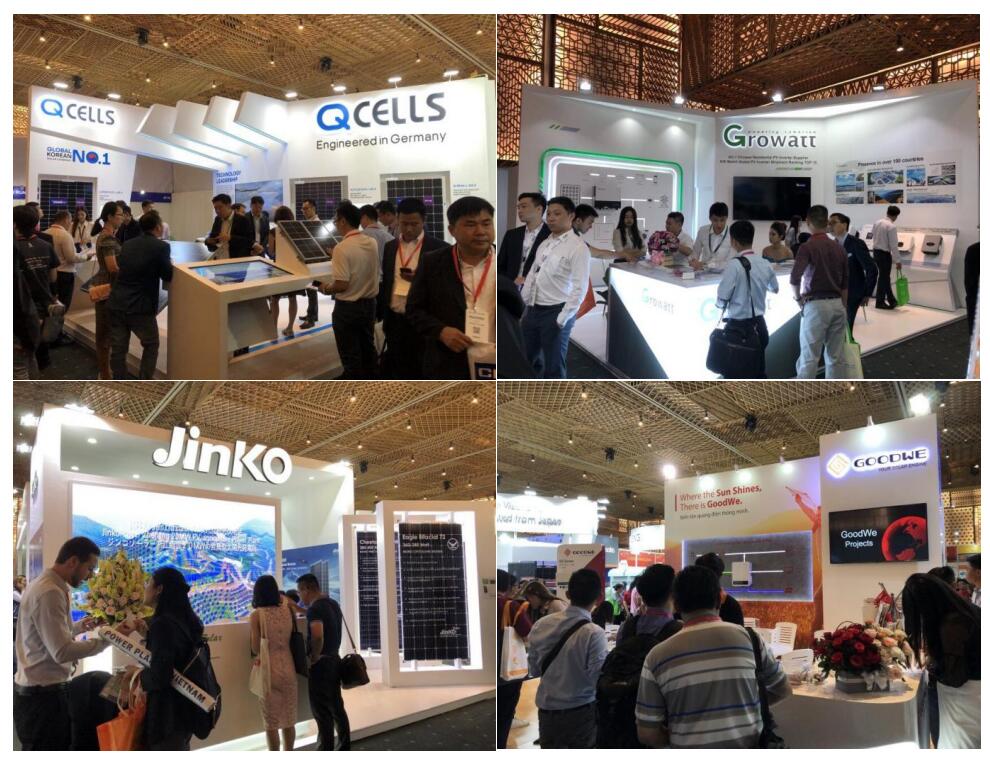
We sincerely invite domestic industry practitioners to gather in Zhengding, China, to explore and develop the smart energy market in North China from an Industry perspective and with a problem-oriented approach, jointly leading the path of innovative Industry development and contributing to China's "3060" goals. Let us meet in the beautiful Zhengding New Area, north of the Great River!
III. Scope of Exhibits
A. Photovoltaic products, applications and technologies
B. Wind power products, applications and technologies
C. Energy storage products, applications, and technologies:
D. Other renewable energy products, applications, and technologies:
IV. Professional Visitors
A. Officials from government departments responsible for electricity, energy, energy saving, construction, agriculture, manufacturing, commerce, etc., in various regions;
B. Agents and dealers/distributors of photovoltaic products and accessories; agents and dealers/distributors of wind energy products; agents and dealers/distributors of energy storage products;
C. Solar power plant and wind farm contractors, investors, etc.;
D. Experts and scholars from relevant industry organizations at home and abroad.
V. Exhibition Fees
Standard booth (minimum rental 9 sqm): RMB 7,200 / 9 sqm (10% corner fee)
Basic configuration: carpet, lighting, 1 power socket, negotiation table and chairs (one table, two chairs); 1 trash bin, fascia board
Indoor raw space (minimum rental 36 sqm): RMB 680/sqm
The indoor raw space includes the usable area and space during the exhibition period, but excludes standard booth configurations; exhibitors are responsible for their own decoration.
VI. Exhibition Guidelines
(1) All participating entities shall follow the principle of "first registration, first payment, first allocation". The Organizing Committee reserves the right to cancel or relocate booths, advertising spaces, and sponsorship slots for which payment has not been received. The registration date is determined by the date when the organizer receives the booth deposit from the enterprise and issues the exhibition application form. The registration deadline is June 20, 2021;
(2) After confirmation by the Organizing Committee, exhibitors must remit the booth deposit (50% of the total booth fee) to the Organizing Committee within one week. The remaining balance must be paid in full by June 27, 2021; otherwise, the booth will not be reserved and the deposit will not be refunded. After transferring the funds, please be sure to send the bank transfer receipt stub to the Organizing Committee;
(3) Upon receipt of the relevant fees, the Organizing Committee will issue a confirmation of participation to the exhibitors;
(4) Participation requirements: Enterprises participating as a group or individually must have complete documentation. Exhibits must comply with the Product Quality Law of the People's Republic of China and the Intellectual Property Law of the People's Republic of China, as well as the relevant regulations of the Conference venue. Infringement of intellectual property rights and the exhibition of counterfeit and shoddy goods are strictly prohibited.
VIII. Contact Information
Organizing Committee of the North China Smart Energy Expo
Landline:
0311-85179229 0311-85179228
Contact: Ren Wenbin 18910758796 (WeChat ID same)
Enterprise QQ: 2853127366
Email: hbenergy_expo@126.com
Website:
www.hbenergy-expo.cn
www.bjyslh-exhibition.com
Address: 11th Floor, Century International Center, Donggang Road, Yuhua District, Shijiazhuang City, Hebei Province
9. Overview of the Wind, Solar and Energy Storage Market in North China
Hebei:
Hebei Province has abundant solar energy resources, especially in Zhangjiakou, where the annual total horizontal irradiance reaches up to 1700 kWh/m². Even under curtailment conditions, the annual power generation hours remain around 1400 hours. In 2019 and 2020, the annual power generation hours for photovoltaic power stations in Hebei Province were 1389 hours and 1336 hours respectively, making it one of the provinces with the highest power generation in southeastern China.
In 2020, Hebei added approximately 7.16 million kW of new photovoltaic installed capacity, becoming the province with the largest annual new PV installations in China, accounting for about 15% of the national total new installed capacity that year! The prefecture-level city with the largest PV installed capacity in Hebei Province is Zhangjiakou City. By the end of 2020, the city's PV installed capacity reached 6.1457 million kW, representing 28% of the province's total installed capacity.
The benchmark price for coal-fired power in Hebei Province is also at a relatively high level nationwide. Specifically: the Jibei Power Grid is 0.372 yuan/kWh; the Jinan Power Grid is 0.3644 yuan/kWh, both higher than the national average benchmark price for coal-fired power!
Without subsidies, the returns on photovoltaic projects in Hebei Province, especially in the Jibei region, are among the leading levels in China. Using 'annual revenue per 1 kW' as a standard for comparing project returns across different regions, Hebei's 'annual revenue per 1 kW' ranges between 450 and 550 yuan, which is almost the highest level nationwide.
Shanxi:
Northern Shanxi is a region with relatively abundant solar energy resources in China. The annual sunshine duration is 3,000–3,200 hours. The total solar radiation received per square meter per year is 5,852–6,680 MJ. Southern Shanxi is a medium-type solar energy resource region in China. The annual sunshine duration in medium-type regions is 2,200–3,000 hours. The total solar radiation received per square meter per year is 5,016–5,852 MJ.
The distribution of areas with good wind energy resources in Shanxi Province can generally be divided into eastern and western parts, bounded by the central graben basin. The western part includes the Guancen Mountains, Lüliang Mountains, and surrounding areas, with a wind power density ≥300 W/m², a technical development capacity of 5,020 MW, and a technical development area of 1,612 km². The eastern part includes the Hengshan, Wutai, Taihang, Taiyue, and Zhongtiao Mountains and surrounding areas, with a wind power density ≥300 W/m², a technical development capacity of 7,900 MW, and a technical development area of 2,449 km². These areas are mainly characterized by high mountains and hilly terrain, representing the best wind energy regions in Shanxi and key areas for wind energy development.
To fulfill the development goal of "achieving a 40% share of new energy and renewable energy installed capacity by 2025," during the 14th Five-Year Plan period, Shanxi Province will implement coordinated centralized and distributed development to orderly advance project construction. It will promote the integrated development of photovoltaics with buildings, transportation, agriculture, and forestry according to local conditions, accelerate pilots for integrated wind-solar-thermal-storage and source-grid-load-storage systems, including "renewable energy + energy storage" pilot demonstrations; deeply advance the collaborative interactive smart energy pilot construction of "new energy + electric vehicles"; and encourage the construction of multi-energy complementary comprehensive power supply bases integrating wind, solar, thermal, and storage, thereby building a flexible, efficient power system with coordinated development of source, grid, and load, achieving large-scale consumption of clean electricity, reducing user electricity costs, and cultivating new momentum for Shanxi's transformation and development.
Inner Mongolia:
The Inner Mongolia Autonomous Region is located in northern China, with abundant solar energy resources. The annual total solar radiation ranges from 1,342 to 1,948 kWh/m², and the annual sunshine duration is between 2,600 and 3,400 hours. The distribution of solar energy resources across the region shows an increasing trend from east to west. Among them, Hohhot has the highest annual total solar radiation at 6,241.19 MJ/m²; Bayannur and Erenhot rank second and third with 6,189.27 MJ/m² and 6,093.14 MJ/m², respectively. Inner Mongolia has very rich wind energy resources. Across its 1.183 million square kilometers of land, the total wind energy reserve reaches 898,000 kW, and the technically exploitable wind energy capacity is 150 million kW, accounting for 40% of the nation's usable wind energy reserves. The seasonal and daily variations in wind speed in Inner Mongolia basically coincide with the patterns of production and residential electricity consumption. Moreover, with its vast territory, sparse population, and mostly flat grasslands, it is highly suitable for constructing large-scale wind farms.
Li Li, Director of the Inner Mongolia Autonomous Region Energy Bureau, introduced plans to implement the "Ten Major Projects": new energy doubling, flexible grid, coal control and carbon reduction, source-grid-load-storage, re-electrification, green hydrogen economy, digital transformation, public benefit enhancement, technology empowerment, and regional cooperation. Among these, the new energy doubling project will pursue both centralized and distributed development, building multi-gigawatt new energy bases in Ulanqab, Ordos, Baotou, Bayannur, Alxa, and other areas, developing distributed new energy according to local conditions, and promoting high-proportion new energy development. By 2025, the share of new energy installed capacity will exceed 50%, making it the main power source in the region, with annual CO2 emissions reduced by approximately 200 million tons, contributing to achieving "carbon peak" before 2030. Additionally, Jiao Jiayu, Director of the New Energy Division of the Inner Mongolia Autonomous Region Energy Bureau, stated at a press conference that during the "14th Five-Year Plan" period, the newly grid-connected scale of new energy projects will reach over 50 million kilowatts. By the end of the "14th Five-Year Plan", the autonomous region aims for renewable energy power generation installed capacity to exceed 100 million kilowatts.