
Application of Smart Lighting Control Systems in Office Buildings
Relevant studies show that the application of smart lighting control systems can effectively control electrical loads, lighting dimming, and ventilation and heating systems, and can reasonably control the operating status of the bus system based on changes in the external environment. The following takes a construction project as an example to specifically elaborate on the application process of the smart lighting control system.
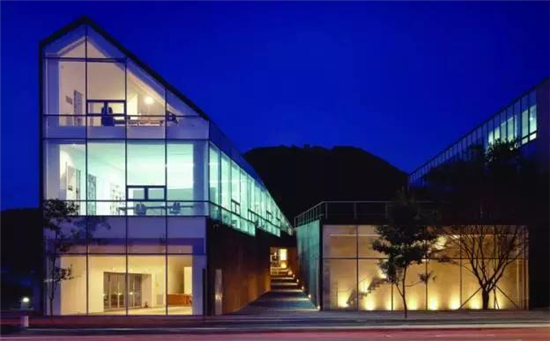
[Project Overview]
A certain construction project is a 20-story office building. The scope of its smart lighting system layout includes offices, meeting rooms, public corridors, and underground parking garages on floors 1–20. After adopting the smart lighting system, the office building can not only adjust lighting schedules through the central control room but also centrally control electrical load structures such as water heaters.
Scene lighting control for building floors
Taking the intelligent control process of scene lighting on floors 1–3 of this building as an example, since the switching technology used is Busch-tritor, the on/off control of scene lighting on these three floors can be achieved with a single button. The 20 light sets in the offices can be controlled independently, with each set having a power of 3,000 W. In addition, for dimming control in public corridors, the power of each light set should be kept within 1,000 W. The operation of the above-mentioned scene lights can be realized via infrared handheld control.
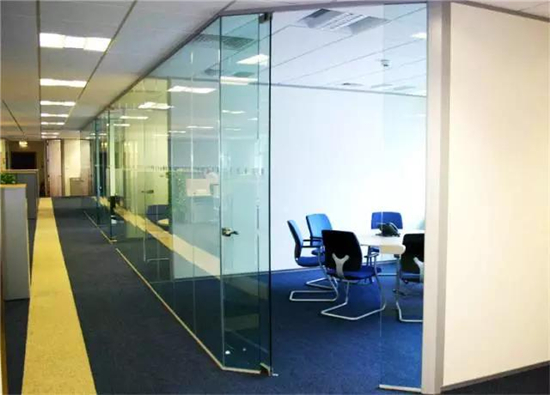
The scene lighting in the conference rooms on the above-mentioned floors is also controlled using Busch-tritor technology. The lighting equipment and curtains in the conference rooms can be uniformly controlled with a single button, but a maximum of five different lighting scenes can be set. For the main hall of the conference room, five light sets can be controlled independently, with each set having a power of 3,000 W; for dimming control of other lights, the power of each light set should be ≤500 W.
The control method for the conference room curtains differs from that of the curtains in other rooms on floors 1–3; they are independently controlled via two groups of electric curtain buttons. In addition, motion sensors are installed at the entrance of the conference room. When someone enters the conference room, the lighting equipment automatically turns on and turns off automatically after the person leaves. This can reduce the workload of management personnel to some extent and achieve energy savings.
Underground parking garage
For the intelligent construction of underground parking lot lighting systems in office buildings, motion sensors are required, which is an effective measure to reduce energy consumption in underground garages. To achieve comprehensive coverage of architectural lighting, motion sensors need to be installed at the exits of the basement. In this scenario, when a vehicle enters the sensor's detection range, the lighting fixtures will automatically turn on and turn off automatically after a few minutes.
Application effects of smart lighting control systems
(1) Reduced lighting costs
The most prominent feature of smart lighting control systems is energy saving. Relevant studies indicate that electricity consumption for office lighting accounts for about 1/3 of the total electricity consumption of the entire building, and the resulting lighting costs account for about 1/10 of the total electrical engineering construction costs of the office building.

Thus, the application of smart lighting control systems has certain practical significance. In addition, applying this system not only saves electrical energy but also reduces wiring workload, and it can automatically adjust lighting times based on changes in external light, thereby reducing the waste of electrical resources in construction projects.
(2) Optimized the lighting environment
目前,市场竞争日趋激烈,而营造良好的办公环境是提高员工工作效率的先决条件。针对该问题,智能照明控制系统合理地利用了外部光源和性能优越的灯具设备,这在一定程度上提高了建筑照明的质量。具体而言,智能照明控制系统采用了开关控制技术和自动调光设备,可有效控制各楼层以及特殊办公场所的照明平均值,从而达到提高办公照资源均匀性的目的。
(3) Achieved targeted settings for different lighting scenarios
对于不同的照明场景,智能照明控制系统可提供多种不同的照明控制方案。具体而言,应用智能照明控制系统可使同一建筑物中的照明设备具有多种艺术效果,从而为建筑物的多元化建设起到辅助作用。如果一栋建筑的室外景观照明和泛光照明能以光线的变化、节假日和大型活动的场景为根据设置,则能极大地提升其美观度。
Conclusion
In summary, this paper takes the smart lighting control system applied in an office building as an example to elaborate on its practical application effects. It has been proven that applying a smart lighting control system not only optimizes the lighting environment of office buildings but also allows for targeted lighting settings for different scenarios, which is unachievable with traditional lighting methods.
Source: FMGate website
China Light
The official website of the China Association of Lighting Industry and a full-media platform for the lighting sector. We provide authoritative and timely lighting information while striving to be a growth partner for businesses. From brand promotion and channel expansion to consulting, talent training and participation in standards development, we provide comprehensive professional services to help businesses improve quality and efficiency and jointly advance the high-quality development of the lighting industry.
Business Contacts
仇纯 (Ms.): 158 6155 3579
顾君 (Mr.): 137 7157 5253