
[Aladdin] Melody KTV Beijing Fuli City Store Entertainment Lighting
This case is provided by"Aladdin" Light and Shadow Space Magazine
Case provider:
Lighting Designer: Wang Junqin
Design Firm: Ruizhihui Design
Beijing R&F City, as a newly emerging area with vibrant economic activity, has witnessed rapid economic development and a surge in consumer spending power in recent years, thereby driving the booming growth of the local entertainment industry. Fierce competition is changing Melody Entertainment operators' requirements for venue design; they are no longer obsessed with the opulent style of gold and silver decorations. Meanwhile, consumers have abandoned their penchant for superficial glamour and begun to pursue musical and visual effects more intensely, seeking stylish entertainment experiences that match their evolving tastes. Therefore, entertainment venues serve as an ideal paradise for hosting guests, requiring a high-class, diversified, warm, yet magnificent atmosphere.
The charm of MELODY KTV lies in its bold and innovative design concept and unconventional creativity, which represents the greatest "playful design" mandate bestowed by the client upon the design team.
Located adjacent to R&F Plaza on Beijing's Third Ring Road, this project is currently one of the largest and highest-end indoor KTV entertainment venues. The operator requested a modern, fashionable, comfortable, and atmospheric overall feel. While meeting these requirements, the designer cleverly combined glass and metal—high-tech materials—with Lighting, creating a striking "WOO...U!!!" effect. Standing out like a unique visual feast beside the busy Third Ring Road, it creates an atmosphere of passion, joy, and freedom.
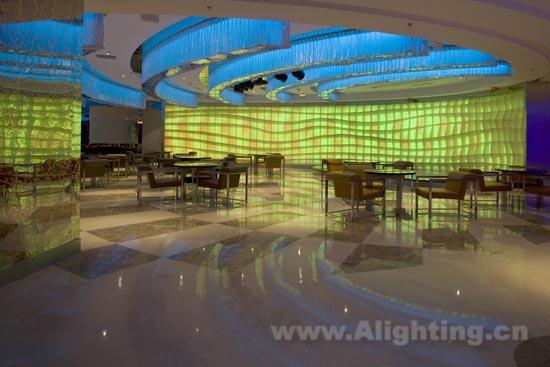
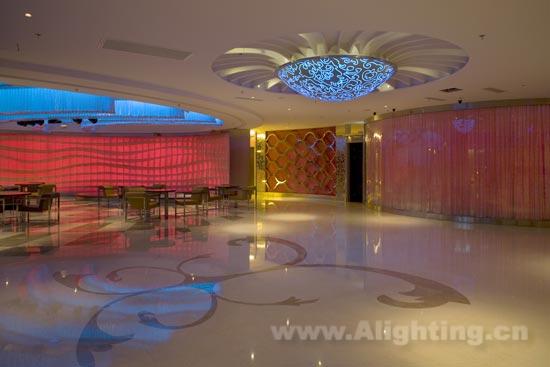
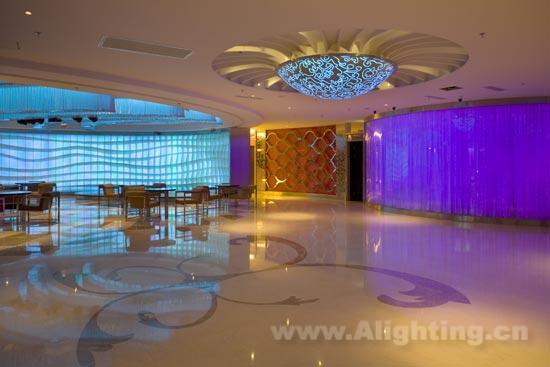
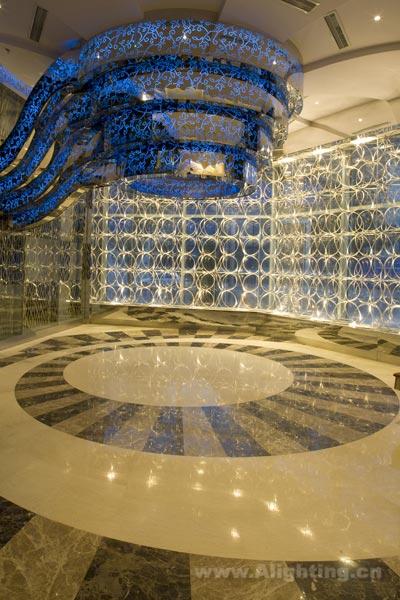
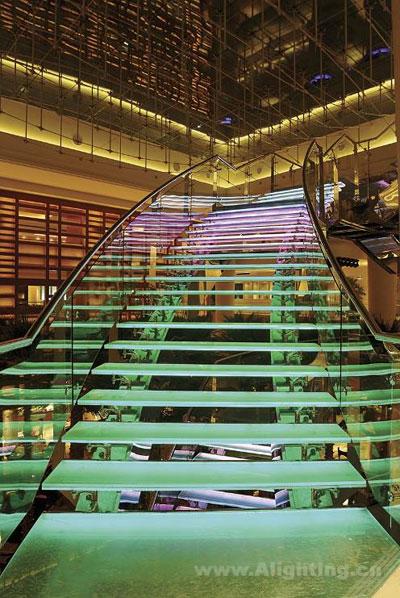
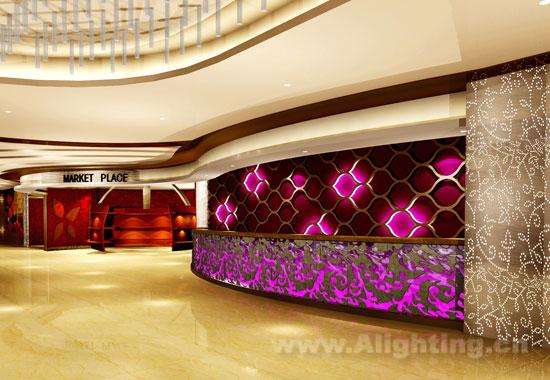
From the outset, the designer aimed to immerse guests in a grand atmosphere. Upon stepping into the 1F lobby, metal, glass, and LED lights flow together like ribbons or running water, seamlessly integrating the space. It feels as if one has entered a technological waterfallspace-time tunnel, where the high-ceilinged space continuously presents cascading water flows like a perfect water dance performance. This allows people to gather and wait freely here. Moving between light and shadow, whether entering or leaving, guests can maintain a pleasant mood.
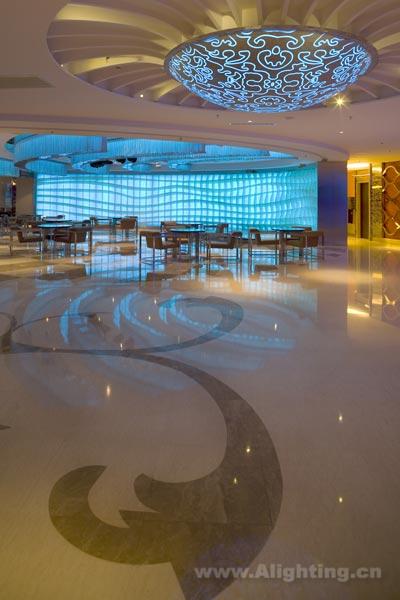
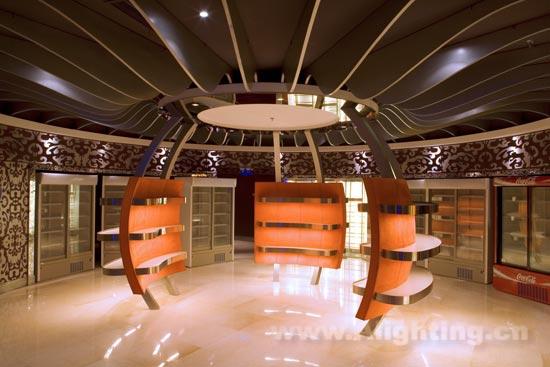
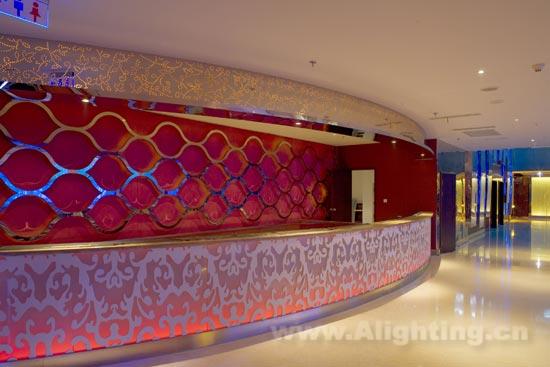
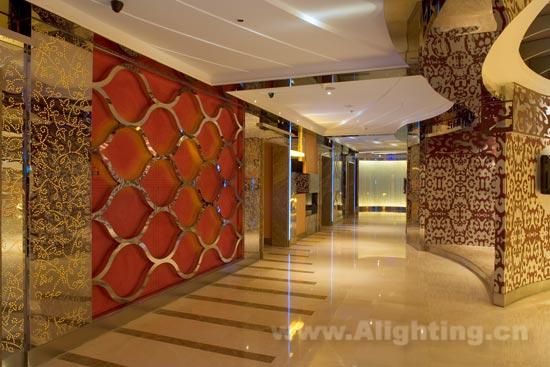
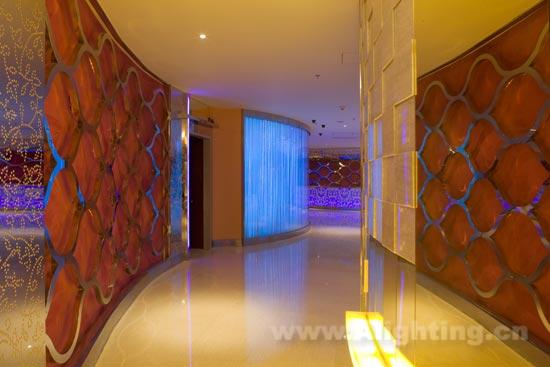
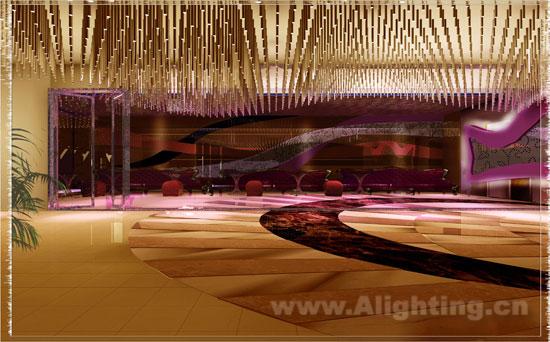
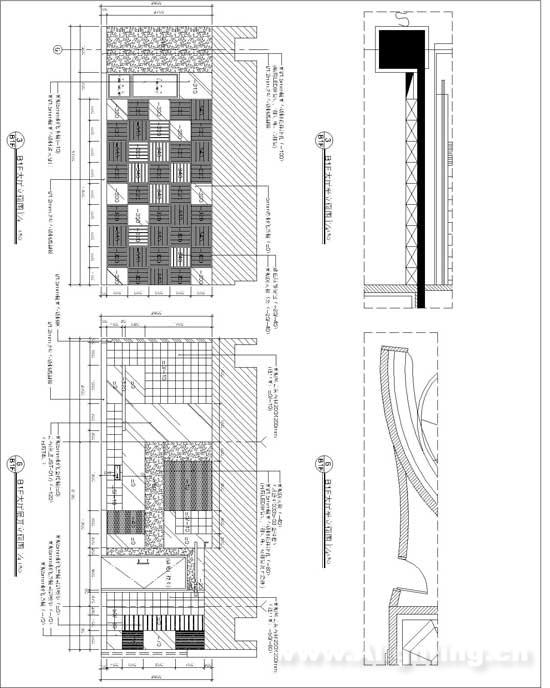
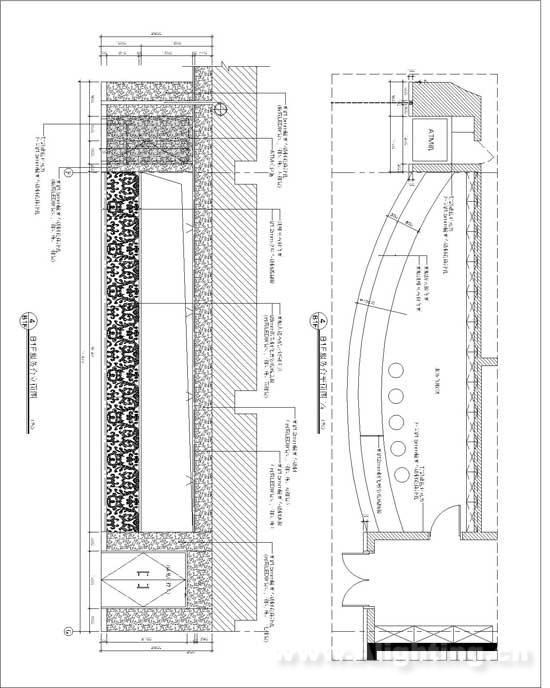
Arriving at the B1F waiting hall through a time-space tunnel, the passion of design flows layer by layer with smooth 3D water-ripple light walls and crystal-like LED light wave effects, refined to perfection. The wall finishes combine cloud stone translucent panels with special LED light wave effects, while the ceiling features metal curtains and flexible LED lights shimmering like water ripples. Another focal point—the service desk—combines glass and composite artificial stone carvings with dynamic LED lighting, achieving a "conflicting yet perfect" blend of rationality and sensibility. The layout of the waiting hall breaks traditional design methods, integrating the "club" area in a fully transparent, open form closely with the waiting hall, elevating interactive joy to its peak. The supermarket connected to the waiting hall uses circular spaces and totems, employing a design approach that combines rigid and soft materials to present shopping circulation and fluidity. The color scheme features champagne silver paired with purple carved patterns and stainless steel to express a sense of fashion. Furthermore, the primary and secondary corridors use multiple material elements with a composite, superimposed geometric design concept, presenting guests with a rhythmic, multi-layered sense of depth, spatial extension, and dynamic lighting effects, creating an absolute visual and sensory impact.
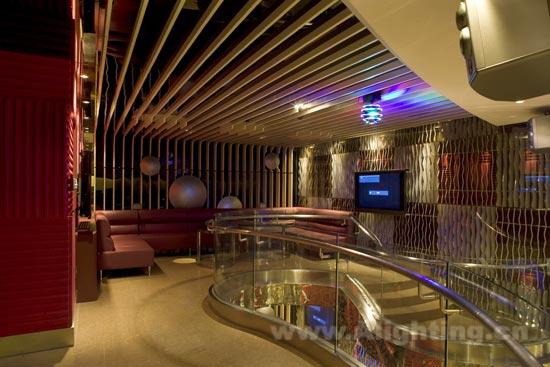
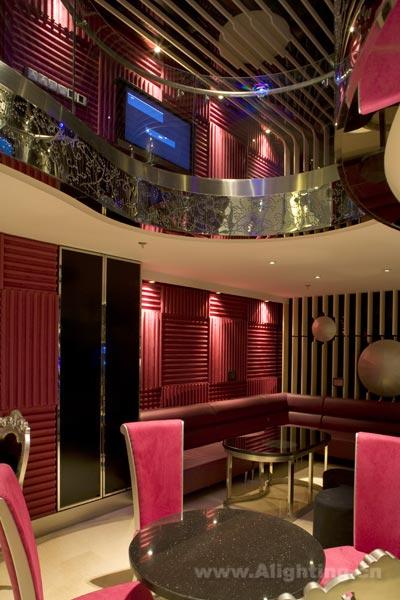
Diversity is the key to entertainment spaces. While meeting multiple spatial needs, the designer shapes an artistic, aesthetically pleasing, and elegant environment through the handling of spatial rhythm, sequence, and layers, integrating all spaces into a unified whole. The design of the private rooms further breaks through traditional forms, using diverse material changes and combining MELODY KTV's promise to every consumer—safety, health, joy, and fashion—as the starting point for design. The private room design employs absolutely subversive techniques to express sensory enjoyment beyond just hearing.
During the design process of this project, the lighting design team primarily demonstrated the main lighting effects through physical models in the company's lighting effect laboratory, conducting repeated experiments to achieve the final perfect result.
The lighting design of the Melody Fuli City store is prominently characterized by the extensive use of composite lighting effects. By leveraging complex and varied shapes, employing multiple translucent materials, and combining them with rich and colorful LED luminaire presentation methods, it creates unpredictable and highly shocking visual effects.
In the MELODY entertainment space, color is the medium for creating atmosphere, and lighting effects are the key to atmospheric rendering; colorful colored light adds a unique visual effect. Here, lighting effects are not just a decoration, but a tool to assist special design effects, becoming an abstract spatial structure and bringing moving beauty. In the MELODY lighting effect presentation, a sense of color dynamics is expressed according to different environmental theme requirements, adding a sense of spatial spirituality to the entire space.
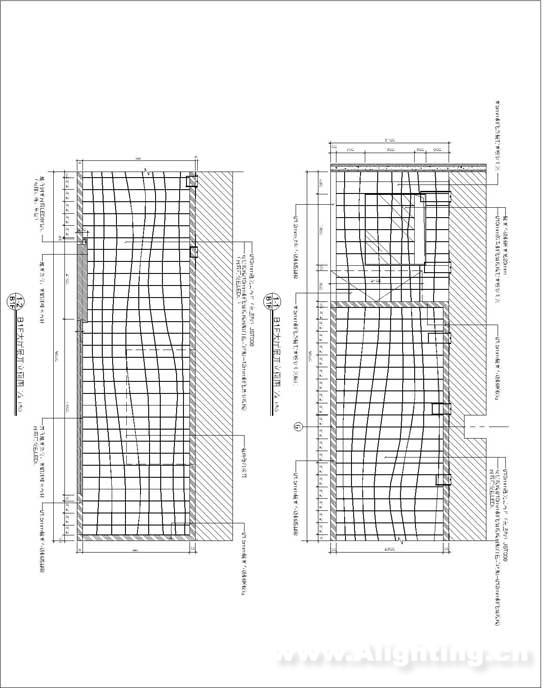
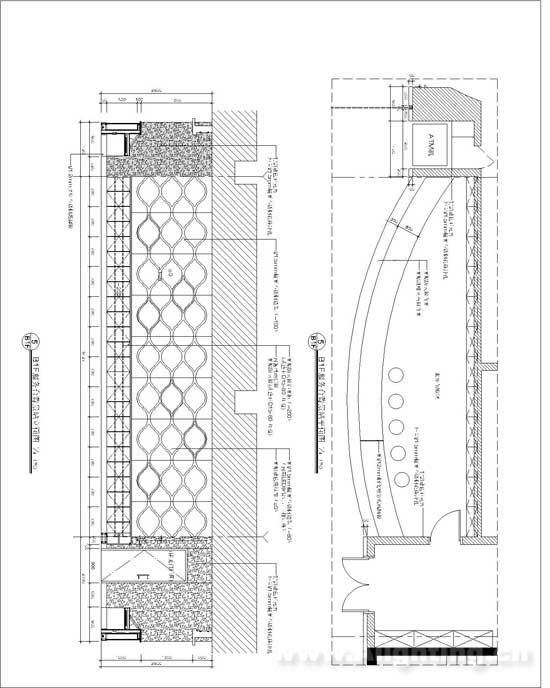
The lobby's feature wall uses tempered frosted glass as the main structural surface. The outer side of the glass features translucent onyx sheets forming a complex and varied outer structure, while the inner side has parallel arrays of individually controlled LED point light sources. An overall flexible ceiling membrane is installed between the glass and the LED wall to form a primary light-mixing layer, with the frosted glass acting as a secondary light-mixing layer. This ensures thorough mixing of the LED point sources, creating dynamic graphics with uniform color and smooth transitions, vividly expressing and enhancing the overall atmospheric design.
The lighting design team consciously selected the appropriate LED control system, which is a key factor determining luminous efficacy. In this project, the Melody R&F City store design adopted DMX512 control technology, achieving 256 grayscale levels for monochrome color changes, making the LED light color variations extremely rich and diverse. By selecting a combination of blue and white LED beads and redesigning the control program to simulate dynamic water wave effects, a realistic effect of surging waves was created.
There are many types of materials used for light mixing. Based on the characteristics of LED light sources, the lighting design team chose frosted acrylic sheets. These sheets effectively mix light colors while having higher light transmittance than ordinary milky white acrylic sheets. Flexible ceiling membranes, due to their thinness and high light transmittance, are even more suitable as light-mixing materials for LED sources. Through careful debugging and design, they achieved excellent design results.
Joy, passion, visual interest, and sensory impact are the main inspirations running through the design of this project, and indeed its soul. [NT:PAGE]
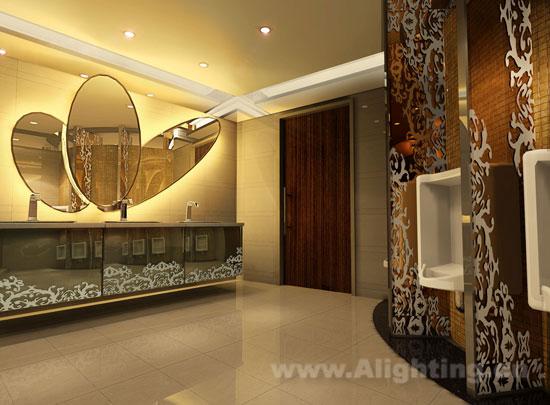
Actual Scene Photo
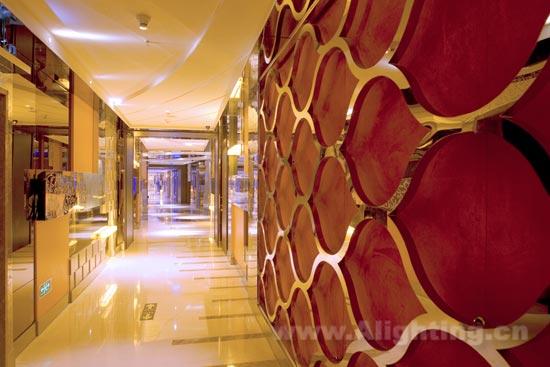
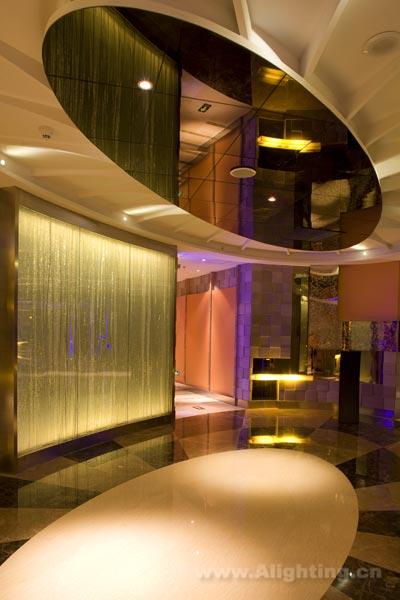
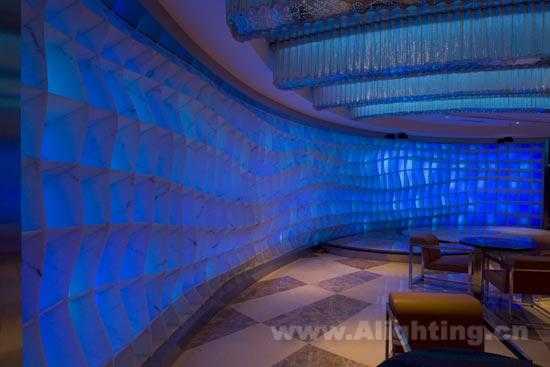
 [NT:PAGE]
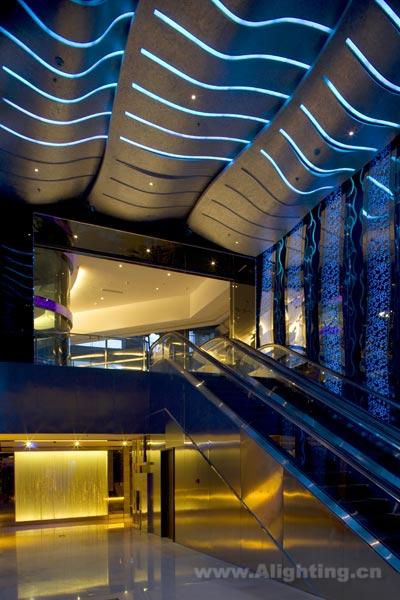
 [NT:PAGE]
 [NT:PAGE]
Decorative Lighting Design and Implementation Plan
Although we have participated in the decorative lighting design and light effect implementation for many Melody stores, when we saw the rendered overall design proposal for the Melody R&F store, we were still shocked by Mr. Wang's bold and innovative design philosophy, his unconventional creativity, and his grasp of the overall style! We felt an impulse to try it out and implement it immediately. Long-term cooperation has brought us a tacit understanding; we eagerly await the unique design proposals presented by Mr. Wang and his team, and we always strive to realize their ideal lighting effects.
 [NT:PAGE]
Once the preliminary design is finalized, extensive work on luminous efficacy experiments, material selection, and manufacturing processes begins. In the company's luminous efficacy laboratory, primary luminous efficacy results are demonstrated using physical models for study and discussion by all parties. Through repeated experiments, collaborative process design, and targeted R&D of LED luminaires, a practical and feasible luminous efficacy implementation plan is developed.
The lighting design of the Melody R&F City store is characterized by the extensive use of composite luminous efficacy. By leveraging complex and varied shapes, employing multiple light-transmitting materials, and combining them with diverse LED luminaire presentation methods, it creates unpredictable and highly impressive visual effects.
The sculptural wall in the lobby uses tempered frosted glass as the main structural surface. The outer side of the glass features a complex outer structure made of light-transmitting onyx slices, while the inner side has parallel arrays of point-controlled LED point light sources. An overall flexible ceiling membrane is installed between the glass and the LED light wall to form a primary light-mixing layer, and the frosted glass forms a secondary light-mixing layer. This ensures thorough mixing of the LED point light sources, creating dynamically changing graphics with uniform color and smooth transitions, vividly expressing and enhancing the overall sculptural atmosphere.
The multi-layered light-mixing materials and complex external structure pose significant challenges for the installation and maintenance of LED luminaires. We adopted a roller-shutter-style structure, fixing the LED point light sources and wiring onto aluminum alloy vertical strip boards, and pushing the LED luminaires into the wall along upper and lower tracks. The luminaires can be pulled out for debugging or maintenance. This represents an innovation in the overall installation of LED luminaires.
Correctly selecting an LED control system is a key factor in determining luminous efficacy. The Melody Fuli City store design adopts DMX512 control technology, achieving 256 grayscale levels for monochrome color changes, making the LED light color variations extremely rich and colorful.
We also customized luminaires with specified color schemes according to the design requirements. We selected a combination of blue and white LED beads, redesigned the control program to simulate dynamic water wave changes, creating a realistic effect of surging waves.
There are many types of materials used for light mixing. Based on the characteristics of LED light sources, we selected frosted acrylic sheets, which can fully and effectively mix light colors while having higher light transmittance than ordinary milky white acrylic sheets. Flexible ceiling membrane, as a light mixing material, is very thin and has high light transmittance, making it more suitable as a light mixing material for LED light sources.
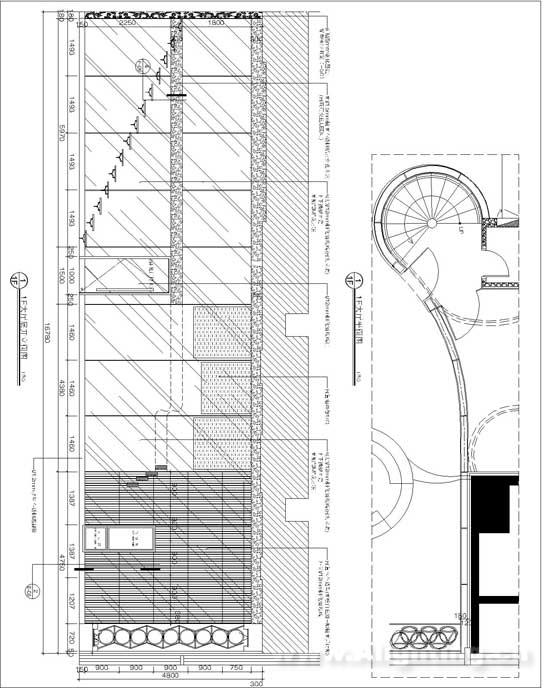
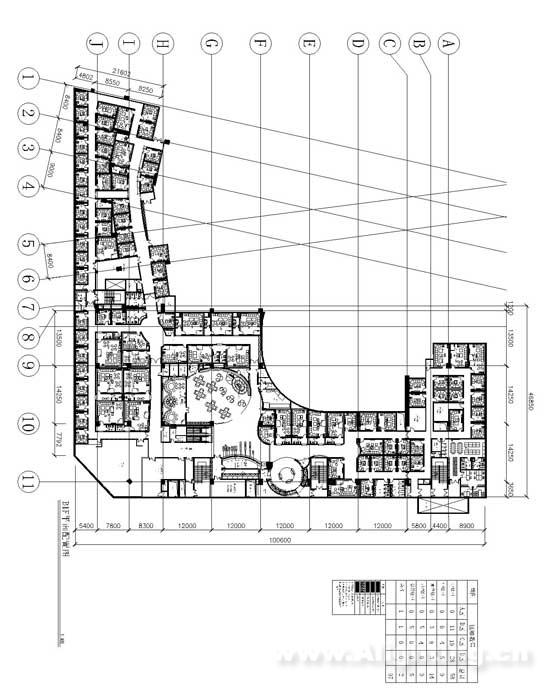
Floor Plan
 [NT:PAGE]
China Light
The official website of the China Association of Lighting Industry and a full-media platform for the lighting sector. We provide authoritative and timely lighting information while striving to be a growth partner for businesses. From brand promotion and channel expansion to consulting, talent training and participation in standards development, we provide comprehensive professional services to help businesses improve quality and efficiency and jointly advance the high-quality development of the lighting industry.
Business Contacts
仇纯 (Ms.): 158 6155 3579
顾君 (Mr.): 137 7157 5253